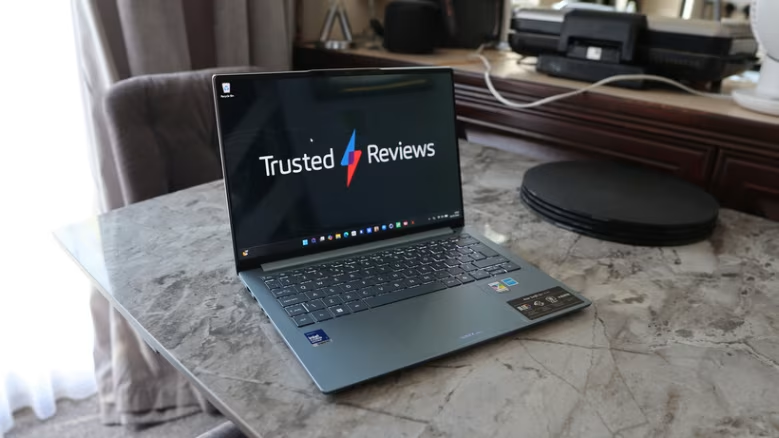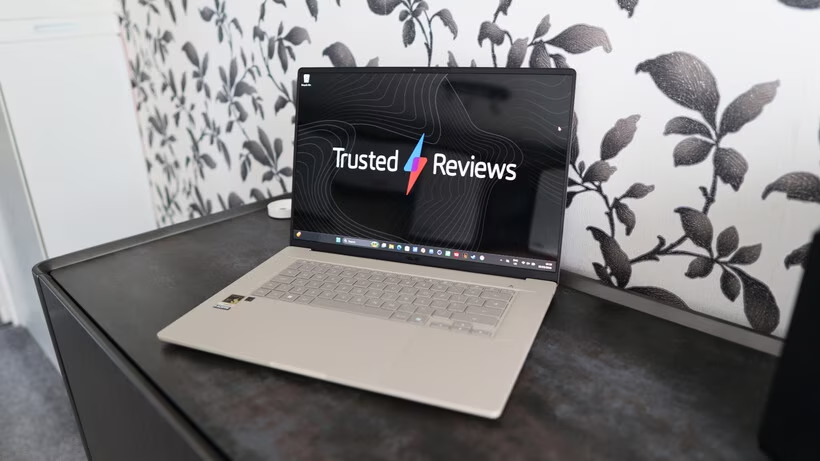
Asus has officially unveiled the Zenbook A16 (2026), an ultrabook that arrives as one of the most complete packages on the market. It represents a major milestone for the year, blending cutting-edge internals with a design that refuses to compromise on portability. At the heart of this machine is Qualcomm’s brand new 18-core Snapdragon X2 Elite Extreme chip.
This powerhouse is supported by a generous 48GB of RAM and a 1TB SSD, ensuring that the laptop can handle intensive workloads with ease. The visual experience is anchored by a dazzling 16-inch 3K OLED screen boasting a 120Hz refresh rate. Despite the expansive display, Asus has managed to house everything inside a “ceralumium” chassis that weighs just 1.2kg, making it both stylish and incredibly light. Endurance is a key highlight for the Zenbook A16, thanks to its 70Whr battery.
In real-world testing, the laptop provided fantastic longevity, solidifying its status as a reliable companion for users on the move who cannot always be tethered to a power outlet. However, these high-end features come with a significant financial barrier. The top-spec model is priced at £2099.99 or $1999.99, which positions it as a premium option that may be out of reach for the average consumer.
The laptop faces immediate pressure from the LG Gram Pro 16. While the LG rival swaps out the Snapdragon chip for an eight-core Intel Core Ultra 7 258V and utilizes an IPS screen instead of OLED, it provides longer battery life and a more accessible price point. Another notable competitor is the Acer Swift 16 AI. Although it features a high-resolution OLED screen and solid endurance, it is heavier and sacrifices raw performance. Crucially, however, the Acer model is available for virtually half the price of the Asus Zenbook.
For those who can afford the steep entry price, the Zenbook A16 (2026) stands as a premier Arm-based Windows ultrabook. It successfully marries beefy performance with a premium build, catering to a specific segment of power users seeking the ultimate in portability and screen quality.