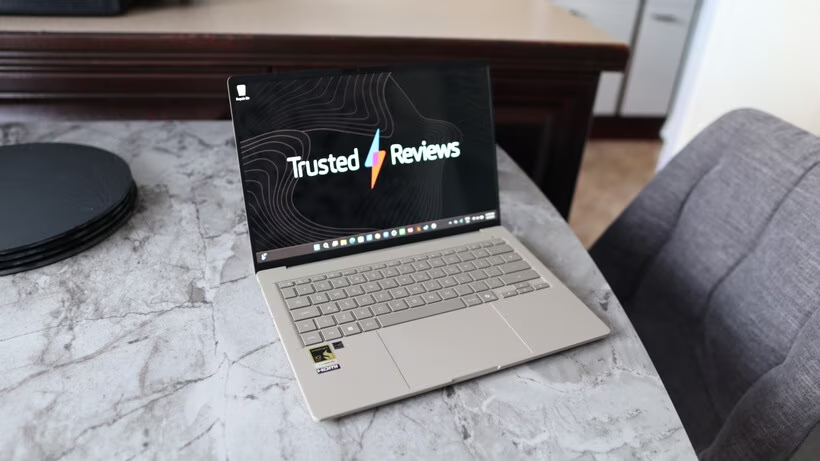
Asus has officially pulled the curtain back on the Zenbook A14 (2026), an ultra-portable that leans heavily into the next generation of mobile computing. By integrating Qualcomm’s latest silicon, this “lightweight marvel” aims to redefine what users should expect from a 14-inch Windows machine. However, the performance jump comes with a side of sticker shock that might give long-time fans pause.
Under the hood, the 2026 model boasts the formidable 18-core Snapdragon X2 Elite chip, paired with 32GB of RAM and a 1TB SSD. This is a significant step up in “grunt” compared to its predecessor, allowing the laptop to breeze through demanding multitasking and creative workloads that would have stuttered on older ultra-low-voltage hardware.
Despite the beefy internals, Asus has managed to maintain the iconic sub-1kg chassis. The device remains one of the most portable 14-inch laptops on the market, appealing to frequent travelers and students who value a bag-friendly footprint. The build quality remains top-tier, featuring the stylish, minimalist aesthetic the Zenbook line is known for.
The visual experience is handled by a 1920×1200 OLED panel. While the OLED technology ensures vibrant colors and deep blacks, the resolution has become a point of contention. In an era where “pro-grade” laptops are pushing higher pixel densities, the standard FHD+ resolution feels slightly behind the curve, especially given the device’s new market positioning.
Endurance is perhaps the laptop’s greatest strength. Thanks to the efficiency of the Snapdragon ARM architecture and a capacious 70Whr battery, the Zenbook A14 (2026) delivers immense battery life. Users can comfortably expect to clear a full workday and then some, minimizing the need to hunt for power outlets.
The most jarring change is the pricing. At £1599, the 2026 model is roughly £500 more expensive than its predecessor at retail. This price hike moves the Zenbook out of the “accessible premium” tier and into direct competition with heavy hitters like the Apple MacBook Pro M4 and specialized AI PCs like the Acer Swift Edge 14.
When compared to rivals, the value proposition gets complicated. The Acer Swift Edge 14 AI offers a higher-resolution OLED screen with a 120Hz refresh rate for less money, while the Acer Swift 16 AI provides similar computing power via Intel’s Panther Lake chips. Asus is essentially betting that its superior portability and battery life will justify the premium.
Ultimately, the Asus Zenbook A14 (2026) is a high-performance, lovely-looking laptop that benefits greatly from its Snapdragon heart. It suffers from the same price-driven scrutiny as recent flagship releases from Samsung, where the hardware is undeniably excellent, but the cost of entry has moved the goalposts for what constitutes a “good deal.”