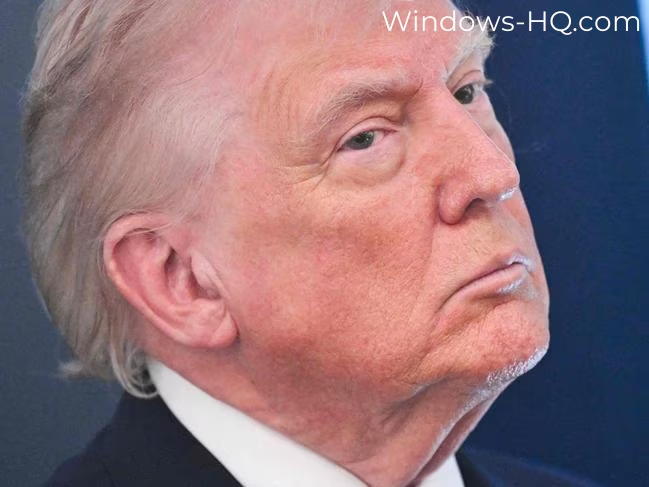
In a stunning diplomatic turnaround, U.S. President Donald Trump has announced a two-week ceasefire with Iran, effectively suspending a planned military strike a mere 90 minutes before a self-imposed deadline. The reprieve comes after a period of intense tension where Trump warned that “a whole civilization” would “die tonight” if an acceptable deal was not reached. However, following a direct intervention by Pakistani Prime Minister Shehbaz Sharif, the U.S. has agreed to hold off its “destructive force” in exchange for a double-sided ceasefire and the immediate opening of the Strait of Hormuz.
According to the agreement, Iran’s military will now coordinate the safe passage of vessels through the critical Strait of Hormuz. Iran’s Supreme National Security Council has claimed a diplomatic victory, stating that the U.S. was forced to accept its 10-point plan, which reportedly includes the lifting of sanctions and the acceptance of its nuclear enrichment program. President Trump validated this shift on Truth Social, describing the 10-point proposal as a “workable basis on which to negotiate” and noting that almost all previous points of contention have already been resolved.
The ceasefire is notably broad in scope, extending beyond the immediate border conflict to include Lebanon and other allied territories. Pakistani Prime Minister Shehbaz Sharif, who presented the plan to Trump alongside Field Marshal Asim Munir, confirmed that the cessation of hostilities is effective immediately. Pakistan has leveraged its unique position as a regional peace broker, utilizing its stable ties with both Washington and Tehran to pull the two nations back from the brink of all-out war.
To finalize the agreement, Prime Minister Sharif has invited delegations from both the United States and Iran to Islamabad for formal negotiations scheduled for Friday, April 10. These “Islamabad Talks” are intended to settle all remaining disputes and achieve a sustainable peace. Pakistan’s role is significant given its status as the home to the largest population of Shia Muslims outside of Iran and its shared cultural and religious history with the neighboring Islamic Republic.
Trump expressed optimism about the resolution, stating that U.S. military objectives have already been met or exceeded. He characterized the current progress as being “very far along” toward a definitive agreement for long-term peace in the Middle East. While the next 14 days will be used to finalize and consummate the deal, the immediate threat of bombing has been lifted, providing a much-needed reprieve for global energy markets and regional stability.
Prime Minister Sharif welcomed the announcement with gratitude, describing the ceasefire as a “sagacious gesture” from both leaderships. The international community is now looking toward Islamabad, hoping that the upcoming diplomatic engagement will share more “good news” and prevent a return to the destructive threats that characterized the hours leading up to the reprieve. For now, the US military has officially paused all planned strikes, shifting the focus from the battlefield to the negotiating table.