US politics are currently dominated by escalating tensions involving Iran, following a series of recent events. President Donald Trump has issued a statement warning that Iran “will no longer exist” due to accusations of violating a ceasefire agreement and responding to US attacks.
The United States conducted fresh military airstrikes on Iranian targets in response to an attack targeting an oil tanker near the Strait of Hormuz. Iran has claimed responsibility for strikes against two Gulf nations, attributing them as retaliation for these US actions. They have stated that further aggression would trigger a “crushing response”.
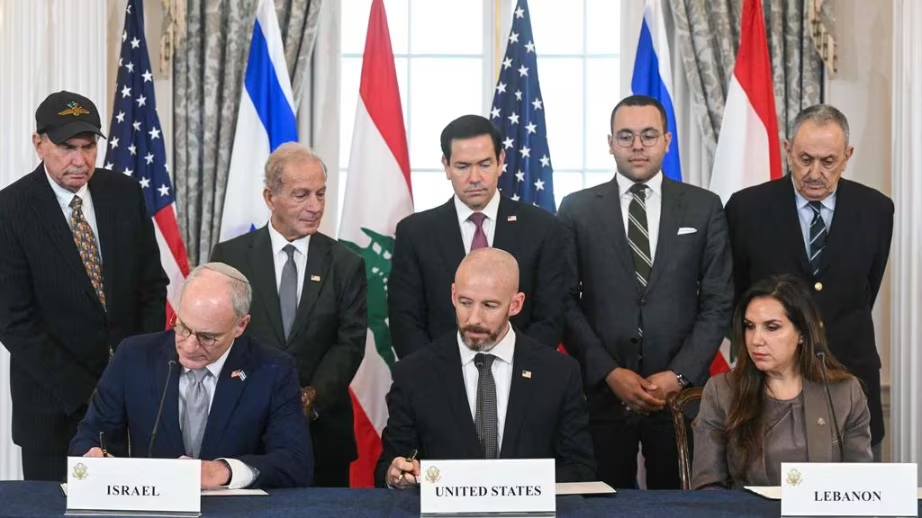
Simultaneously, Israel, Lebanon, and the United States signed a landmark framework agreement in Washington. This agreement outlines a path towards formally ending decades of conflict between the parties.
The deal involves a pilot program handing Lebanese forces control of Israeli-occupied territory and a push to strip Hezbollah of its weapons.
However, despite the carefully staged optimism at the signing ceremony, both Israel and Hezbollah have already identified significant unresolved differences. Furthermore, Israeli forces continue to occupy substantial areas of southern Lebanon.
The agreement is considered an early, uncertain step into deeply hostile territory.
Five rounds of gruelling talks were required to formulate this framework. The agreement includes a pilot programme handing Lebanese forces control of Israeli-occupied territory and a sweeping push to strip Hezbollah of its weapons, a goal that has defeated the world’s most powerful nations for generations.
The framework represents “the beginning of the beginning”, according to Secretary of State Marco Rubio.