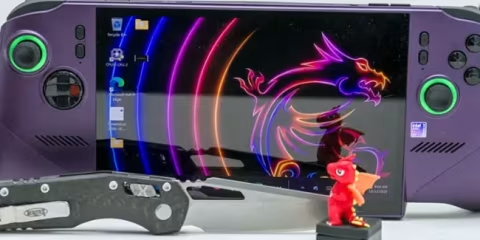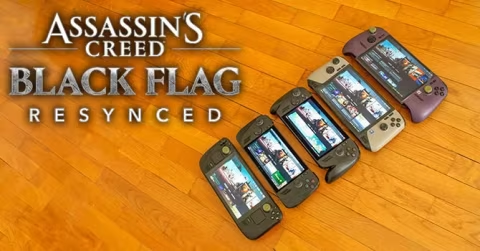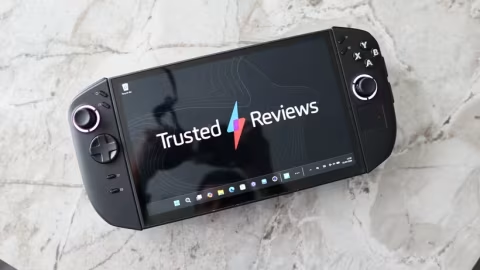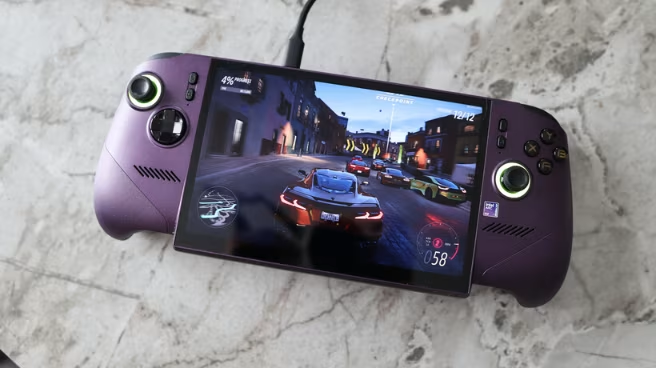
The MSI Claw 8 EX AI+ costs £1,399.99 in the UK and $1,799 in the US. It represents the first handheld console to ship with Intel’s Arc G3 Extreme, a handheld-specific cut of Panther Lake. This integrated GPU features the full 12-core Xe3 Arc B390.
MSI claims that this new chip delivers 42 percent more performance on average compared to the AMD Ryzen Z2 Extreme found in competing devices. The unit’s underlying architecture is significant: the G3 Extreme is a 14-core part, composed of two Performance cores, eight Efficiency cores, and four Low Power Efficiency cores. It operates with 14 threads and a boost clock up to 4.7GHz.
Supporting the processor are 32GB of LPDDR5X memory, running at 8533MT/s, and a 1TB SSD. The device features an 8-inch IPS panel with a 1920×1200 resolution and a 120Hz refresh rate. The battery is an 80Whr cell, matching the capacity of the ROG Ally X.
Dimensions and build details show the package weighs 785g. Despite initial concerns from the reviewer regarding its width—noting it is wider than the Legion Go 2—the reviewer found that extra width contributes to a feeling of stability in the hands. Furthermore, at 785g, it is over 100 grams lighter than the Lenovo handheld.
Peripheral details include two USB4 Type-C ports, a microSD reader, and a 3.5mm jack. The controls adhere to an Xbox layout, featuring diagonally opposed Hall effect thumbsticks and an ABXY pad on the right. This generation of the D-Pad adds a metal dome, providing a clickier, more tactile feel. Textured shoulder buttons and Hall effect triggers allow for good analogue input.
Performance testing yielded strong results. Running Cloud streamed Hitman World of Assassination and Forza Horizon 5 natively, the reviewer reported no issues with the controls, calling the rumble convincing and the dual 2W speakers decent.
The display is the key area of compromise. While punchy and decently detailed, the 8-inch IPS panel lacks the depth and sharpness characteristic of OLED screens, a technology used by the Legion Go 2, the ROG Xbox Ally X20, and the Steam Deck OLED. Measurements confirmed 483.4 nits peak brightness and a 1520:1 contrast ratio.
Gaming benchmarks set the performance standard. When tethered at the full 45W TDP, Cyberpunk 2077 maintained 35.30fps at 1080p on Ultra. Returnal achieved 47fps on Epic. These figures notably surpassed the 27.09fps and 24fps recorded by the Legion Go 2 in the same titles.
Optimal performance can be reached by adjusting game settings or utilizing XeSS 3.0. Turning Auto on for Cyberpunk 2077 boosted the frame rate to 44.05fps at Ultra. Enabling Multi Frame Generation with the 4x setting pushed Cyberpunk to 137.82fps at 1080p rasterised Ultra, while plugged in.
Battery performance shows divergence between use cases. In PCMark 10 Modern Office at 150 nits, the Claw lasted 15 hours and 42 minutes. The Gaming test lasted 2 hours and 31 minutes, suggesting a power bank or 65W brick is necessary for extended play. The brick can refill the 80Whr cell to 50 percent in 45 minutes and to full in roughly 100 minutes.
The operating system is a standard Windows 11 setup. It incorporates Xbox FSE, which presents games from major launchers like Steam and Ubisoft Connect within a single, console-style interface. The unit is designed for ambitious performance, setting itself as a leading choice for handheld gaming, provided the price point is manageable.