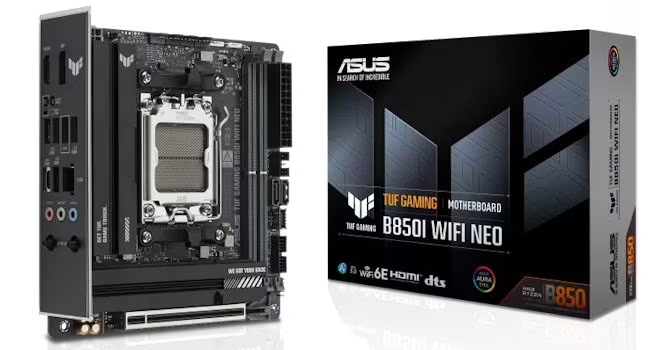
The ASUS TUF Gaming B850I Wi-Fi Neo has entered the market as a Mini-ITX motherboard for the AM5 platform. It represents ASUS’s entry into the compact TUF Gaming segment for AMD’s Ryzen 7000, 8000, and 9000 series processors.
Positioned as a more affordable alternative to the premium ROG Strix B850-I, the board aims to offer core functionality without the flagship price tag. At a retail price of approximately £179.99 in the UK, it undercuts many direct competitors.
The board adheres to the standard 17 x 17 cm Mini-ITX layout. It includes two DDR5 memory slots, supporting a maximum capacity of 128 GB. Overclocking support extends to 9600 MT/s or higher.
Storage capability includes two M.2 slots. One slot supports PCIe Gen 5, ensuring compatibility with the fastest available NVMe drives, while the second slot likely supports PCIe Gen 4. The board features a primary PCIe 5.0 x16 graphics slot, which is reinforced for increased durability, a feature beneficial for compact systems that may see frequent component swapping.
Power delivery appears robust enough to drive AMD’s flagship 16-core CPUs. This capability is key, as maintaining thermal performance is often a limiting factor for Mini-ITX boards.
Connectivity includes 2.5 GbE Ethernet and Wi-Fi 6E. For fast external storage, the board supports USB 3.2 Gen 2×2, offering speeds up to 20 Gbps. The rear I/O layout follows the typical ITX standard, omitting legacy connections.
The core foundation is built around the B850 chipset. This mid-range option supports necessary features like PCIe Gen 5 for graphics and M.2 storage, alongside USB 3.2 Gen 2×2 support, creating a capable foundation for modern gaming systems.
In terms of user experience, the board’s UEFI BIOS is described as