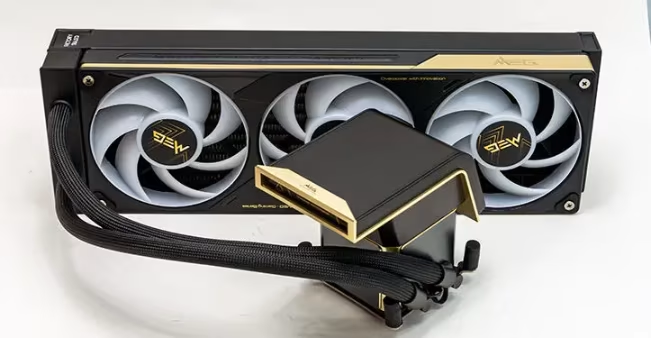
MSI has introduced the MEG CoreLiquid E15 360, an all-in-one liquid cooler designed to reshape the market. This new flagship unit marks a distinct shift for MSI, moving away from the previously dominant Asetek platform.
For co-development, MSI partnered with LuxShare Thermal Technologies. LuxShare is characterized as an enterprise-oriented mega-manufacturer. Its pedigree includes building products for Apple and supplying liquid cooling solutions to both hyperscale and AI datacenters, establishing it as a specialized player in thermal management.
Several features define the CoreLiquid E15 360’s departure from conventional designs. Most attention is drawn to the cooler’s topper. This piece is a 6.67-inch curved AMOLED display, offering 2K resolution and a 110-degree viewing angle. The display topper is magnetic and tool-less, and it also functions as an EZ Cap, hiding the inlet and ports to contribute to a cleaner final build.
Innovation extends to the fan assembly. The fans are delivered as a prepackaged subassembly. This unit provides real-time static pressure monitoring, allowing the system to compensate if blockages are detected. Furthermore, the system utilizes a counter-rotating central fan, a design choice intended to improve laminar airflow and reduce noise.
Wiring management represents a radical simplification. The entire fan block is sealed and incorporates an integrated EZ_Conn header. This single header attaches directly to the radiator, meaning only one USB Type-C cable is necessary to power the fans, ARGB lighting, and water pump. The design is optimized for clean builds, especially when connected to MSI’s custom JAF_1 header.
The radiator itself is 30mm thick, optimized both for performance and ease of use. The total package is framed by a price point of $599 CAD, translating to approximately $399 USD. This valuation places the product firmly within the enthusiast hardware segment.
Industry observers are framing the CoreLiquid E15 360 as a potential paradigm shift for the AIO market. The high level of engineering sophistication has sparked discussion regarding whether the cooler is a simple vanity project or if it truly signals the future direction of the thermal industry.
This review, which comes from an author with over two decades of industry experience, covered the design and features of the unit. However, the content retrieved did not include the full performance testing, thermal data, installation experience, or the reviewer’s final conclusion, focusing instead on the product’s engineering profile.