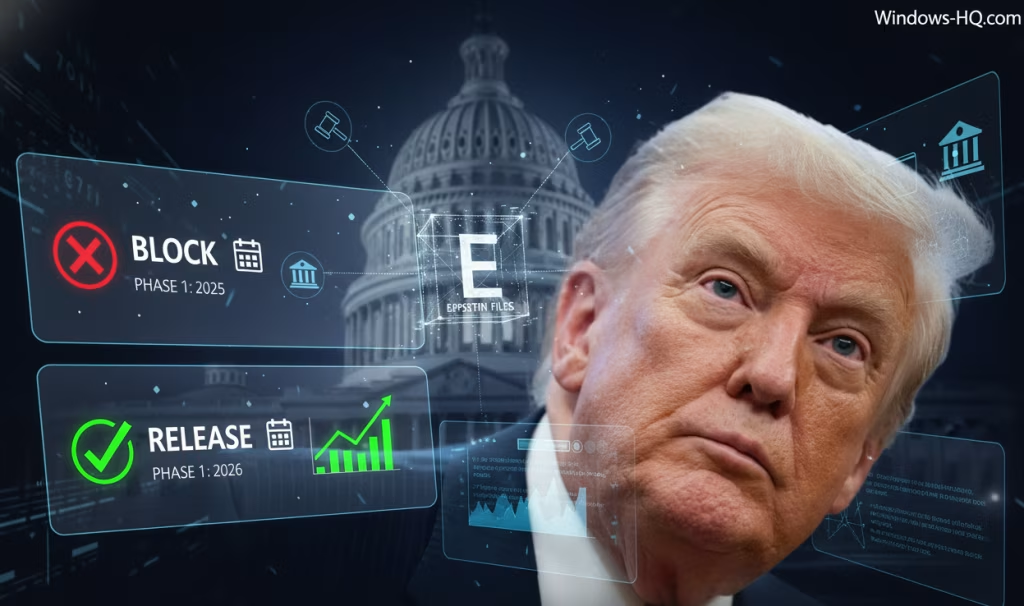
President Donald Trump has unexpectedly reversed his long-held opposition to the release of all government files related to convicted sex offender Jeffrey Epstein, signaling on Monday that he would sign the congressional measure if it reaches his desk. This rare moment of political retreat follows intense internal pressure and the realization that the measure’s momentum in the House could not be halted.
According to people familiar with the situation, the stark political reality—that he risked suffering an overwhelming and embarrassing defeat on the House floor—convinced the President to shift his position late Sunday evening. Advisers conveyed that the bill’s passage was inevitable despite the White House’s private attempts to pressure Republican defectors in the preceding days.
Trump remains personally frustrated by the continuing focus on the Epstein files, viewing the issue as a political “hoax” co-opted by Democrats to distract from his administration’s agenda. The President resents being linked to Epstein, asserting he cut ties with the financier well before any criminal charges were filed.
The issue has ignited a fierce internal Republican rift, most publicly exemplified by the President’s bitter attacks on Rep. Marjorie Taylor Greene, whom he labeled a “traitor” for her staunch support of the House measure just 48 hours before his own reversal. This internal discord helped illustrate the unstoppable bipartisan momentum behind the bill.
In what is now being characterized as a tactical maneuver, Trump and his allies hope that quickly backing the bill will allow Republicans to move past the divisive issue and refocus attention on policy efforts and the economy, which are viewed as more crucial to the upcoming midterm elections. House Speaker Mike Johnson echoed this sentiment, stating, “We’ll just get this done and move it on. There’s nothing to hide.”
As part of this shift, Trump has also sought to reframe the controversy by ordering a Justice Department investigation into the former financier’s ties to prominent Democrats, including former President Bill Clinton and economic adviser Larry Summers. White House spokeswoman Abigail Jackson cited this probe as evidence of Trump’s desire for “transparency.”
However, the initiation of a new Justice Department investigation has sparked fresh questions about whether the department could then cite the open probe as grounds for refusing to turn over some documents to Congress, even if the release measure is signed into law. A White House official has denied that Trump ordered the department to obstruct congressional requests.
The bill, which is expected to pass the House overwhelmingly on Tuesday, now faces an uncertain future in the Senate. With the Senate due to break for a Thanksgiving recess and Majority Leader John Thune uncommitted to fast-tracking the measure, the final vote could be delayed until December or later.
This delay provides a critical window of opportunity that Trump allies hope to exploit, allowing them to shift the public narrative away from the Epstein controversy and back to his administration’s perceived successes, even as the risk of the issue “popping up” later remains.