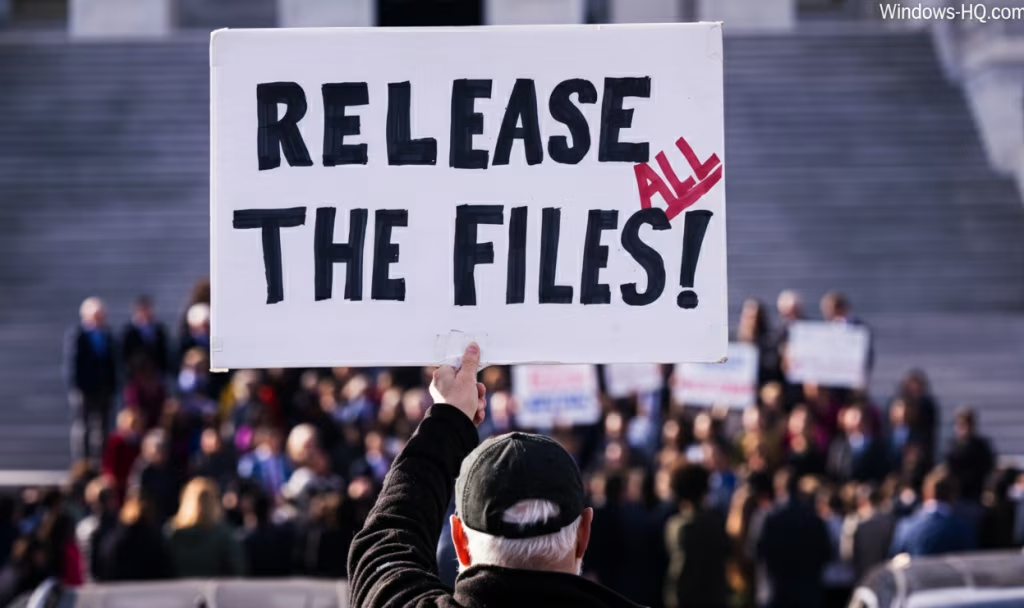
In a remarkable display of near-unanimity, both chambers of the United States Congress on Tuesday overwhelmingly backed the Epstein Files Transparency Act, legislation designed to force the Department of Justice (DOJ) to release all investigative files related to convicted sex offender Jeffrey Epstein.
The measure first passed in the U.S. House of Representatives with a decisive vote of 427-1, easily clearing the two-thirds majority required. The sole dissenting vote came from Rep. Clay Higgins, a Louisiana Republican, who argued on X (formerly Twitter) that the bill was flawed because it “abandons 250 years of criminal justice procedure” and risked “injuring thousands of innocent people” named but not implicated in the files.
Just hours after the House vote, the U.S. Senate passed the bill by “unanimous consent.” This procedural move, introduced by Democratic Minority Leader Chuck Schumer, allowed the legislation to bypass a formal roll-call vote and head directly to the President’s desk without any objections from the 100-member body. Schumer characterized the saga as one of the most damaging political moments of President Trump’s tenure.
The bill’s passage comes after a tense, monthslong battle marked by strong opposition from President Trump and Republican House leadership, including Speaker Mike Johnson, who had worked to keep the measure off the floor. The vote was ultimately forced by a discharge petition effort led by Democratic Rep. Ro Khanna and Republican Rep. Thomas Massie, which successfully secured the required 218 signatures from a bipartisan coalition.
President Trump, who had previously attacked the effort as an “Epstein Hoax” and targeted Republican supporters like Rep. Marjorie Taylor Greene, abruptly reversed his stance on Sunday, urging his party to vote for the bill because “we have nothing to hide.” Despite his authority to release the files himself, the President told reporters on Monday he would sign the congressional measure.
The Epstein Files Transparency Act requires the DOJ to “publish… all unclassified records, documents, communications and investigative materials” related to Epstein within 30 days of enactment. Crucially, the bill permits the DOJ to withhold or redact information only to protect the personal information of victims or to avoid jeopardizing an active federal investigation, but specifically prohibits withholding information due to “embarrassment, reputational harm, or political sensitivity.”
Following the Senate’s swift action, the bipartisan bill is expected to move quickly to the White House for the President’s signature, though it is unclear when the documents will actually be released, as the DOJ’s recently-ordered investigation into Epstein’s ties to certain Democrats could potentially be cited as grounds to withhold some material.