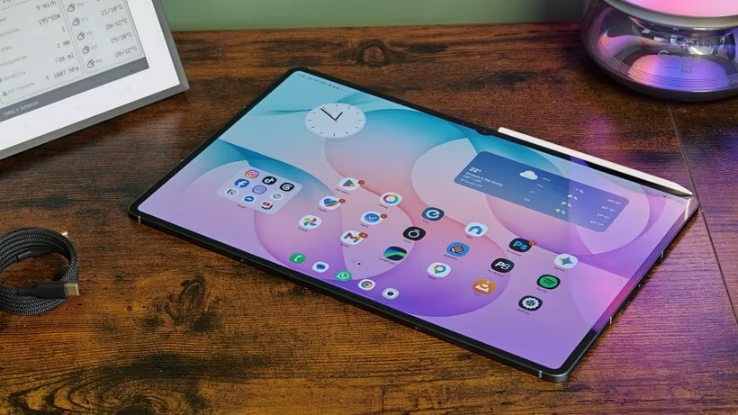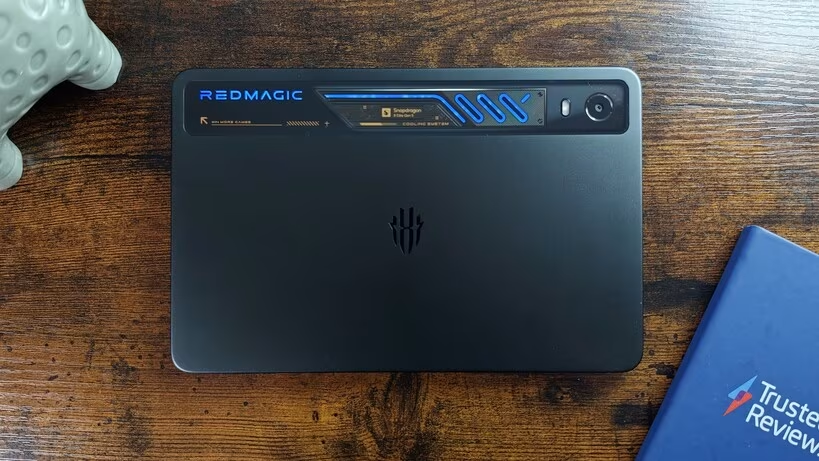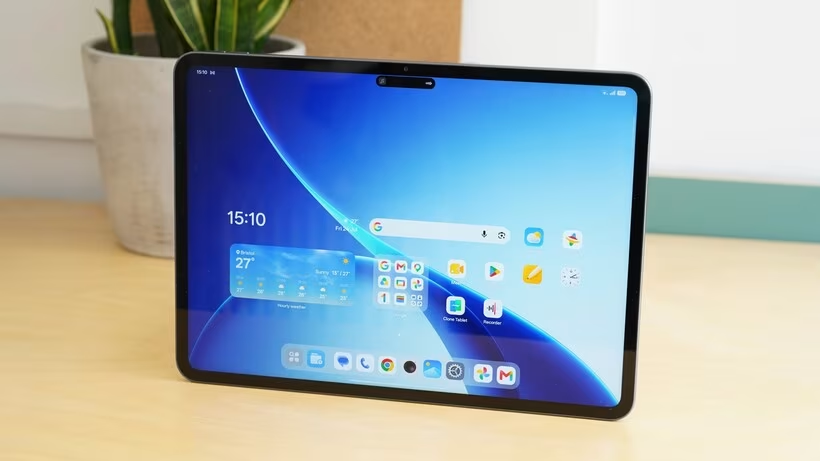
The Oppo Pad 5 is an Android tablet featuring a 12.1-inch screen and comes with two pricing options: £379 for the Wi-Fi model or £459 for the 5G version.
Its main selling point is its large and vibrant display, positioning it within the competitive budget tablet sector. The device is reported to be a rebadged version of the OnePlus Pad Go 2, which launched in late 2025, coinciding with reports that OnePlus is exiting both the European and US markets.
The aesthetic design features familiar flat edges with curved corners and a wide 7:5 screen aspect ratio. Although its frame is metallic, the back panel is constructed from matte plastic, which can be prone to fingerprints and contributes to a less premium feel overall. Despite this use of extensive plastic, the tablet has a considerable weight of 597g, making it significantly heavier than competitors such as the Xiaomi Pad 8, which weighs 485g. Dimensionally, the Oppo Pad 5 measures 266.01 x 192.77 x 6.83mm and is relatively thick for its class.
The display itself is a 12.1-inch LCD panel with a resolution of 2800 x 1980 pixels and supports a 120Hz refresh rate. While not an OLED screen, it is described as surprisingly vibrant and punchy. The display achieves a peak brightness of 900 nits, which is deemed adequate for indoor use, though this falls short of the 3.2K resolution and 144Hz refresh rates offered by some rival models.
Audio quality benefits from quad speakers, providing decent clarity, good separation, and spaciousness, making video playback a strong feature of the tablet.
Performance is handled by a MediaTek Dimensity 7300-Ultra processor paired with 8GB of RAM. While this chipset was considered decent in a £300 smartphone released in early 2025, its performance is less impressive when placed in a £400 tablet launched over a year later. The device struggled during demanding tasks, such as running Wuthering Waves, which required lowering graphical settings for smooth operation.
In benchmarks, the Oppo Pad 5 scored 1005 in Geekbench 6 single-core and 3026 in multi-core. This is notably less than competitors utilizing Snapdragon 8s Gen 4 chips, which achieved scores roughly double these figures. Furthermore, the tablet failed to complete the 3DMark Wild Life Extreme test, a task that its near-identical sibling, the OnePlus Pad Go 2, managed successfully.
For the software experience, the tablet utilizes Oppo’s ColorOS 16.1, based on Android 16. The interface is generally praised for being clean and having minimal bloatware, with only Netflix, WPS Office, and LinkedIn preloaded. While the overall navigation remains fast, the limited hardware capacity can occasionally cause micro-pauses when users switch quickly between multiple open applications.
The camera array consists of an 8MP rear camera and an 8MP front-facing camera. Both cameras produce mediocre quality images; the rear struggles with washed-out colours and overexposure even in good lighting, though it is adequate for document scanning. The front camera works for video calls but requires sufficient light to prevent graininess.
In terms of power, the tablet features a 10,050mAh battery cell that can sustain a full day of mixed-use productivity tasks. During testing, the device consumed only 4% of its charge after playing light games for 30 minutes. However, charging is slow, supporting only 33W SuperVOOC power, and takes 1 hour and 52 minutes to fully recharge from empty. Notably, a charger does not come included in the box.
A significant limitation is the absence of the Oppo Pencil 2R stylus, which, while compatible, was unavailable for purchase in the UK at the time of the review, and older Oppo styluses are incompatible. This puts it at a disadvantage compared to rivals like the Samsung Galaxy Tab S10 Lite or Lenovo IdeaTab Pro, both of which offer guaranteed stylus availability or bundling.
The reviewer concludes that while the Oppo Pad 5 provides an excellent medium for media consumption at a low price point, its overall performance and heavy build mean that other options remain available for similar costs.