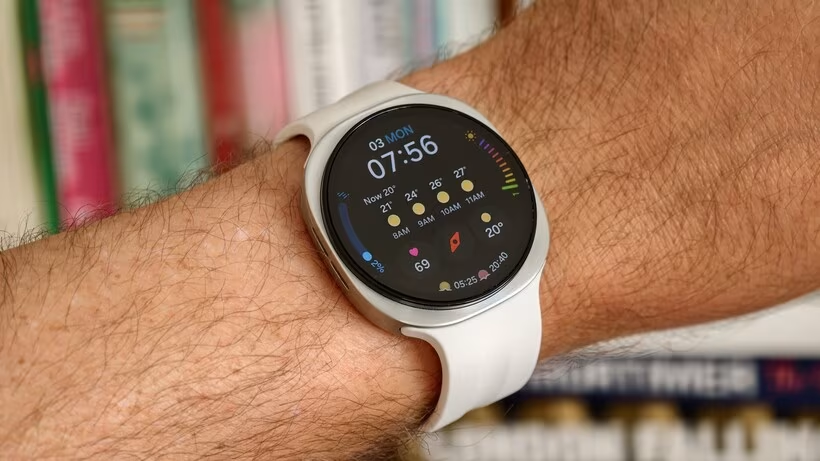
The Samsung Galaxy Watch 9 has been profiled as a smartwatch representing a refinement year rather than a total reinvention, visually similar to the Watch 8 from 2025.
The model is priced at £349 for the reviewed 40mm variant. It features a circular design and a 1.34-inch AMOLED screen with a peak brightness of 3,000 nits, ensuring readability even in direct sunlight.
The watch is available in 40mm and 44mm sizes. The smaller 40mm model weighs only 31.5 grams and features an aluminium casing, supporting IP68 and 5ATM water resistance for swimming in pools or the sea.
Performance is driven by the Qualcomm Snapdragon Wear Elite chipset, which reportedly offers a significant boost over older generations.
The chip facilitates faster app loading compared to the Pixel Watch 4. Furthermore, it enables hands-free Gemini support, allowing users to speak to the watch via wrist movement without pressing buttons or saying “Hey Google”. Samsung’s version of Wear OS is noted for being more intuitive than Google’s own implementation, utilizing a tile-based layout with notifications grouped by app.
Third-party app support is characterized as top-notch, comparable to the Apple Watch, supporting seamless performance from apps such as Spotify, Strava, and Google Maps.
The health and fitness tracking suite is extensive. It incorporates Samsung’s BioActive Sensor, covering multiple metrics including heart health, a temperature sensor, accelerometer, barometer, gyro sensor, geomagnetic sensor, and light sensor.
The available features include heart health monitoring, daily cardio load, vascular load, blood glucose, and antioxidant levels; however, these require manual activation within the Samsung Health app.
Dual-GPS technology was assessed for its accuracy in run route plotting, matching that of the Galaxy Watch Ultra 2. Auto-workout detection successfully captured activities like walks and casual sea swims without required user input.
Sleep tracking is rated highly, with results comparable to dedicated trackers such as the Oura Ring 5 and Whoop MG.
The Samsung Health app presents data via scores for energy, heart health, fitness index, and daily cardio loads, with customizable tiles. Nevertheless, its AI insights are described by the review as weak and lacking clear practical use.
A functional limitation noted is that the watch does not prompt users to enable advanced tracking features, potentially leading buyers to overlook available monitoring capabilities for days or weeks.
Crucially, several key health functions—including ECG, blood pressure monitoring, and sleep apnoea detection—are exclusive to Samsung phones. The device cannot be paired with an iPhone whatsoever.
Battery life is identified as the primary weakness. The 40mm model has a 390mAh battery that lasts only about one day of use. While it could extend from morning until mid-afternoon, it does not sustain two full days and nights.
The charging speed was deemed sluggish, requiring approximately 90 minutes to charge fully from near zero, lagging behind competitors like the Pixel Watch 4.
The larger 44mm model contains a 445mAh battery, providing additional hours. Users can improve longevity by disabling the always-on display, though this reduces overall usability.
The review concludes that the Galaxy Watch 9 offers an excellent experience due to its bright display, fast performance, and superior health tracking.
It is recommended as the top choice for Samsung phone users, who retain access to all features like ECG and sleep apnoea detection. For owners of other Android phones, certain features are inaccessible, suggesting they might find a watch from their specific manufacturer more suitable.
Despite the subpar battery endurance, the combination of dual-GPS performance, the upgraded processor, comprehensive workout options, and comfortable design merits a strong recommendation alongside the Pixel Watch 4 for general Android users.