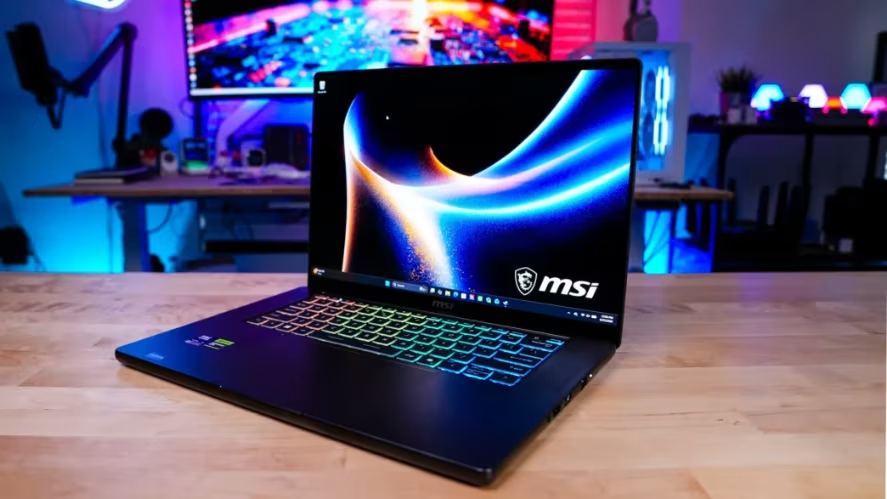
The MSI Stealth 16 AI+ B3WF is positioned as a 16-inch gaming laptop, priced at $2699.99. It features an Intel Core Ultra 9 386H processor and an NVIDIA RTX 5070 laptop GPU, coupled with 32GB of DDR5-5600 memory and a 1TB PCIe Gen4 SSD.
The device comes in Charcoal Black, which is described as having a grey or gunmetal tone. The chassis utilizes an all-aluminum alloy, giving it a premium feel despite its compact dimensions of 13.94 x 9.69 x 0.66-0.79 inches and relatively light weight of 4.39 pounds.
The aesthetic design incorporates a sleek MSI Dragon logo and an ‘S’-shaped accent, intentionally moving away from aggressive gaming aesthetics. Rounded corners further contribute to its overall premium appearance.
Connectivity is robust for a thin gaming machine. Ports include two Thunderbolt 4 Type-C ports that support DisplayPort and Power Delivery 3.0. Additional inputs are a USB 3.2 Gen 2 Type-A port, a charging port on the left side, a 2.5G Ethernet port, full-size HDMI 2.1 (supporting up to 8K at 60Hz or 4K at 120Hz), another USB-A port, and an audio combo jack on the right.
Wireless capabilities include support for Wi-Fi 7 and Bluetooth 6.0.
The display is a notable feature: a 16-inch QHD+ (2560×1600) OLED panel with a refresh rate of 240Hz. It is VESA DisplayHDR True Black 600 certified and features a glossy finish. A simple IR 1080p webcam, complete with a privacy shutter, is located above the display.
The unit houses an 80-key keyboard featuring rounded caps and 4-zone RGB lighting controllable via MSI software. It includes a dedicated Copilot key and a fingerprint reader integrated into the power button. A large, smooth touchpad complements the input array.
Internally, cooling is managed by a tri-path design that vents heat through the bottom, rear, and an area above the keyboard. This system utilizes phase-change thermal compound on both the CPU and GPU. Furthermore, the back panel can be easily removed, granting access to a second M.2 slot and accessible memory for upgrades.
Performance testing demonstrated strong capabilities. When gaming at 1920×1200, frame rates consistently exceeded 100 FPS in modern titles. Even when running at the native 2560×1600 resolution, results remained robust; Cyberpunk 2077 averaged 67.92 FPS on High preset with DLSS set to Balanced.
Storage tests confirmed that both the internal PCIe Gen4 NVMe drive and an external Thunderbolt 4-connected portable SSD performed according to expectations for their hardware class.
The overall review was highly positive, noting that despite its desktop-class performance, the laptop remained impressively thin and moderately light. This allowed it to fit easily into a backpack or sleeve without feeling like a bulky gaming rig.
Other standout features include an unusually comfortable keyboard with more key travel than typical gaming models, and a display praised for its brightness, vibrancy, 240Hz smoothness, near-full DCI-P3 color coverage, and suitability for content creation, all while mitigating noticeable glare issues despite the glossy finish.
Beyond gaming, the hardware is capable of handling video and photo editing using GPU acceleration. It also supports coding comfortably due to its display and keyboard, in addition to handling on-device AI tasks like local model inference and AI-powered noise cancellation for calls.
The primary criticisms cited were the fan noise, which becomes noticeably loud under gaming loads, and the overall steep price point. The reviewer did attribute some of the pricing pressure partly to broader memory market issues.
Despite these drawbacks, the final verdict awarded the laptop a 9 out of 10 score. It is recommended as a strong choice for users who are both gamers and creators and frequently travel, seeking powerful performance without typical bulk.