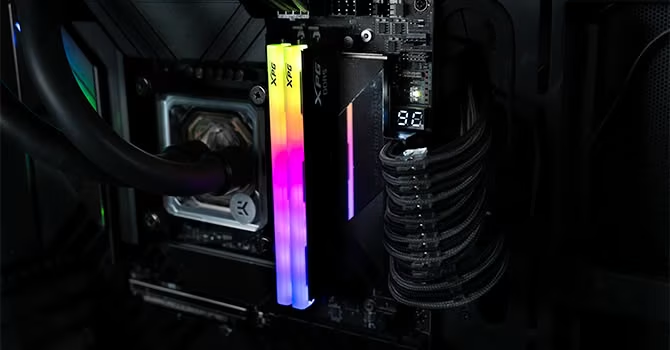
The review examines the XPG Lancer Blade RGB DDR5-5600 16 GB (2×8 GB) memory kit. This module is positioned as a deliberately entry-level, low-profile option rather than a performance flagship.
The kit operates strictly according to the JEDEC 5600 MT/s specification, featuring timings of 46-45-45-90. It supports both XMP and EXPO profiles that mirror these exact JEDEC timings. This design guarantees reliable speed on either Intel or AMD platforms without the compatibility guesswork often associated with higher-frequency kits.
The Lancer series maintains its characteristic low-profile heat spreader, ensuring clearance conflicts are avoided, even when paired with tower air coolers. Additionally, it incorporates XPG’s signature RGB lighting while maintaining the brand’s design language.
However, a key technical point must be noted regarding the module’s construction. Each 8 GB DIMM utilizes only four memory ICs, unlike the eight ICs found in fully populated modules of comparable capacity. This reduced IC count directly results in lower available memory bandwidth compared to fully populated 16 GB or 24 GB DIMMs operating at the same frequency.
The review identifies this factor as the primary reason the kit scores near the bottom of relative performance charts across all tested platforms, even when benchmarked against other full-IC complement 5600 JEDEC kits. Sources confirm that this is not considered a defect but rather a deliberate cost-cutting measure employed by XPG to achieve an aggressive price point.
Consequently, there is essentially no meaningful headroom for overclocking with this specific kit.
Overall, the consensus frames this memory module as highly reasonable for budget-conscious or entry-level builders. It offers guaranteed and hassle-free compatibility across any DDR5 platform, making it suitable for users who do not require chart-topping bandwidth. This is presented as a viable alternative given rising DDR5 pricing and lower-capacity kits remaining among the most budget-friendly choices.
The review specifically advises that enthusiasts seeking maximum frame rates or high bandwidth-sensitive performance workloads should look toward fully populated, higher-performance memory kits instead.