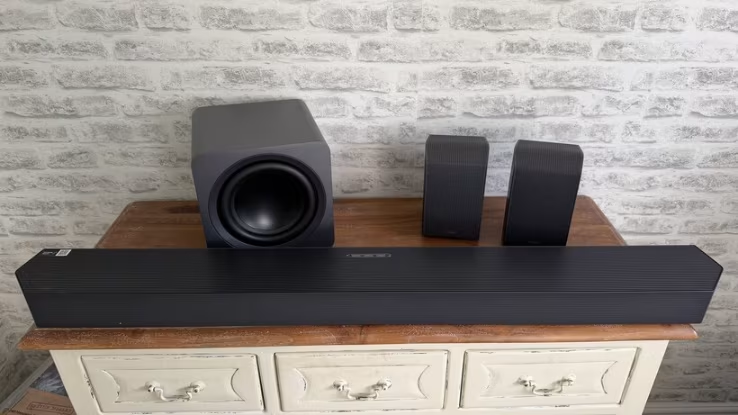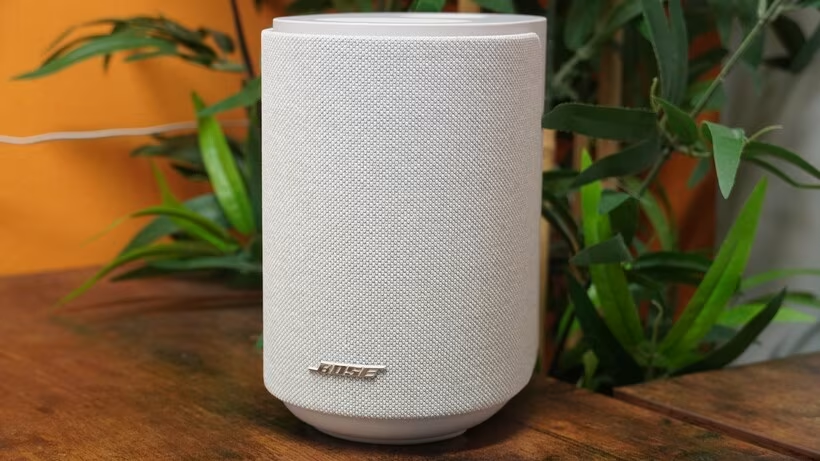
The Bose Lifestyle Ultra Speaker marks the brand’s reentry into home audio following an extended quiet period. It is priced at £299.95/$299/€349.95, with a limited “Driftwood Sand” edition available for £349/$349/€369. The speaker serves as the entry point into a new three-product Lifestyle Collection, which also includes a soundbar and subwoofer.
Positioned by Bose as a versatile all-rounder, the unit can operate in several configurations: standalone, as a stereo pair, as part of a multi-room setup, or functioning as a rear surround channel when paired with the Lifestyle Ultra Soundbar. Overall independent reviews have been strongly positive, praising its sound quality, aesthetic design, and connectivity features, declaring it a genuinely strong comeback for Bose in home audio.
In terms of design, the speaker features an oval shape, distinguishing it from rivals such as HomePod or WiiM Sound due to its rounded appearance. It maintains a compact profile, preventing it from dominating a room. An upward-firing driver is located on top behind a perforated grille. The device also incorporates touch controls for accessing Bluetooth functionality, voice assistant capabilities, and a microphone mute switch for user privacy.
Internally, the unit utilizes a three-driver array—consisting of front-firing and up-firing tweeters plus a woofer. This is combined with Bose’s TrueSpatial processing to enhance soundstage height and width from its single compact enclosure. Additionally, an S-shaped port design was implemented to reduce turbulence that could distort sound and improve bass clarity relative to the speaker’s size.
Connectivity options are extensive, including Wi-Fi support for AirPlay 2, Google Cast, Spotify Connect, Tidal Connect, and Qobuz Connect. Further connections are provided via Bluetooth 5.3 and a 3.5mm AUX input. Notably, it is reported as the first non-Echo device to support Amazon’s Alexa+ assistant.
Regarding multi-room functionality, Bose does not feature a dedicated protocol like those offered by Sonos, WiiM, or BluOS; instead, grouping relies on whichever streaming ecosystem (AirPlay or Google Cast) the listener already utilizes. Some reviewers found this less convenient than a single unified app-based system.
While it lacks native Dolby Atmos or other immersive format support, Bose relies instead on its proprietary spatial processing technology. On sound quality, independent listeners consistently observed that the speaker performs well despite its small size, particularly praising the clarity and detail in vocals, guitars, and midrange/treble content. Bass output was described as present but restrained, though pairing two units for stereo playback notably amplified the perceived scale and overall soundstage.
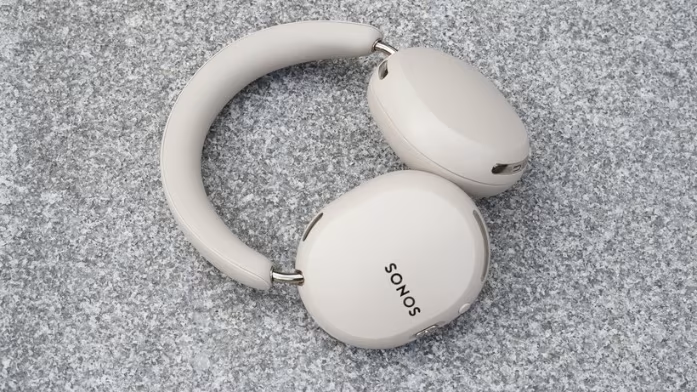
In comparison to competitors, the Bose Lifestyle Ultra is priced higher than the Sonos Era 100, but it generally matches models like the WiiM Sound, Denon Home 200, and Bluesound Pulse Flex. The consensus from independent testing suggests that Bose has developed a robustly sounding and highly connected smart speaker, positioning it as a direct competitor to Sonos, even if some features—such as unified multi-room app experience or deep, built-in bass—are left for the rest of the Lifestyle Collection to address.