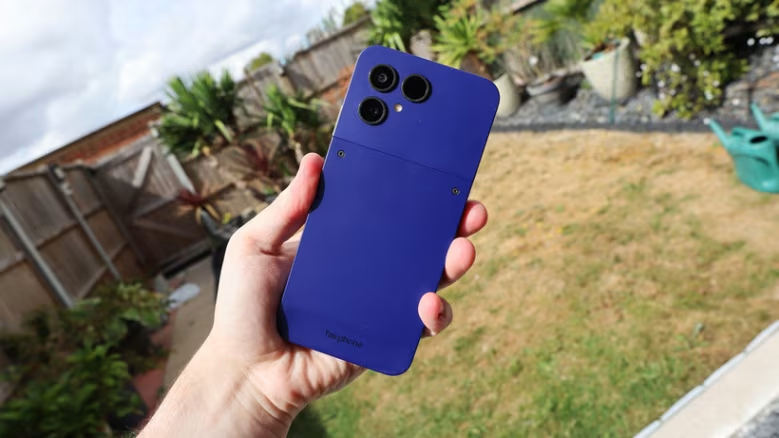
The Fairphone 6 Plus positions itself as a repairability champion, with performance taking a secondary role. Priced at £579/$649.99, the phone features a chunky plastic frame, newly available in Cobalt Blue, Horizon Black, or Forest Green. This particular Cobalt Blue shade references the brand’s involvement in the Fair Cobalt Alliance and its awareness campaign against conflict minerals.
Despite having a matte finish that picks up fingerprints, the device maintains a grippy texture and compact feel. Repairability is central to its design: the rear panel is secured by only two small screws, granting users access to multiple spare parts. These include components for the battery, screen, loudspeaker, camera modules, and the USB-C port.
The visual experience is backed by a 6.31-inch OLED panel. This display features a 120Hz refresh rate and a sharp 1116×2484 resolution. Peak brightness reaches 1400 nits, ensuring clarity for both indoor and outdoor use. The panel utilizes LTPO technology, dynamically adjusting the refresh rate between 10Hz and 120Hz. The fingerprint sensor is placed on the power button, a location the reviewer found more ergonomic than an under-display sensor.
Camera hardware remains identical to the preceding model. The setup features a 50MP main camera paired with a 13MP ultrawide lens. General photographs taken from the main sensor display good dynamic range and punchy colors, although pixel-peeping reveals instances of blurriness. Like most phones in its class, the lack of a dedicated telephoto lens means that zooming beyond a simple 2x or 3x causes details to fall off dramatically. The 32MP selfie camera delivers good color richness.
In terms of raw power, performance is described as mixed. The Snapdragon 7s Gen 4 chip and 12GB of RAM provide zippy performance for navigating social media, streaming video, or general operating system tasks. However, the device struggles in heavier, multi-threaded workloads. Against beefier mid-rangers, such as the Xiaomi 17T or the Honor 600, the 6 Plus slows down. Its general performance places it closer to budget handsets like the Nothing Phone 4b than its true mid-range competitors, despite carrying a higher price tag.
The phone shines in its software experience. It runs a clean, simple Android 16 setup that closely resembles Google’s Pixel launcher, keeping bloatware minimal. A unique My Fairphone app is included, which helps users access device info, phone health status, and guides for spare parts. For users seeking a digital detox, a simple slider activates an ‘Essentials’ UI, limiting the device functionality to basic apps like Maps, Phone, and Camera.
Fairphone has committed to long-term support, offering six years of Android updates and backing this commitment with a five-year warranty through 2033. This dedication to longevity is a standout feature. The 4415mAh battery is smaller than some rivals at this price point, but its key advantage is its easy replaceability. It supports up to 30W of wired fast charging, capable of reaching 50% charge in 33 minutes. There is no support for wireless charging.
Despite the strengths in build quality and software longevity, the Fairphone 6 Plus sacrifices raw power and camera versatility for its core mission of sustainability and repairability.