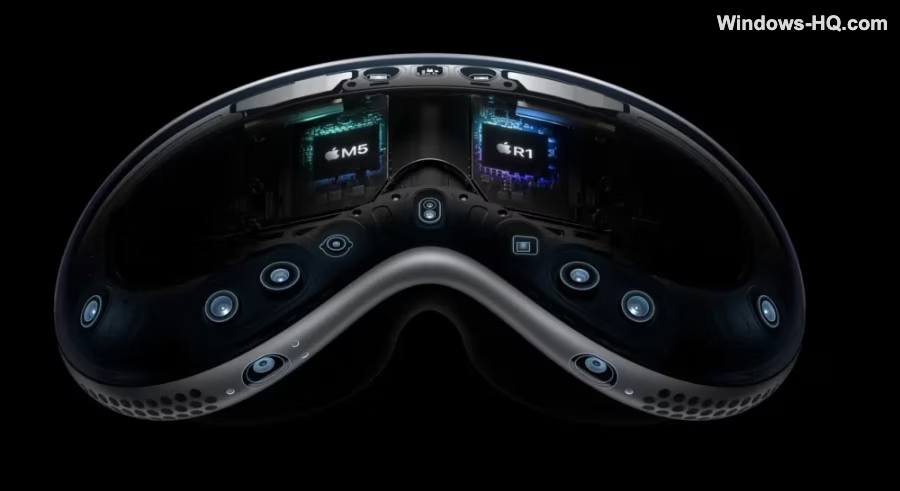
Apple’s initial launch of the Vision Pro in February 2024 was marketed as a pioneering entry into the spatial computing space. However, the device has reportedly faced significant headwinds in its adoption. Sources indicate that the Vision Pro has seen disappointing sales, totaling around 600,000 units. The high price point of $3,499 and the weight of the headset, which is over 1.3 pounds, have been cited as major barriers to widespread consumer use.
Even an updated M5 model, released in October 2025, which offered improved features such as a faster chip, a 120Hz refresh rate, and better weight distribution via a redesigned Dual Knit Band, failed to boost sales or reduce return rates. Furthermore, Apple reportedly experienced an unusually high percentage of returns for the device, surpassing those of other modern Apple products.
Due to these ongoing challenges, reports suggest Apple has shifted its strategic focus away from the immediate future of the Vision Pro. The dedicated Vision Products Group has reportedly been broken up, and its team members have been reassigned. Much of the software team has moved to work on Siri, and the hardware team is reportedly pivoting its attention towards developing smart glasses. This strategic redirection indicates a company-wide effort to explore other areas of augmented and virtual reality development.
While the Vision Pro line is not officially discontinued, and the M5 model is reportedly continuing to sell, Apple’s broader interest in the spatial computing market remains focused on smart glasses. The company is reportedly continuing to invest in these lighter, potentially more affordable AR offerings, which are expected to be several years away from consumer release.
Initially, these smart glasses are anticipated to resemble models like the Ray-Ban Meta smart glasses, featuring AI but lacking an integrated display. The technology developed for the Vision Pro cannot be easily utilized in the smaller, lighter smart glasses because it requires too much power. The development team previously considered a lighter and cheaper ‘Vision Air,’ but this project was reportedly stopped last year.
Future prospects for the Vision Pro could only be revived if Apple successfully develops a substantially cheaper and more comfortable headset. For now, Apple is continuing to learn from the Vision Pro’s market challenges as it charts its course within the evolving wearable technology landscape.