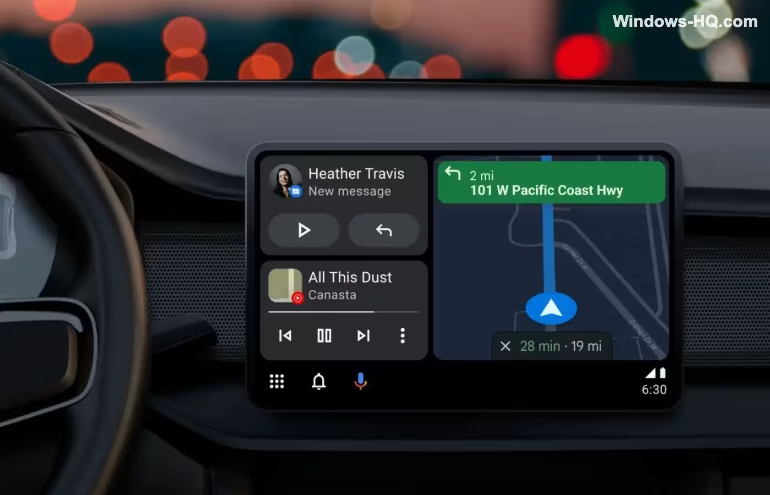
Android Auto 17.7 is the latest stable version of Google’s in-car platform, according to a report dated late September 2026. While all users will eventually receive the update via the Play Store, the rollout is gradual. Those needing immediate access must sideload the APK, although this process carries inherent risks.
The stable release of 17.7 followed updates 17.2 and 17.6, arriving in late September. In contrast, a beta version of Android Auto 17.8 has already been released, indicating that version 17.7 remains the current stable offering.
The rollout pattern for the Android Auto 17 cycle was established when Google announced the platform at Google I/O 2026. That announcement marked the start of the 17 cycle and highlighted deep integration with Gemini AI. Following this initial announcement, Google released the beta version, Android Auto 17.0, to testers worldwide. The stable version subsequently appeared in late June and early July.
Google maintains a deliberate, gradual rollout strategy. This method limits potential damage if a bug is detected, allowing the company to slow or halt the update before it reaches a mass user base. Users find this cautious approach frustrating when they seek the newest features instantly.
Small-scale updates, like 17.7, are characterized by behind-the-scenes improvements rather than visible, major user interface changes. The article notes that user feedback suggests the differences in 17.7 are minimal for users already on a stable 17 version. Google also does not provide detailed change logs for these recent updates, making it difficult for users to determine exactly what has changed.
When Android Auto 17 launched, the headline features included Gemini AI integration across the platform, a new widgets system, and an updated Material 3 Expressive interface redesign. This redesign revamped the platform’s fonts, wallpapers, and animations.
Major functional additions, such as Immersive Navigation, were also introduced. This feature provides a 3D view of the surroundings, including terrain, buildings, and overpasses. Immersive Navigation updates also display the position of traffic lights and stop signs for user awareness. Notably, this system began rolling out to some users in August 2026 through a server-side update, meaning its availability was independent of a specific app version.
For entertainment, Android Auto 17 supports 60 FPS FHD video playback for video apps. Furthermore, select vehicles will eventually be able to view 60-FPS content on their infotainment displays. An associated feature allows video playback to automatically switch to audio-only mode when a car begins moving, ensuring compliance with safety regulations while maintaining audio access.
Despite the promise of these new features, the report cautions that much of the functionality remains unreleased in the stable 17.7 version. The rollout of these advanced features—including Immersive Navigation, the improved video playback, and the auto-switching audio feature—will happen in stages over the coming months. Functionality release is gradual and server-side, meaning the user experience varies depending on when Google activates each feature for individual users.