The Endorfy Viro Infra Wireless enters the market as a less expensive alternative to the Viro Wireless. It launches at €60, marking a saving of €27 compared to the pricier sibling, which sells for €87.
TechPowerUp’s review of the headset titled “Win Some, Lose Some” captures the product’s nature: the Infra incorporates several features the Viro Wireless lacks, but it also sacrifices some of the original model’s distinguishing features.
The most immediate physical difference is weight. At 280 g, the Infra is substantially lighter than the 345 g Viro Wireless. This low weight has been highlighted by Polish outlet ITHardware as a major advantage, enabling comfortable multi-hour wear.
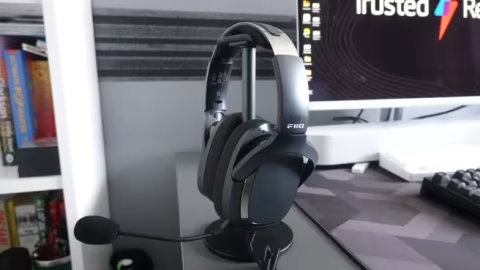
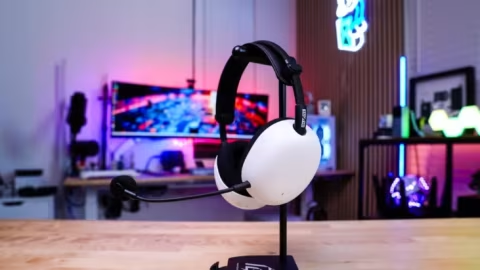
Structurally, the headset features a metal headband and durable yokes. The earcups use matte hard-plastic that resists fingerprints and scratches, paired with breathable fabric earpads and a headband designed to reduce sweating in warm conditions.
Technically, the closed-back design utilizes 50 mm dynamic drivers. These drivers feature 16 Ω impedance and a rated frequency response of 20–20,000 Hz. Its connectivity options are expansive, offering four distinct modes. These include 2.4 GHz wireless via a USB-C dongle that contains a USB-A adapter, Bluetooth 5.1 with SBC, wired USB-C audio, and 3.5 mm analogue via a supplied cable.
A key upgrade over the Viro Wireless is the wired USB-C mode. This capability allows simultaneous audio playback and charging. The provided dongle is also noted to be more compact than the one supplied with the Viro Wireless.
Platform compatibility is broad, supporting PC, Mac, PlayStation 4 and 5, and Xbox through the controller’s 3.5 mm jack. Android and iOS devices are also supported. However, the Infra cannot match the Viro Wireless’s hybrid 2.4 GHz plus Bluetooth mode, which allows users to take calls without exiting a game.
Audio tuning favors entertainment over neutrality. ITHardware describes the sound as pleasant and bass-forward, suggesting suitability for gaming. The headset includes two direct hardware sound profiles: Gaming Mode and Vocal Mode, which users can cycle without needing software. Buyers should be aware that the midrange is slightly recessed, which can result in some loss of detail when listening to music. Volume control is handled by buttons instead of a potentiometer, giving it a clunky and imprecise feel.
Despite the compromises, the detachable microphone includes a foam pop filter. DVHARDWARE notes that the microphone itself is an improvement over the Viro Wireless, although the Infra lacks the Viro Wireless’s ENC noise cancellation for the microphone. Furthermore, there is no companion software available, meaning no access to EQ, virtual surround, or firmware-level customization.
Battery life represents the clearest sacrifice compared to the Viro Wireless. The 750 mAh battery is rated for up to 24 hours over 2.4 GHz and up to 40 hours over Bluetooth at 50% volume. A full recharge takes approximately 2.5 hours. While TechPowerUp describes 24 hours as “perfectly fine for a €60 headset,” it calls this a “far cry” from the Viro Wireless’s endurance metrics.
TechPowerUp and ITHardware both give the Infra a mixed but value-oriented verdict. While the headset gains wired USB audio, a lighter construction, and an improved microphone, it gives up marathon battery life, hybrid connectivity, and dedicated software management.
ITHardware awarded the Viro Infra Wireless 8/10, praising its comfort, versatility, and gaming audio. They criticized the average battery life, recessed mids, and lack of dedicated software support.
The Viro Infra Wireless is positioned best for gamers needing a comfortable, multi-platform wireless headset on a strict budget, provided they accept shorter endurance and forgo an EQ or advanced microphone processing.