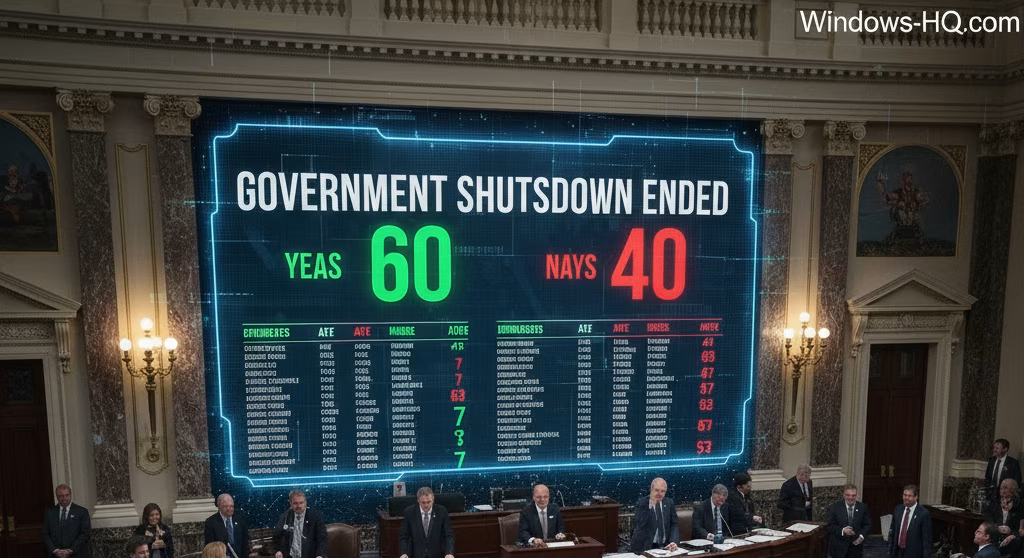
The U.S. Senate approved a funding package on Monday that is expected to bring the nation’s longest government shutdown to an end. The bill passed with a 60-40 tally, thanks to a coalition of seven Democrats and one independent senator who joined all Republicans in supporting the measure.
This vote effectively broke the 40-day stalemate between the parties. However, the compromise deal immediately incited fierce backlash within the Democratic caucus because it failed to secure a key demand: the direct extension of expiring tax credits for healthcare premiums under the Affordable Care Act (ACA).
The legislation will extend funding for most federal agencies through January 2026 at current levels. It also includes three year-long funding provisions for essential programs within the Department of Veterans Affairs, the USDA/FDA, and legislative branch operations.
Crucially, the continuing resolution includes language to stop further mass federal firings and reverse dismissals that occurred during the shutdown. It also guarantees back pay for federal workers who have spent weeks without their regular paychecks, addressing a major humanitarian and operational crisis.
President Donald Trump has already expressed his support for the deal, stating he would abide by its terms. Speaker Mike Johnson has urged the House of Representatives to return from recess for a vote, ensuring a swift delivery of the bill to the President’s desk for signing.
The primary point of contention was the ACA tax credits, which are scheduled to expire at the end of the year. Without an extension, millions of Americans relying on the ACA marketplace could face sharp increases in their healthcare premiums or lose their coverage entirely.
The eight senators from the Democratic caucus who broke ranks to support the deal are now facing intense criticism from party leaders and activists who mobilized behind the shutdown strategy, arguing that the compromise represented a surrender without winning the desired concessions.
Defending the move, Senator Jeanne Shaheen (D-NH) stated that the compromise “was the only deal on the table” and offered the “best chance to reopen the government.” Democrats are relying on a promise from Senate Majority Leader John Thune to hold a separate Senate vote on the healthcare subsidies later this year.
However, the path forward for the healthcare subsidies remains highly uncertain. Speaker Johnson made no guarantee of a vote in the Republican-controlled House, stating only that the chamber would follow a “deliberative process” and refusing to promise specific dates or outcomes.
The end of the shutdown gridlock comes as hundreds of thousands of federal workers missed paychecks, critical services like air traffic control faced unprecedented strain, and millions of Americans risked losing food assistance, highlighting the severe national impact of the prolonged political deadlock.