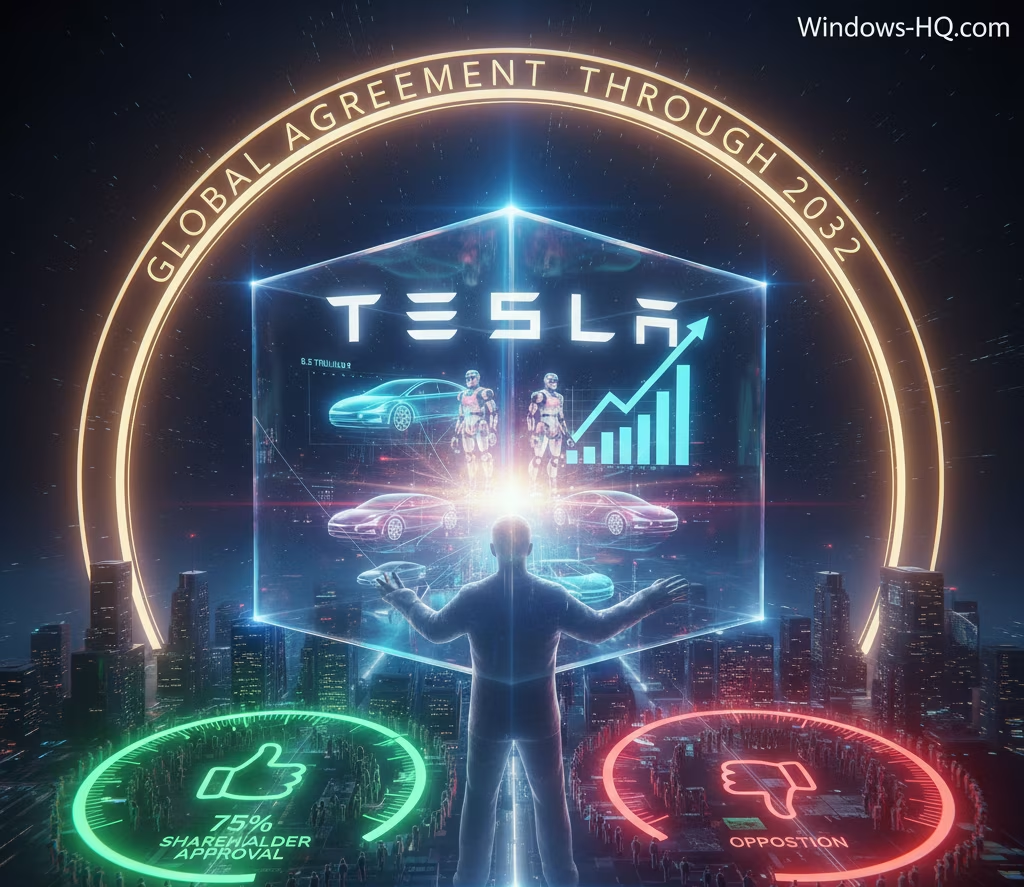
Tesla shareholders delivered a significant victory to Elon Musk on Thursday by voting to approve his massive new compensation proposal, potentially the largest corporate payout in history. The vote, which garnered support from over 75 percent of shares cast, is aimed at securing the controversial CEO’s continued leadership during a period of major strategic and market uncertainty for the automaker.
The enormous pay package, initially put forth by the board last September, is designed to award Musk with more than 423 million additional shares, which would boost his stake in the company from the current 15 percent to approximately 25 percent. The final, official tally is expected to be filed with the Securities and Exchange Commission within a few days.
To vest the full, colossal compensation—which could be worth up to $1 trillion if all metrics are met—Musk must achieve a highly ambitious series of operational and financial milestones over the next decade.
These unprecedented goals include increasing Tesla’s market capitalization from its current $1.5 trillion to an eye-watering $8.5 trillion. The operational milestones are focused on Musk’s future-facing vision for the company: putting into service 1 million robotaxis, selling 12 million more cars, securing 10 million Full Self-Driving subscriptions, and delivering 1 million humanoid robots.
In the lead-up to the vote, Tesla’s board aggressively warned shareholders that a failure to approve the payout would run the risk of losing Musk to his other ventures. The board has heavily pushed the narrative that Musk’s “steady hand” is essential for Tesla to achieve its stated destiny as a leader in AI and robotics.
The vote occurred against a backdrop of ongoing legal and operational challenges. Musk’s previous compensation package, valued at over $50 billion, was invalidated by a Delaware court last year, with the judge citing a lack of sufficient independence between the board and the CEO. While shareholders had twice approved that prior deal, the court’s ruling remains under appeal.
In direct response to that legal setback, shareholders also approved a separate proposal to officially move Tesla’s legal home from Delaware to Texas, a move engineered by Musk to secure a more favorable legal environment.
Despite the successful vote, the pay package faced significant opposition from major institutional investors. These opponents included Norges Bank Investment Management (which manages Norway’s sovereign wealth fund), various public pension funds like the American Federation of Teachers, and major proxy advisory firms Institutional Shareholder Services and Glass Lewis.
In reality, Tesla’s market position is more precarious than the board’s rhetoric suggests. The company faces stiff competition, particularly from Chinese automakers, which has already begun to shrink its global market share. Recent sales have also been negatively impacted by a nationwide protest movement spurred by Musk’s political endorsements and his work at a government efficiency department.
Furthermore, the viability of Musk achieving his audacious technological milestones is under scrutiny. Tesla’s first robotaxi service in Austin, Texas, rolled out earlier this year but fell short of his past predictions, still requiring safety monitors. The company’s latest product, the Cybertruck, has also been widely characterized as a consumer flop, adding pressure to Musk’s ability to deliver on the promised technological leaps required for the full payout.