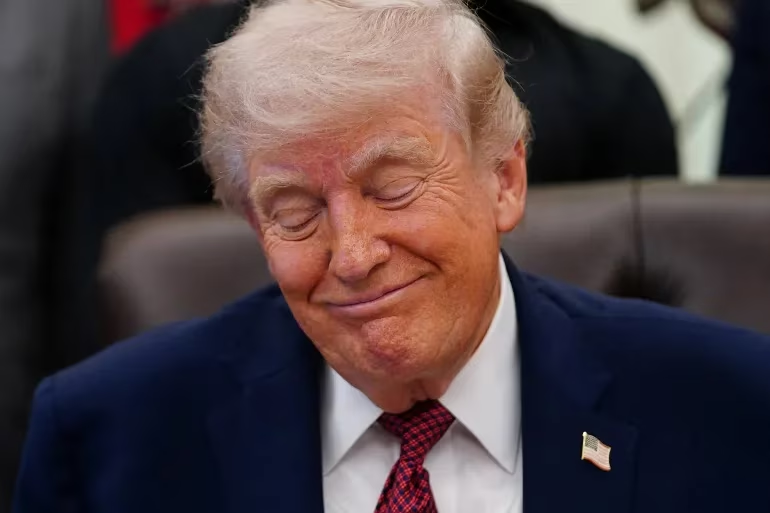
US President Donald Trump announced an extension to the ceasefire with Iran. Trump stated that the US military would hold off planned attacks until Iranian leaders submitted a unified proposal to conclude the war. The decision to extend the truce came, according to Trump, at the request of Pakistani mediators.
Trump’s statement confirmed that the blockade would continue. He declared that the US military would remain ready and able, extending the ceasefire until the proposal was submitted and discussions concluded. This extension lacked a specific deadline, suggesting it was open-ended from the US perspective.
The move represented an abrupt shift from Trump’s earlier comments, when he had opposed lengthening the truce and warned Iran that the US was set to launch a major attack on its infrastructure. This reversal occurred after Iranian officials condemned the US naval blockade on their ports, which had cast doubt on Iran’s participation in scheduled talks for Wednesday.
Pakistani Prime Minister Shehbaz Sharif praised Trump for extending the truce, stating that Islamabad would continue to push for a negotiated settlement. Sharif expressed hope that both sides would maintain the ceasefire and conclude a comprehensive ‘Peace Deal’ during the planned second round of talks in Islamabad.
Despite the extension, the naval siege persists. Iran’s Minister of Foreign Affairs, Abbas Araghchi, previously characterized the blockading of Iranian ports as both an ‘act of war’ and a violation of the existing ceasefire. Araghchi asserted that Iran was capable of defending its interests and resisting bullying.
In his announcement, Trump attributed the delay in negotiations to alleged internal disagreements within the Iranian leadership. He claimed that based on a request from Pakistani officials, the US was holding its attack until Iran’s leaders developed a unified proposal. However, an Al Jazeera correspondent reported that Trump’s assertion regarding fractures in the Iranian leadership was likely a ‘misconception,’ noting that Iran maintained a unified leadership structure.
The conflict’s origins trace back to strikes launched by the US and Israel on February 28. While multiple top Iranian officials, including Supreme Leader Ali Khamenei, were killed, the governing system in Tehran showed no major defections, with the IRGC leading the war effort. Khamenei was reportedly replaced by his son, Mojtaba, who had not made a public appearance since his selection.
Negotiation efforts, which began with an initial two-week ceasefire between the US and Iran on April 8, have faced recurring tensions. Disagreements over the inclusion of Lebanon in the truce and control of the Strait of Hormuz complicated the process. For a resolution, the US seeks a complete shutdown of Iran’s nuclear program, alongside limits on its missile production and regional support for allies like Hezbollah and Hamas. In contrast, Tehran insists on its right to domestically enrich uranium as part of a civilian program and refuses to concede its military capabilities or regional alliances. Furthermore, Iran maintains that the US would not be allowed to extract uranium from the country, despite Trump claiming otherwise.