Iran has stated it has no plans for a second round of talks with the United States. Foreign ministry spokesperson Esmail Baghaei told Al Jazeera that Tehran believes Washington has violated the existing agreement, making new negotiations unnecessary. Baghaei also emphasized that Iran will continue defending its national interests and will not forget US attacks on Iran during previous diplomatic talks.
According to the spokesperson, US proposals have been deemed “unserious,” and its demands “unrealistic,” adding that Tehran does not accept ultimatums.
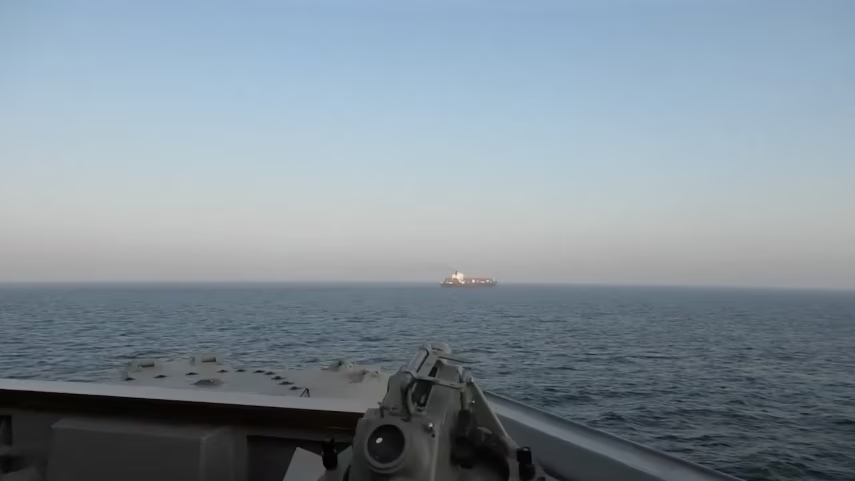
Tensions remain high, marked by recent military actions. The US military was involved in the forcible interception of a Chinese-flagged cargo ship carrying goods toward Iran’s Bandar Abbas port. Iran’s military accused the US of “armed piracy” over the incident, stating that the US fired on the vessel, disabling its engines, following a six-hour standoff. China’s foreign ministry also expressed concern regarding the seizure of the Iranian-flagged ship by US forces.
Meanwhile, the strait of Hormuz and Iranian ports remain subjects of dispute. Iran had previously closed the strait on March 4th following US-Israeli airstrikes. Although Iran declared the strait open after a 10-day ceasefire deal between Israel and Lebanon, Donald Trump maintained that the naval blockade of Iranian ports would continue until a deal was reached.
These tensions are complicated by an ongoing internet blackout in Iran, which has entered its 52nd day. Monitoring groups report that the general public remains cut off from international networks, severely hindering communication and making mobilization more difficult. While a select number of officials retain internet access, the general population is largely isolated.
The diplomatic process that aimed to resolve these issues has reportedly stalled. Prior to this period, Iran’s key demands for talks included a ceasefire in Lebanon, an end to the US blockade on Iranian ports, and progress on Iranian asset releases. This was viewed by Iran and mediators in Pakistan as a traditional, reciprocal diplomatic process.
However, during recent diplomatic exchanges, Donald Trump gave the impression that Iran had surrendered. While Iran was expected to partially lift restrictions on the strait of Hormuz following a ceasefire in Lebanon, Trump kept the blockade on Iranian ports in place. He also claimed Iran had completely lifted restrictions on tanker traffic and that Iran had agreed to hand over its stockpile of highly enriched uranium to the US for safekeeping, giving the impression of a comprehensive surrender.