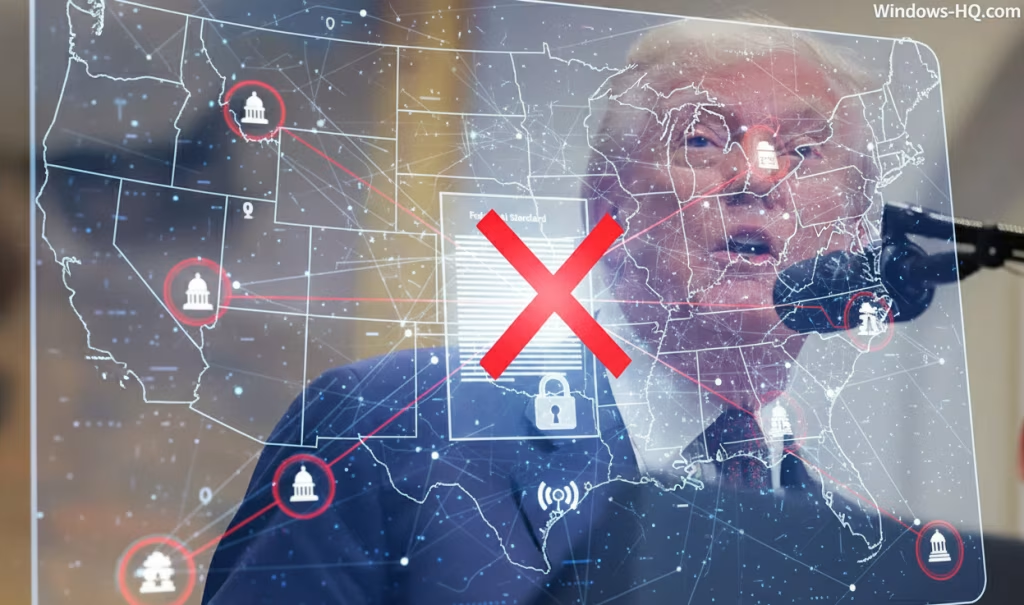
The Trump administration has paused the advancement of a draft executive order that aimed to aggressively challenge state-level AI regulations. The order, which was reported on earlier this week, would have represented a significant escalation in the federal government’s efforts to establish a singular national policy over artificial intelligence.
The development follows President Trump’s recent public push for “one Federal Standard instead of a patchwork of 50 State Regulatory Regimes” for the AI industry, a position he has consistently advocated. The administration and tech industry figures argue that disparate state laws could stifle innovation and hinder American competitiveness against rivals like China.
The draft executive order was particularly controversial as it reportedly included the establishment of an AI Litigation Task Force under the Attorney General. The sole mission of this task force would be to challenge state AI laws in court, potentially arguing they unconstitutionally regulate interstate commerce or are otherwise unlawful.
Furthermore, the draft order directed the Department of Commerce to review state AI laws and issue guidelines that could threaten to withhold federal broadband funding from states with regulations deemed “onerous” or inconsistent with the administration’s goals. This tactic drew immediate and bipartisan criticism from state lawmakers and attorneys general who argued it would undermine their ability to protect residents from AI-related harms like discrimination and deepfakes.
The move to challenge state authority comes after an earlier legislative attempt failed. A proposal to include a 10-year moratorium on state AI regulation in Trump’s “Big Beautiful Bill” was overwhelmingly removed by the Senate in a 99-1 vote, indicating broad congressional opposition to blocking state action without a corresponding federal framework.
Industry figures have also been divided on the issue. While many in Silicon Valley advocate for federal preemption to reduce compliance burdens, some major companies, such as Anthropic, have broken ranks to support state AI safety bills, including California’s SB 53, signaling a deep ideological rift in the burgeoning AI landscape.
With the draft executive order now reportedly put on hold, the immediate future of AI regulation remains fragmented. The pause suggests the administration is likely weighing the potential for massive political and legal opposition, including from Republicans who have criticized the notion of federal overreach into state regulatory authority, leaving the contentious debate over national AI standards unsettled for now.
URL Sources:
- https://www.thehindu.com/sci-tech/technology/white-house-pauses-executive-order-that-would-seek-to-preempt-state-laws-on-ai/article70310349.ece
- https://apnews.com/article/trump-executive-order-artificial-intelligence-ai-regulation-646de06404ba543dd7244d225fb27250
- https://www.washingtonpost.com/technology/2025/11/19/trump-order-ai-sue-states/
- https://www.techpolicy.press/white-house-circulates-draft-executive-order-targeting-state-ai-laws/
- https://www.dlapiper.com/insights/publications/2025/01/white-house-ai-executive-order-sets-its-sights-on-free-market-innovation