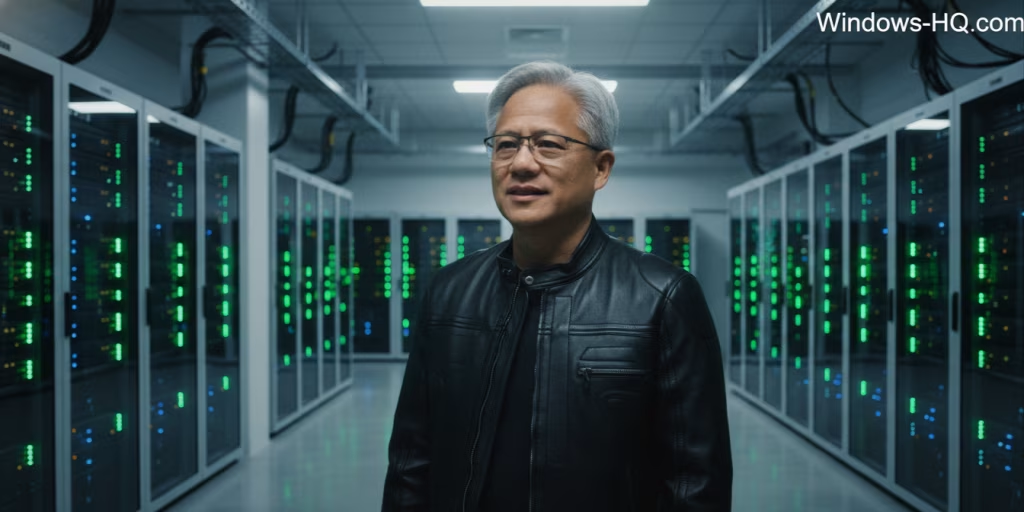
Nvidia CEO Jensen Huang has strongly rejected the prevailing market suggestion that the global artificial intelligence sector is currently operating within an economic bubble. Huang, speaking during the company’s recent earnings call, asserted that the substantial investment being directed towards AI infrastructure represents fundamental, long-term changes in computing rather than speculative hype.
He provided a three-part rationale explaining why the demand for specialized computing systems, particularly GPUs, is sustainable and driven by structural shifts across industries.
The first dynamic highlighted is the rapid adoption of GPUs by data-intensive sectors such as ad recommendations, search systems, data processing, and engineering. Huang argued that traditional CPU-based infrastructure simply cannot meet the massive computational demands imposed by modern AI workloads, necessitating a permanent shift to high-performance GPU systems.
Secondly, Huang emphasized that AI is moving beyond merely being integrated into existing applications; it is enabling entirely new software capabilities. He pointed specifically to the emergence of “agentic AI”—systems capable of reasoning autonomously, planning complex tasks, and operating with minimal human input. These sophisticated developments require significantly greater computing resources, reinforcing the need for Nvidia’s advanced chips.
The third core dynamic contributing to infrastructure growth is the inevitable scaling required across enterprise systems. Huang believes the AI boom, combined with expanding datasets and powerful new AI tools, will substantially increase traffic, demanding greater inspection and monitoring capabilities and further driving the need for new infrastructure.
Nvidia’s confidence is underscored by its recent financial performance, which saw both revenue and profits surpass analysts’ expectations, along with guidance that exceeded forecasts. Huang recently projected that the total AI chip sales market could reach $500 billion by 2025 and 2026.
Despite investor concerns about the company’s reliance on a small number of hyperscalers, Huang stressed that even these cloud providers are boosting their own revenue streams through the deployment of AI-enhanced recommendation engines, demonstrating the immediate, tangible value derived from Nvidia chips.
CFO Colette Kress confirmed the company remains on track to meet revenue targets, highlighting the robust, enduring demand for AI-driven systems globally. The company also noted its current order backlog does not yet fully reflect recently announced agreements with organizations like Anthropic or the expanded deal with Saudi Arabia.
Huang concluded by asserting that what may appear to be high capital expenditure today should be viewed by investors and operators as foundational, structural investment necessary for a computing transformation, signaling long-term growth potential well beyond short-term market fluctuations. “From our vantage point we see something very different,” Huang stated, dismissing the bubble talk.
Sources
- TechRadar (https://www.techradar.com/pro/we-see-something-very-different-nvidia-ceo-jensen-huang-dismisses-ai-bubble-talk-and-i-guess-he-should-know)
- The Economic Times (https://m.economictimes.com/news/new-updates/nvidia-ceo-jensen-huang-breaks-silence-on-biggest-fear-surrounding-ai-bubble/articleshow/125458939.cms)
- NASDAQ (https://www.nasdaq.com/articles/nvidia-ceo-jensen-huang-downplays-ai-bubble-concerns-very-different)
- PC Gamer (https://www.pcgamer.com/software/ai/ex-intel-ceo-pat-gelsinger-says-of-course-were-in-an-ai-bubble-but-it-wont-end-for-several-years/)
- Financial Express (https://www.financialexpress.com/business/investing-abroad-is-there-an-ai-bubble-jensen-huangs-3-minute-rejection-after-nvidia-profit-jumps-65-4050431/)