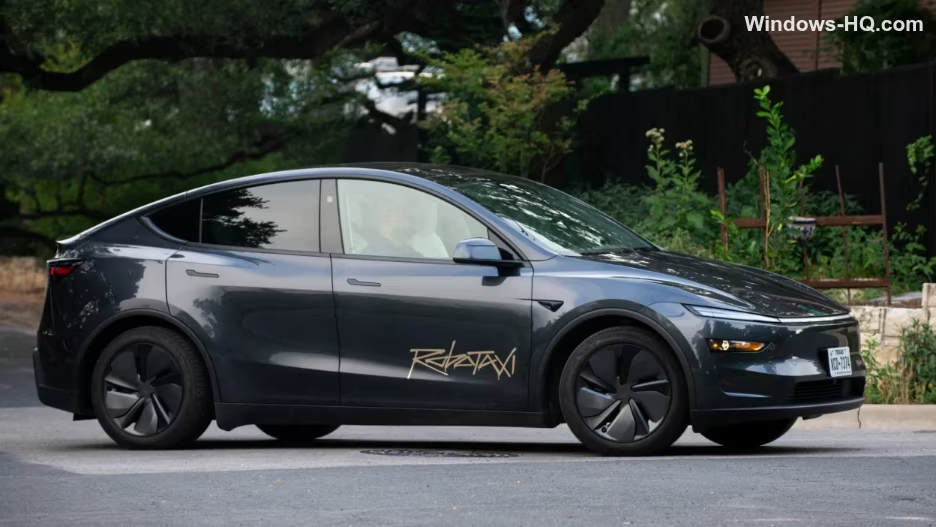
Tesla has expanded its robotaxi service, now rolling out in Dallas and Houston, according to a social media post from the company. The post, which stated, “Robotaxi is now rolling out in Dallas & Houston 🤠,” included a 14-second video showing Tesla vehicles operating without human monitors or drivers in the front seat.
With this expansion, Tesla now offers robotaxi service in three Texas cities, having first launched in Austin last year. The Austin service began offering rides without safety drivers in January 2026. A February filing by Tesla indicated that its Austin robotaxis have been involved in 14 crashes since their launch. The company initially deployed a small group of self-driving taxis in Austin with human safety monitors and other restrictions, subsequently widening the service area and beginning to remove the monitors.
The deployment in Dallas and Houston appears to be starting on a limited scale. Crowdsourced data from the Robotaxi Tracker website registered only a single vehicle in each of these new cities, contrasting with 46 active vehicles logged in Austin.
Reuters reported on April 18 that Tesla is rolling out its robotaxis, marking a further expansion in the United States. Tesla’s official robotaxi account on X announced the launch, posting two videos featuring its Model Y SUVs running driverless in Dallas and Houston. The company also posted two map images outlining service boundaries but did not disclose details such as fleet size or pricing. CEO Elon Musk reposted the announcement, encouraging users to “Try Tesla Robotaxi in Dallas & Houston!”
Tesla’s move aligns with a resurgence in the robotaxi business, with companies like Alphabet’s Waymo and Amazon’s Zoox accelerating their own expansion efforts. Expanding the robotaxi service and achieving wider adoption of its full self-driving (FSD) software, a version of which underpins the technology, are central to Tesla’s growth strategy. Musk has repositioned the company’s focus towards artificial intelligence and robotics, moving away from solely electric vehicles, with a significant portion of its $1.3 trillion valuation hinging on this strategic shift.
Separately, Tesla also offers a more limited ride service with human drivers in the San Francisco Bay Area, which began last year. While Musk had previously promised a rapid expansion of robotaxi service across the U.S., earlier predictions of wide operations in multiple U.S. metro areas by the end of 2025 were not realized.