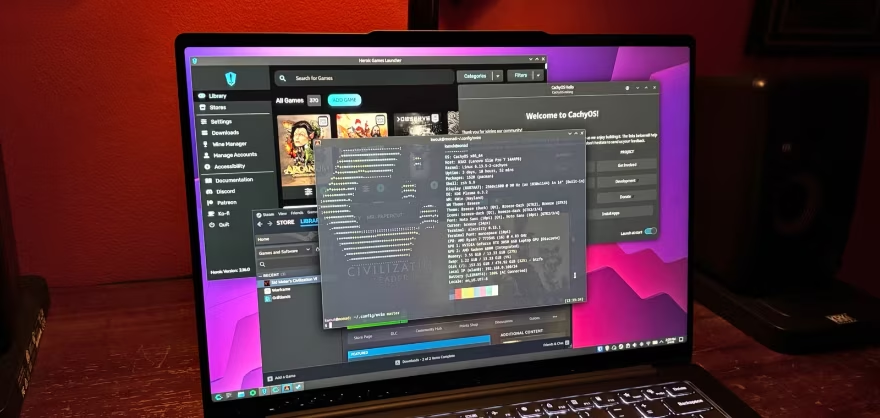
CachyOS has released a build of Linux 7.0, incorporating several performance tweaks and new features. This release follows the mainline Linux 7.0 kernel, which was released by Linus after initial preview builds, despite seeming to have more bug fixes than usual. Linus decided not to delay the release, believing the changes were minor, and suggested the increased number of fixes might be due to the improvement of AI assistants in finding bugs.
CachyOS is noted for being a performance-based distribution, often favored by gamers looking for better framerates, although its performance gains are also reportedly beneficial for everyday tools. The popular Arch Linux-based CachyOS has now integrated the Linux 7.0 kernel into its users’ systems.
While the core kernel update moves the upstream base from Linux 6.19 to 7.0, CachyOS’s version includes several extra patches and modifications. The most notable additions include the enablement of Intel FRED by default for users with Intel Core Ultra Series 3 “Panther Lake” laptops. This patch was originally upstreamed for Linux 7.1 but was backported to Linux 7.0.
Furthermore, CachyOS has incorporated additional patches, such as enhancements to MGLRU and improvements to scheduling. The distribution has also ambitiously included a brand new NTFS driver. This new driver, which was merged for Linux 7.1, was shipped to CachyOS users early, aiming to simplify dual-booting Windows and Linux while boosting data transfer rates between the two operating systems. CachyOS also added these tweaks like the NTFS driver and the Intel FRED enablement, some of which were originally slated for the 7.1 release.