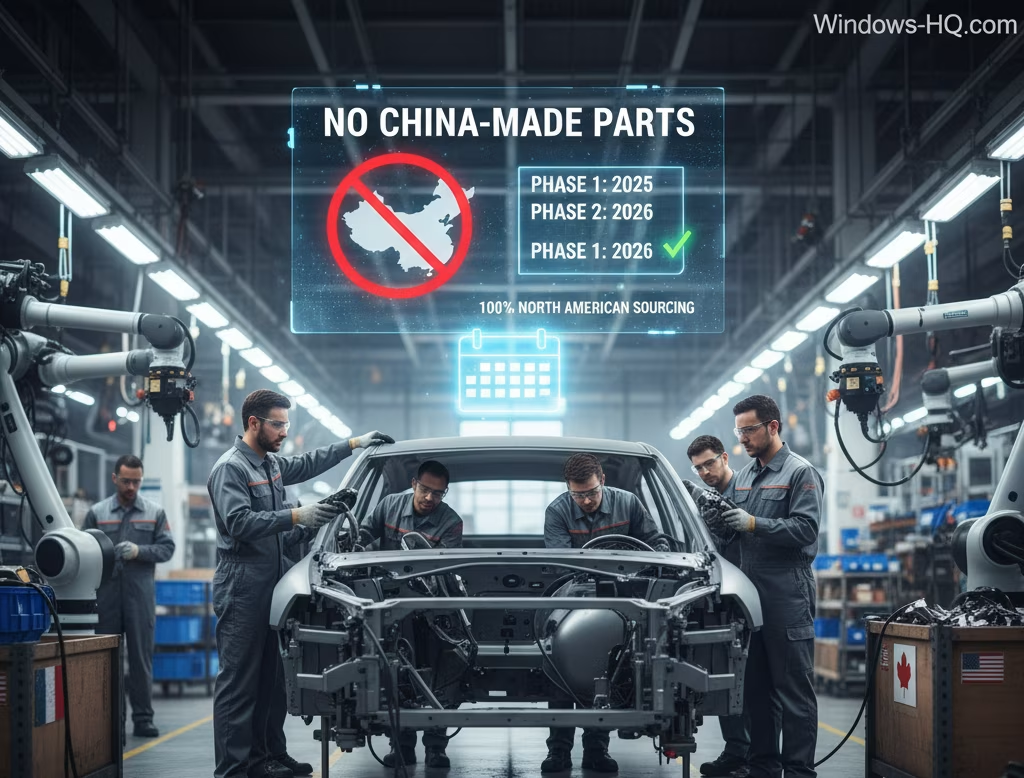
Tesla is now mandating that its entire supply chain for cars manufactured in the United States must exclude all components sourced from China, according to a recent report by the Wall Street Journal. This move signals a significant effort by the automaker to decouple its US production from Chinese manufacturing dependencies.
The Elon Musk-led company and its network of suppliers have reportedly already initiated the replacement of some China-made parts. The ambitious goal is to complete the transition, switching all remaining components to non-Chinese origins within the next one to two years.
This shift comes as a direct response to the persistent instability introduced by the ongoing US-China trade dispute. Executives have faced significant struggles with fluctuating tariffs, which have complicated the predictability of pricing strategies and overall operational costs.
The requirement formalizes a trend that has been in place for some time; Reuters previously reported in April that Tesla has been steadily increasing its North American sourcing for its US factories over the past two years, anticipating potential tariff threats and geopolitical friction.
The broader context for this decision includes recent performance data from the Chinese market. Earlier this month, the China Passenger Car Association reported that Tesla’s China-made electric vehicle sales saw a notable fall of 9.9% in October compared to the previous year.
Furthermore, output of the crucial Model 3 and Model Y from Tesla’s Shanghai plant, which includes vehicles destined for export, dropped sharply by 32.3% from September’s figures, indicating domestic and export challenges.
Tensions between the US and China have consistently placed car executives in a “triage mode” throughout 2025. The threat of unpredictable tariffs and industry panic over potential bottlenecks for vital materials like rare-earth elements and semiconductor chips have forced a strategic reevaluation of global supply reliance.
Auto companies across the board are actively rethinking their dependence on China, which has historically been a crucial source for various parts and raw materials essential to vehicle manufacturing.
Tesla is not alone in this strategic withdrawal; General Motors (GM) also recently directed thousands of its suppliers to begin the process of removing China-made components from their respective supply chains.
Ultimately, Tesla’s mandate positions the company to mitigate the risks associated with geopolitical trade disputes and tariff volatility, prioritizing operational stability and a more localized North American supply chain for its vehicles sold in the United States.