Despite widespread anxieties on Wall Street that the intense boom surrounding Artificial Intelligence is forming an imminent financial bubble, Warren Buffett’s conglomerate, Berkshire Hathaway, made a significant investment in one of the sector’s leaders.
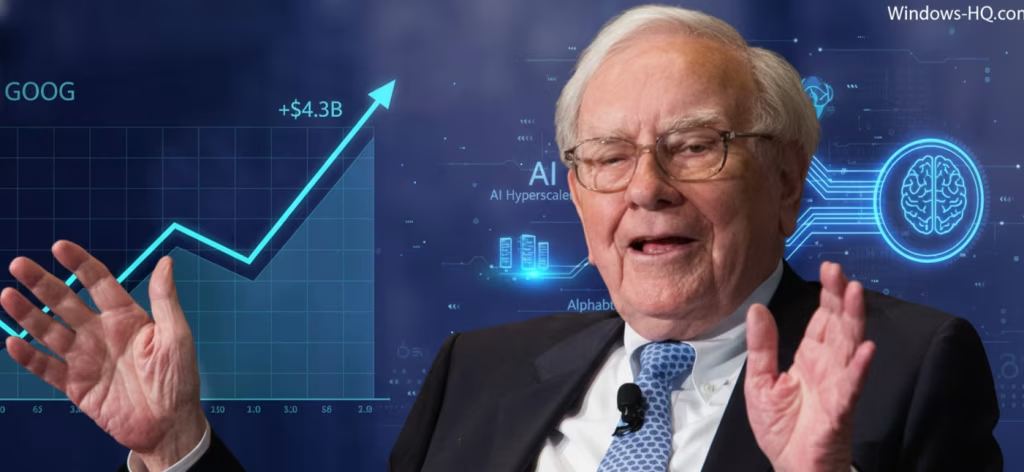
A regulatory filing released late Friday revealed that Berkshire Hathaway purchased 17.8 million shares of Google parent company, Alphabet, during the third quarter of the year. The news immediately sent Alphabet’s stock soaring by 4% in after-hours trading.
This acquisition was the largest single stock addition to Berkshire’s portfolio last quarter, valued at approximately $4.3 billion as of the end of September. The firm also added stakes in other companies, including Chubb, Domino’s Pizza, Sirius XM, and Lennar.
Crucially, the purchase highlights a continued belief in the major technology players driving the AI revolution, as Berkshire also maintained its position in another key AI hyperscaler, Amazon, throughout the third quarter.
The addition of Alphabet shares comes amid a massive rally for the stock. Even following recent market pullbacks fueled by concerns over AI valuations, Alphabet shares remain up by a substantial 46% for the year.
While the purchase is timely, Alphabet has been on Berkshire’s radar previously. The late Charlie Munger, Buffett’s long-time business partner, once admitted regretting that they had not identified Google’s immense potential sooner back in 2019.
At that time, Google’s dominance in the search engine market was the primary factor attracting Berkshire’s attention. Today, however, Alphabet is positioned among the global tech giants leading the colossal push into general AI development and infrastructure.
Alphabet, alongside peers like Amazon, Meta Platforms, and Microsoft, is currently spending hundreds of billions of dollars annually on AI capital expenditures with no indication of slowing down their investment pace.
Morgan Stanley estimates that these AI hyperscalers collectively plan to spend approximately $3 trillion on data centers and other foundational infrastructure through the year 2028, underscoring the enormous scale of the investment cycle.
This relentless capital expenditure, much of which is financed through debt, has created nervousness among investors who question whether AI companies can successfully translate such massive outlays into sustained, profitable revenue growth in the long term.
With Warren Buffett scheduled to step down as Berkshire’s CEO by year’s end, it remains unclear whether he, his appointed successor Greg Abel, or another top investment executive was the one who authorized the strategic purchase of Alphabet stock.
The investment comes as Berkshire has otherwise adopted a cautious stance, allowing its cash pile to reach record highs. Buffett’s closely watched stock portfolio has been shrinking overall, marking three consecutive years of net selling.
The firm’s most recent selling activity included the offloading of more shares of Apple, a stock that Berkshire has been steadily reducing its stake in for more than a year. The move into Alphabet thus represents a highly selective bet against the prevailing market conservatism.