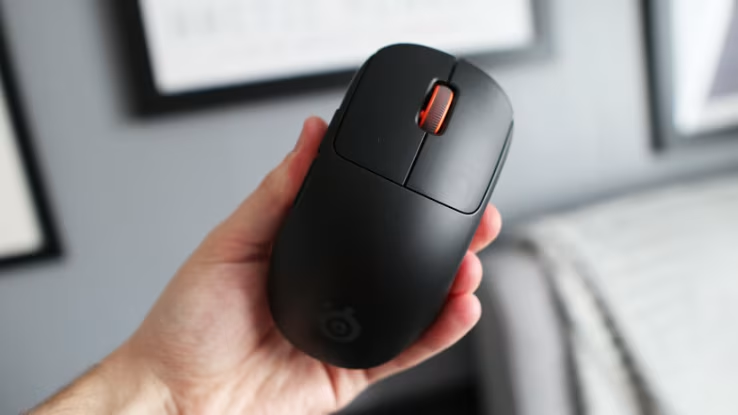
SteelSeries has launched the Sensei Pro, a wireless gaming mouse designed to revive the classic Sensei shape for 2026. The device is priced at £169.99, $179.99, or €199.99.
The mouse boasts a highly detailed set of specifications, including a 42,000 DPI TrueMove 42K Pro sensor and true 8000Hz polling. It features a genuinely clever swappable battery system, positioning it as one of the most complete wireless gaming mice available.
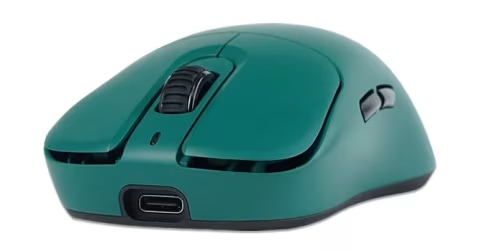
Measuring only 53g, the Sensei Pro is exceptionally light. While its construction uses dense plastics to maintain a solid feel, the weight saving has altered the design, eliminating a front-facing USB-C port since the mouse prioritizes wireless connectivity.
The design features a symmetrical, neutral shape, which was developed with input from pro players and key influencers. Button arrangement is functional and minimal: two main buttons and a scroll wheel are located on the top, accompanied by two side buttons on the left. The underside houses the DPI switch and the power button, alongside the innovative swappable battery mechanism.
Weight reduction required considerable engineering. SteelSeries attached the battery using mechanical means rather than magnets, requiring multiple revisions to the internal structure to ensure proper weight distribution while maintaining a low mass.
The core performance elements are headlined by the TrueMove 42K Pro sensor, a custom PixArt 3955. This sensor is capable of 20,000 FPS capture. In its Max Performance mode, the mouse operates at a high rate, providing accuracy even if the 42,000 DPI itself feels jittery in many common scenarios. For typical CS2 play or office use, the sensor remained accurate and zippy in the 1600 to 3200 DPI range.
The polling rate is a standout feature. The inclusion of true 8000Hz polling oversamples a 9000Hz readout. This high rate applies to both the sensor tracking and the optical switches, promising extremely reliable and speedy connectivity.
A key innovation is the Ultra Wide Band wireless connectivity. This system operates between 6 and 9GHz and uses multiple channels for higher data throughput. It offers twenty times more bandwidth compared to traditional 2.4GHz connections, greatly minimizing potential interference.
The swappable battery system addresses the power demands of the high-performance hardware. At full charge, users achieve up to 16 hours per battery. With two included batteries, the total operational time can reach 32 hours. Extending to 1000Hz polling increases the endurance to 60 hours per battery, or 120 hours total.
Software customization is handled by the SteelSeries GG suite. This software allows users to adjust DPI and polling rates for both clicks and the sensor. Users can also match their sensitivity to previous mice for a seamless transition or choose custom settings for separate X and Y DPI axes.
In terms of aesthetics, the Sensei Pro is available in black and white. However, the black shell version can develop a shiny appearance after several hours of use.
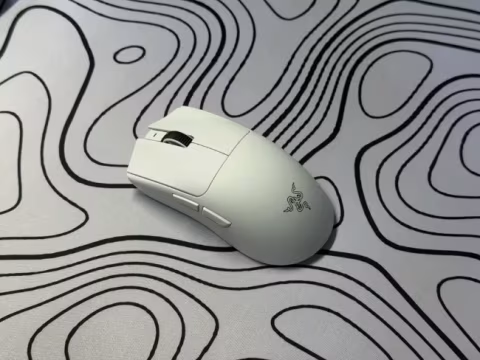
Comparing it to competitors, the Sensei Pro faces stiff competition. The Razer Viper V4 Pro undercuts it slightly on weight at 50g and matches its polling rate. Nevertheless, SteelSeries maintains an advantage with its UWB connectivity and its dual-battery setup. The Logitech G Pro X2 Superstrike offers excellent rapid trigger technology and Lightspeed wireless, but it weighs eight grams more than the Sensei Pro.
For gamers seeking flagship performance without compromise, the Sensei Pro provides a highly responsive and accurate experience. The blend of the 42,000 DPI sensor, 8000Hz polling, and UWB connectivity creates an impressive package. The pros include immense power and clever wireless connectivity. Cons noted by the review are its high cost and the potential shine of the black shell. Those with a smaller budget may find more affordable alternatives that deliver core ultralight performance.