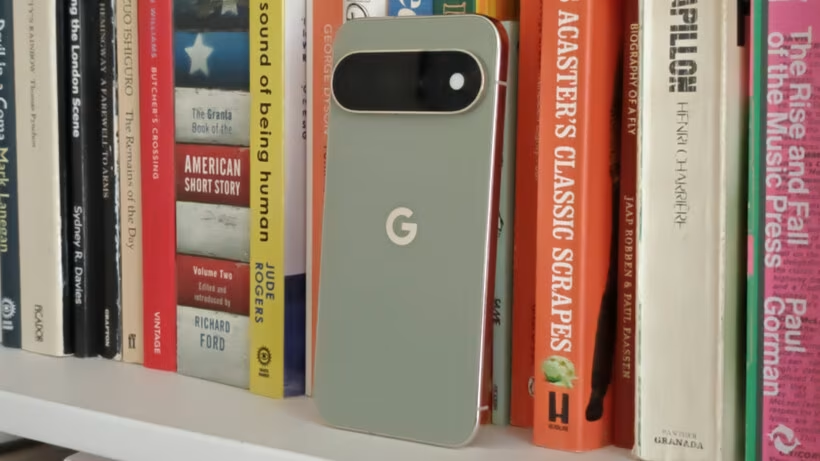
The Google Pixel 11 Pro XL has been released with a starting price of £1,279 for the base model, which includes 256GB of storage and 12GB of RAM. This price point marks the highest-ever starting price for a non-folding Pixel. A notable change is the base model’s RAM, which now offers 12GB, compared to the 16GB provided in the cheaper Pixel 10 Pro XL at its launch. The increase in cost is attributed partly to the rising expense of RAM, a consequence linked to the AI boom, even as Google promotes its Gemini AI to users.
In terms of design, the Pixel 11 Pro XL closely resembles its predecessors, including the Pixel 10 Pro XL and Pixel 9 Pro XL. Its build quality is described as top-tier, matching the fit and finish of the iPhone 17 Pro. The phone features a back camera bar with three lenses. A new element is called HiLight, which utilizes a multicoloured flash as an indicator light. However, the reviewer found this feature to be underused and gimmicky, noting that it only functions when the phone is face down and when receiving calls from selected contacts. Due to its physical size and weight of 226g, the reviewer found one-handed use difficult and uncomfortable. The article suggests that the smaller and less heavy Pixel 11 Pro, which maintains identical specifications apart from screen and battery size, is a better option for many consumers.
The device is equipped with a 6.8-inch OLED display. This screen offers a sharp 1344 x 2992 resolution, a 120Hz refresh rate, and a peak brightness of 3,600 nits, making it Google’s brightest Pixel yet. It uses Gorilla Glass Victus 2, which Google claims is twice as scratch-resistant as previous versions. Nevertheless, the large size dictates that it is a two-handed phone, making it challenging to reach the top screen area with a single thumb.
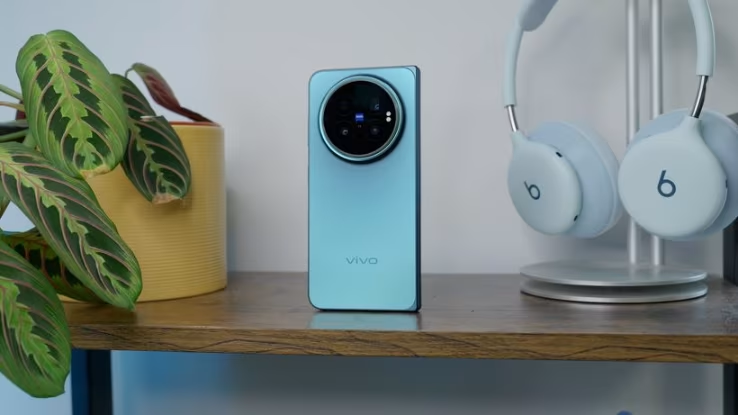
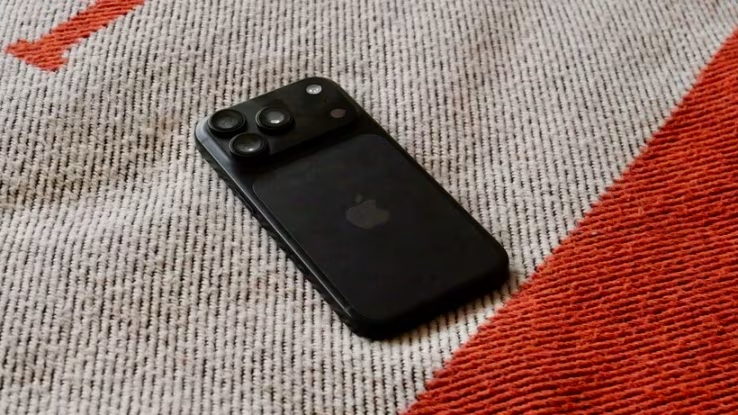
Camera performance remains a key highlight. The system features an upgraded 50MP main sensor, a 48MP 5x telephoto lens, and a 48MP ultrawide lens. The Pixel is noted for its ability to capture moving subjects, such as pets and babies, and the reviewer recommended it over any Galaxy S26 model for reliable point-and-shoot photography. However, the review pointed out that Chinese rivals, including the Xiaomi 17 Ultra, Oppo Find X9 Ultra, and Vivo X300 Ultra, possess superior overall camera systems, featuring larger sensors and enhanced telephoto lenses. Google’s heavy reliance on computational processing and AI results in images with boosted contrast that are less true to life compared to iPhone photographs. While new “Camera Looks” provide alternative shooting modes, the default “Original” mode was preferred. Furthermore, the 120x “Pro Zoom” utilizes AI to fill in details digitally, a feature the reviewer disliked. Video quality was deemed disappointing, characterized by washed-out colors at Full HD and lagging zooming transitions between lenses, trailing behind the iPhone.
Performance is described as inconsistent. The Tensor G6 chipset operates well for everyday usage and AI tasks, providing fast responses from Gemini. However, the GPU performance is significantly inadequate for gaming. In Geekbench 6’s GPU test, the Pixel 11 Pro XL scored 7,912, which is substantially lower compared to the Galaxy S26 Ultra’s 24,611. The reviewer stated that the phone’s high price point is not justified for mobile gamers, as its performance falls short of expectations.
Regarding connectivity, the device supports Wi-Fi 7, Bluetooth 6, and NFC. Google also claims that a new modem may improve the cellular signal.
The software experience is centered on Gemini AI. However, many headline Gemini Intelligence features are only accessible in the US upon launch, a limitation noted as frustrating for UK buyers. A praised feature is “Rambler,” an advanced voice-to-text tool that can generate coherent sentences even when users include pauses and filler words. Google’s Android version is described as playful and less serious than the interfaces of Samsung’s One UI or Xiaomi’s HyperOS. The device is guaranteed seven years of Android and security updates, ensuring long-term support.
Battery life is rated as very good, featuring a 5,115mAh cell that can last nearly two days with moderate usage. Nonetheless, it is surpassed by other Android phones; the OnePlus 15, which uses silicon-carbon battery technology, can last three days. Charging capabilities are rated at 45W wired and 25W wireless, but the reviewer found the real-world wired charging rate slower than advertised, reaching only 37% in 30 minutes. The phone includes support for Google’s Pixelsnap magnetic charging ring, a feature described as rare among Android devices.
In conclusion, the reviewer considers the Pixel 11 Pro XL suitable for users who favor Google’s Android experience and intend to keep the device for multiple years due to the seven years of software support. Significant drawbacks include its weak gaming performance, slow charging, reduced base RAM, and elevated cost. For the same price, the Galaxy S26 Ultra provides superior performance. The reviewer ultimately recommends that interested buyers consider the smaller and more economical Pixel 11 Pro instead.