For the first time in over 53 years, humans have embarked on a journey to the Moon with the launch of NASA’s Artemis II mission. This marks a significant milestone as the first moonshot involving humans since 1972.
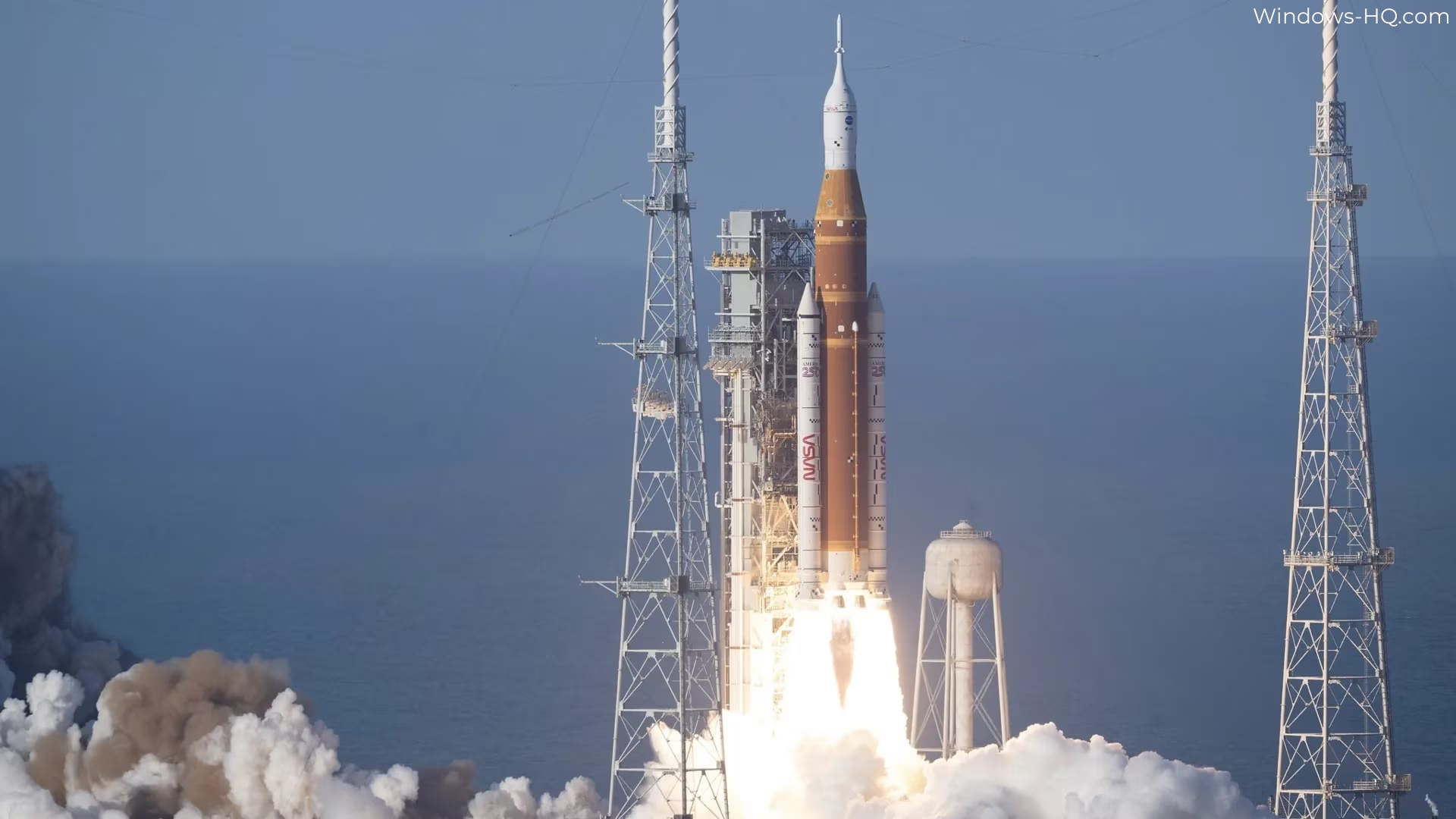
The long-anticipated Artemis II mission commenced at 6:35:12 p.m. Eastern on Wednesday. The Space Launch System (SLS) rocket lifted off from the Kennedy Space Center’s Launch Complex 39B, propelling the mission into the clear blue sky above Florida’s Space Coast.
This launch represented only the second flight of the powerful SLS rocket. Its successful debut occurred in November 2022, when it sent an uncrewed Orion spacecraft on a flyby around the Moon.
Aboard the Orion capsule for this current lunar flyby is an international crew of four. Commander Reid Wiseman, pilot Victor Glover, and mission specialist Christina Koch are all NASA astronauts, joined by Canadian mission specialist Jeremy Hansen.
The SLS rocket delivered the Orion capsule and its European Space Agency-built service module to an initial orbit approximately eight minutes after liftoff. The immense power of 8.8 million pounds of thrust propelled the vehicle skyward.
As they ascended, Commander Wiseman remarked about halfway to orbit, “We have a beautiful moonrise, and we’re headed right at it.” The crew had christened their capsule “Integrity.”
Following its achievement of orbit, Orion deployed its four solar arrays, which were angled away from the spacecraft in a manner reminiscent of an X-Wing from Star Wars. Flight controllers addressed a brief communications glitch during this phase.
Later on Wednesday, the SLS upper stage propelled “Integrity” into a high Earth orbit, reaching a distance as far as 46,000 miles away. During this extended journey, the crew was treated to the sight of a lunar eclipse.
Reflecting on the initial part of their mission, Commander Wiseman stated during a broadcast from “Integrity” Wednesday night, “It was an amazing ride uphill.” He also added, “We forgot how beautiful it is to look down on Earth.”
If all checks out as planned, the service module’s main engine is scheduled to fire on Thursday evening. This maneuver will send the crew on a trajectory that will loop them around the Moon.
The last time humans ventured this far from Earth was with Apollo 17, which launched on December 7, 1972. That mission included a three-day expedition on the Moon and concluded with a splashdown on December 19 of the same year.