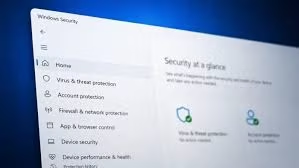
Microsoft officially asserts that dedicated third-party antivirus software is unnecessary for most Windows 11 users. In a recent blog post, Microsoft emphasized that the built-in Microsoft Defender Antivirus is sufficient protection for everyday risks on Windows 11. The company stated that keeping the default security guards enabled and ensuring regular updates are the primary requirements for adequate protection.
According to Microsoft, Windows Defender provides sufficient protection for most users without the need for additional software. Microsoft pointed out that Windows 11 is described as “the most secure Windows yet,” partly due to the integrated, continuously updated, and active by default built-in antivirus software: Microsoft Defender.
Microsoft’s guidance clarified that for many average Windows 11 users, Microsoft Defender Antivirus handles everyday risks, negating the need for supplementary antivirus applications. The blog post noted that the decision to add third-party antivirus is dependent on how the user utilizes their computer and which specific features they value.
The built-in Microsoft Defender Antivirus and SmartScreen are cited as tools that can protect users against both malicious files and phishing sites. Microsoft stressed that if users maintain default settings and practice careful consideration when downloading files from the internet, they should be well-protected.
However, Microsoft did acknowledge scenarios where third-party security measures may be beneficial or necessary. These specialized needs include managing multiple devices, sharing computers with family members, or requiring advanced services such as parental controls or identity monitoring. Furthermore, in corporate settings, enhanced threat monitoring and centralized management may necessitate specialized security software for protecting sensitive data.
The report also cautioned users considering third-party antivirus installations to carefully weigh the associated advantages and disadvantages. Running multiple real-time scanners simultaneously can lead to unpredictable behavior. Furthermore, the extra background processes required by multiple security suites can place an additional load on both the computer’s RAM and CPU. Experts recommend that users limit themselves to a single real-time antivirus program.