Apple is reportedly set to discontinue support for Intel-based Macs with the upcoming macOS 27 release. This move marks a significant milestone, concluding Apple’s transition to its custom silicon processors and ending an era for Intel-powered Macs.
Apple is expected to announce macOS 27 at WWDC 2026. Reports indicate that macOS 27 will be incompatible with any Macs utilizing Intel CPUs. This decision effectively closes the chapter on Apple’s relationship with Intel for its Mac lineup. macOS 26, dubbed “Tahoe,” will serve as the final operating system release for Intel-based Macs.
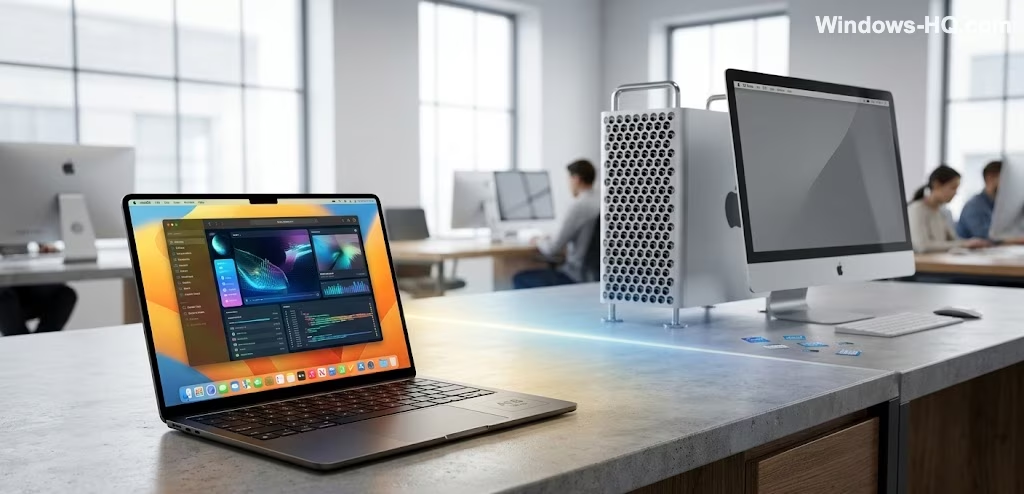
This includes models such as the 2019 16-inch MacBook Pro, the 2020 13-inch MacBook Pro, the 2020 27-inch iMac, and the 2019 Mac Pro. Intel-based Macs will continue to receive security updates for a period, but they will not gain access to new features or major OS upgrades beyond macOS 26.
The move to Apple Silicon began in late 2020 with the introduction of the M1 chip. Since then, Apple has progressively rolled out its M-series processors across its entire Mac range. macOS 27 is anticipated to be compatible only with Apple silicon Macs.
Specifically, the upcoming macOS 27 release will require a Mac equipped with an M-series chip or a MacBook Neo with an A18 Pro chip. It is also presumed that the update will support all Macs with an M1 chip or newer.
Therefore, users with Intel-based Macs who wish to continue receiving the latest macOS features and updates will need to consider upgrading to an Apple Silicon model. The compatibility list for macOS Tahoe indicates support for models including the MacBook Air with Apple silicon (2020 and later), MacBook Pro with Apple silicon (2020 and later), and iMac (2020 and later).
However, several Intel-based Macs—including the 2019 16-inch MacBook Pro and the 2020 27-inch iMac—will not be compatible with macOS 27, despite being able to run macOS Tahoe.