Microsoft is reportedly adjusting its strategy regarding AI integration, signaling a retreat from aggressively embedding Copilot across its consumer products. This shift suggests a move away from making AI a ubiquitous, consumer-facing product and toward a more invisible, specialized utility.
The initial push for Copilot was massive, prompting Microsoft to apply the branding across nearly all products, including Office 365, the Windows taskbar, and Edge. However, the company is now executing a pullback on several fronts.
A key indicator of this change came from Xbox CEO Asha Sharma, who announced a leadership reshuffle and stated plans to retire features that do not align with the company’s direction, including winding down Copilot on mobile and halting its development on console.
This message was corroborated by Jacob Andreou, the Executive Vice President of Copilot, who posted a statement noting that it was critical to remove Copilot from places where it did not meet its promise. Andreou subsequently deleted the tweet.
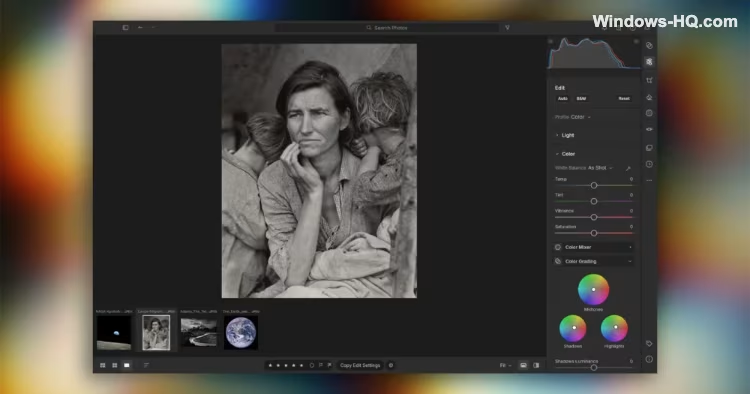
In the Windows ecosystem, tangible changes are visible. Microsoft has reportedly removed the “Ask Copilot” button from the Snipping Tool and the Photos app. Furthermore, in Notepad, the Copilot logo has been stripped away, and the remaining generative AI functionality has been renamed to the more utilitarian “Writing Tools.”
These changes suggest that Microsoft is attempting to make AI invisible within the operating system, prioritizing functional software over a constant, highly visible chatbot.
The strategic shift was influenced by both internal and external pressures. Internally, Microsoft has noted significant financial success with Copilot in the enterprise sector, where the service reportedly has over 20 million paying subscribers. This usage is described as being on par with the Outlook email service for corporate tasks like summarizing spreadsheets.
However, on the consumer side, the AI integration was criticized heavily, with the brand becoming a scapegoat for system failures during a period when Windows 11 was plagued by bugs and performance issues.
External competition also played a role. The launch of the MacBook Neo by Apple, a low-priced laptop that challenged the entry-level PC market, prompted Microsoft to commit to a renewed focus on Windows 11 quality and stability, leading to the recent reported removal of the AI branding from consumer apps.
Looking forward, Microsoft’s strategy involves a significant divergence. While the Windows 11 operating system is undergoing a fix-it effort, with its engineering team actively addressing performance issues and engaging with community feedback, the Copilot brand is being promoted toward the enterprise back-office.
The company is expanding its AI capabilities, releasing new models like advanced voice and text transcription models and its second-generation in-house image model, MAI-Image-2. Additionally, the Microsoft 365 Copilot ecosystem is opening up to support third-party models, such as Anthropic’s Claude Opus 4.7. This indicates a maturation of Copilot from a consumer gimmick into a corporate workhorse.
Ultimately, the article concludes that AI on Windows 11 will become an invisible, unnamed tool, needing to function quietly like existing utilities rather than demanding user attention.