Microsoft is progressing with its strategy to transform Windows 11 into a comprehensive “AI-native” operating system, following previous controversies surrounding its AI integration. The initial key feature in this direction is an experimental component named “Agent Workspace.”
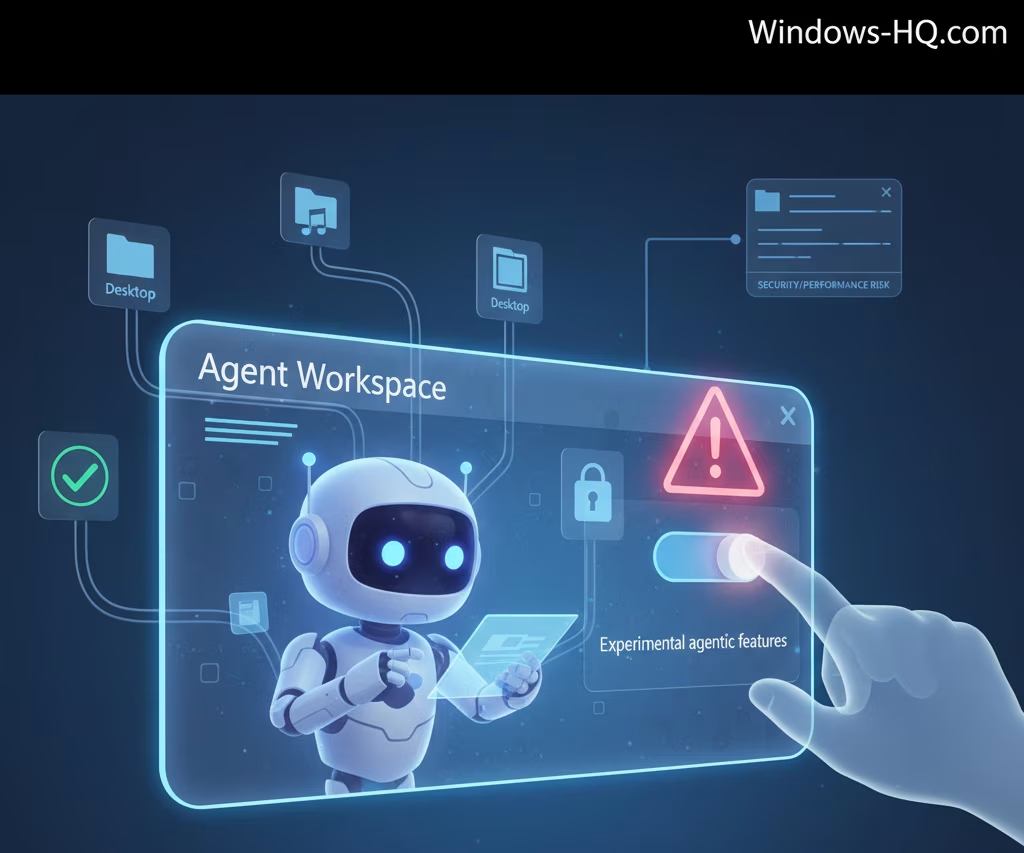
Agent Workspace allows advanced AI agents—which are designed to mimic human navigation and actions, such as booking travel or performing tasks—to operate with their own runtime, desktop, and user account, and to run continuously in the background if the feature is activated by the user.
This functionality has been discovered as a new “Experimental agentic features” toggle within the “AI Components” page of the Settings app in Windows 11 Build 26220.7262, currently available only to Windows Insiders in the Dev or Beta Channel.
The concept behind Agent Workspace is to create a separate, contained Windows session specifically for AI agents. This isolation is intended to prevent an agent from acting directly as the user. Agents are instead given limited access to specific directories like Desktop, Music, Pictures, and Videos, keeping their actions isolated and auditable.
However, despite this isolation, an agent will still require explicit permission from the user to access core personal folders such as Documents and Desktop in order to perform tasks on the user’s behalf. The user must grant authorization for agents to access apps and these private folders.
When a user toggles on the feature, Windows issues a warning that the experimental functionality could potentially impact system performance, security, and privacy controls. Microsoft insists it is mitigating risks through runtime isolation and separate authorization accounts for each agent.
Each agent is designed to have its own defined set of permissions, ensuring that one agent’s access rules do not automatically apply to others. This compartmentalization gives the user control over what data each AI agent is allowed to interact with.
There are also potential performance concerns associated with the agents, as they will run continuously in the background and consume system resources like RAM and CPU. While Microsoft suggests the power consumption will be limited, the exact definition of this “limit” has not been disclosed, and some agents could potentially be resource-intensive.
Ultimately, the introduction of Agent Workspace underscores Microsoft’s commitment to an “Agentic OS” future for Windows 11, making it clear that investment in AI features will continue regardless of user preferences or initial backlash. The feature, though optional now, indicates the direction of the operating system’s evolution.