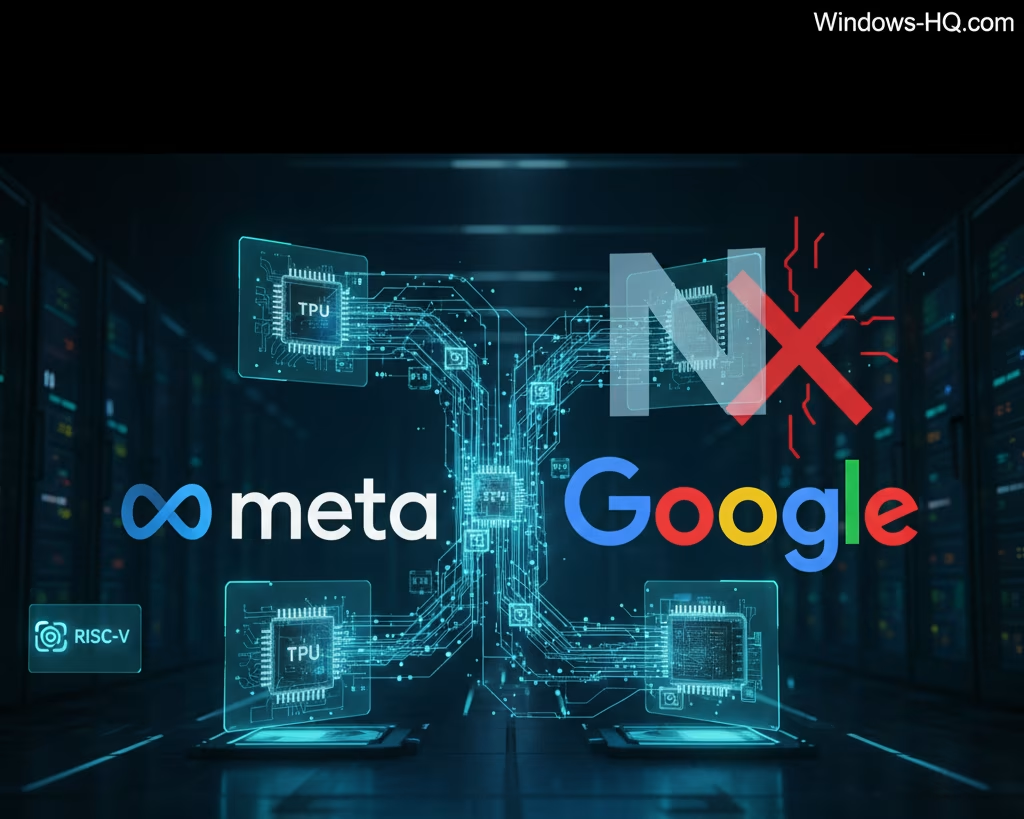
Meta Platforms is reportedly nearing a potentially transformative agreement with Alphabet’s Google, revolving around the use of Google’s custom Tensor Processing Units (TPUs) for its rapidly expanding AI development needs. This multibillion-dollar deal represents a significant strategic pivot for both tech giants and could fundamentally alter the competitive landscape of the high-end compute market.
The proposed agreement involves a phased approach, beginning with Meta renting large quantities of Google Cloud TPUs throughout 2026. The partnership would then transition to Meta making direct hardware purchases of the custom AI accelerators from Google beginning in 2027.
This partnership marks a major departure from historical precedent. Google has traditionally restricted the use of its TPUs primarily to internal workloads, while Meta has relied on a diverse mix of CPUs and GPUs sourced from multiple third-party vendors, most prominently Nvidia.
The prospect of a major external commitment to TPUs immediately impacted the financial markets. Alphabet’s valuation climbed sharply, bringing it closer to the $4 trillion milestone, while Meta’s stock also rose on the news. Conversely, Nvidia’s stock declined by several percentage points as investors began speculating on the potential long-term erosion of its market share dominance in the data-center segment.
Google Cloud executives estimate that securing Meta’s business could allow Google to capture a meaningful share of Nvidia’s colossal data-center revenue, which recently exceeded $50 billion in a single quarter. The success of this deal would validate the TPU as a serious, commercially available alternative to Nvidia’s widely adopted GPUs.
The shift by Meta is part of a broader strategy to diversify its compute base, which also includes exploring alternative hardware options, such as RISC-V-based processors from Rivos. This diversification is driven by intense competition and a strained global supply chain.
The massive scale of demand for AI infrastructure has created severe supply constraints, with data-center operators facing rising component costs and shortages across multiple hardware categories, including GPUs and memory modules. These procurement pressures are projected to intensify through next year, regardless of the financial investment made by these firms.
Analysts caution that the ultimate impact of the deal remains uncertain due to these external market constraints, which may limit the actual production volume. Furthermore, with Google and Nvidia maintaining aggressive annual release schedules for their respective architectures, the long-term performance and relevance of either design remains unclear, necessitating a diversified compute strategy.