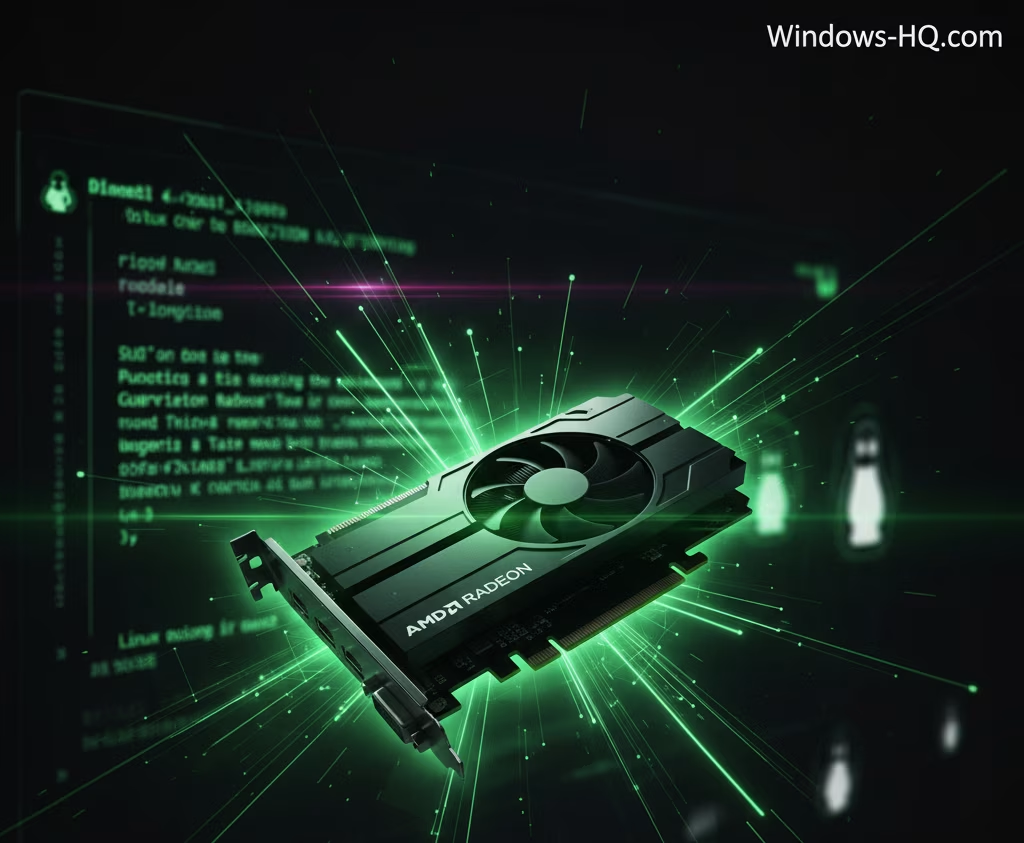
Linux users have long appreciated AMD’s commitment to open-source drivers, and the upcoming Linux Kernel 6.19 update is set to reward that loyalty in a big way. The new kernel version introduces a fundamental change for legacy hardware, specifically targeting “Southern Islands” (GCN 1.0) and “Sea Islands” (GCN 1.1) graphics cards. By defaulting these 13-year-old GPUs to the modern “amdgpu” driver instead of the legacy “radeon” driver, the update unlocks hidden potential in aging hardware.
Testing conducted by Phoronix on an AMD Radeon HD 7900 3 GB revealed staggering results, with performance gains exceeding 30% and even 40% in specific benchmarks. The shift to the modern driver allows these classic cards to perform better than they ever have under older kernel versions, effectively extending the lifespan of budget builds and retro gaming rigs. In particular, the GravityMark 1.87 OpenGL tests showed some of the most dramatic uplifts reported so far.
This monumental shift was largely facilitated by engineers from Valve, who have spent years refining the “amdgpu” kernel driver to support these legacy architectures. Their work ensures that even older hardware can benefit from modern features like the Mesa RADV Vulkan driver. This is a game-changer for Linux gaming, as it enables these older cards to utilize Proton more effectively, potentially making previously unplayable modern titles compatible with vintage hardware.
Beyond raw frame rates, the transition to the modern driver path brings improved stability and access to modern graphics APIs that the legacy driver simply couldn’t support. This means better compatibility with current desktop environments and smoother hardware acceleration across the board. For many, it’s like receiving a free hardware upgrade through a simple software update, a feat rarely seen in the world of proprietary operating systems.
The Linux 6.19 kernel serves as a perfect “holiday gift” for the open-source community, proving that even a decade-old GPU like the R9 390X still has a place in a modern setup. As the industry continues to push for faster cycles and planned obsolescence, this update stands as a testament to the power of community-driven development and the enduring value of well-supported open-source hardware drivers.