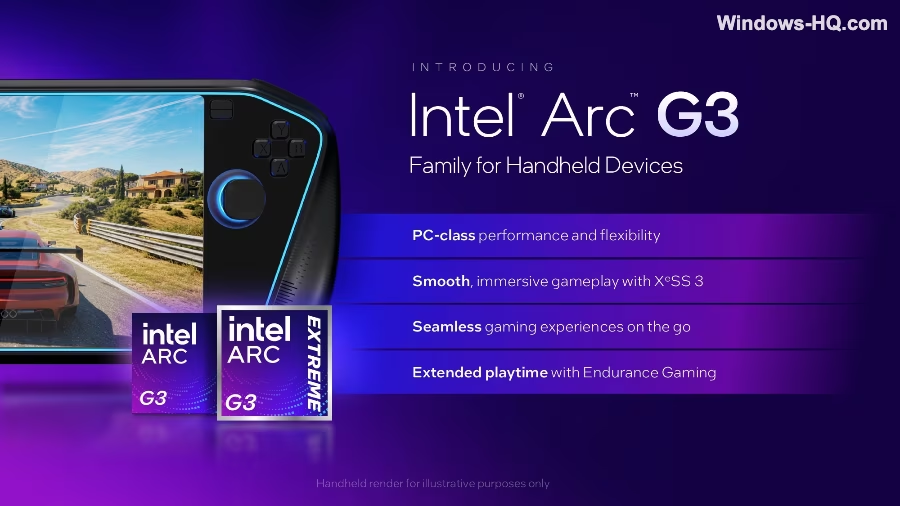
Intel has announced the G-Series processors, launching two chips: the Arc G3 and the Arc G3 Extreme. These processors are purpose-built for handheld gaming PCs and run on Windows 11. The G-Series architecture is based on Intel’s Core Ultra Series 3 (Panther Lake), but its core counts, power management stack, and software layer have been reworked specifically for handheld use cases.
The CPU configuration includes two performance cores, eight efficiency cores, and four low-power efficiency cores. This structure is designed to provide sustained clock speeds while managing a small battery, which the report suggests is suitable for handheld games running at 720p or 800p.
On the graphics front, the Xe3 architecture incorporates up to Arc B390-class GPU hardware. Intel is emphasizing XeSS 3, which is presented as a three-part stack: XeSS Super Resolution for AI upscaling, Multi-Frame Generation for interpolated frames, and Xe Low Latency for engine-level input response.
A key differentiator is Intel Precompiled Shaders. This feature allows handheld devices to download pre-built shader caches from Intel’s servers, potentially mitigating the stuttering issues that often occur when games compile shaders on the device for the first time.
Other notable specifications include Thunderbolt 4 with Thunderbolt Share support, providing 40 Gbps, and connectivity via Wi-Fi 7 R2 and dual Bluetooth 6.
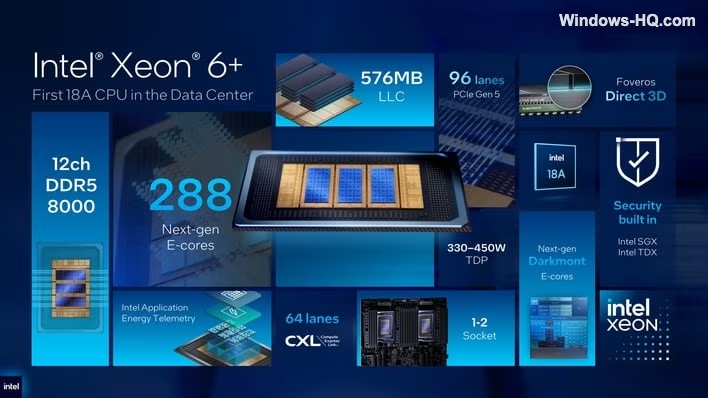
Manufacturing will utilize Intel 18A, described as Intel’s most advanced logic process. The fabrication process is noted as being domestic to the United States.
The initial launch partners confirmed are Acer’s Predator Atlas 8, MSI’s Claw 8 EX AI+, and OneXPlayer. These systems are expected to start shipping in June 2026, with Intel stating that broader OEM availability will follow rest of the year. Further details are anticipated at Computex 2026.