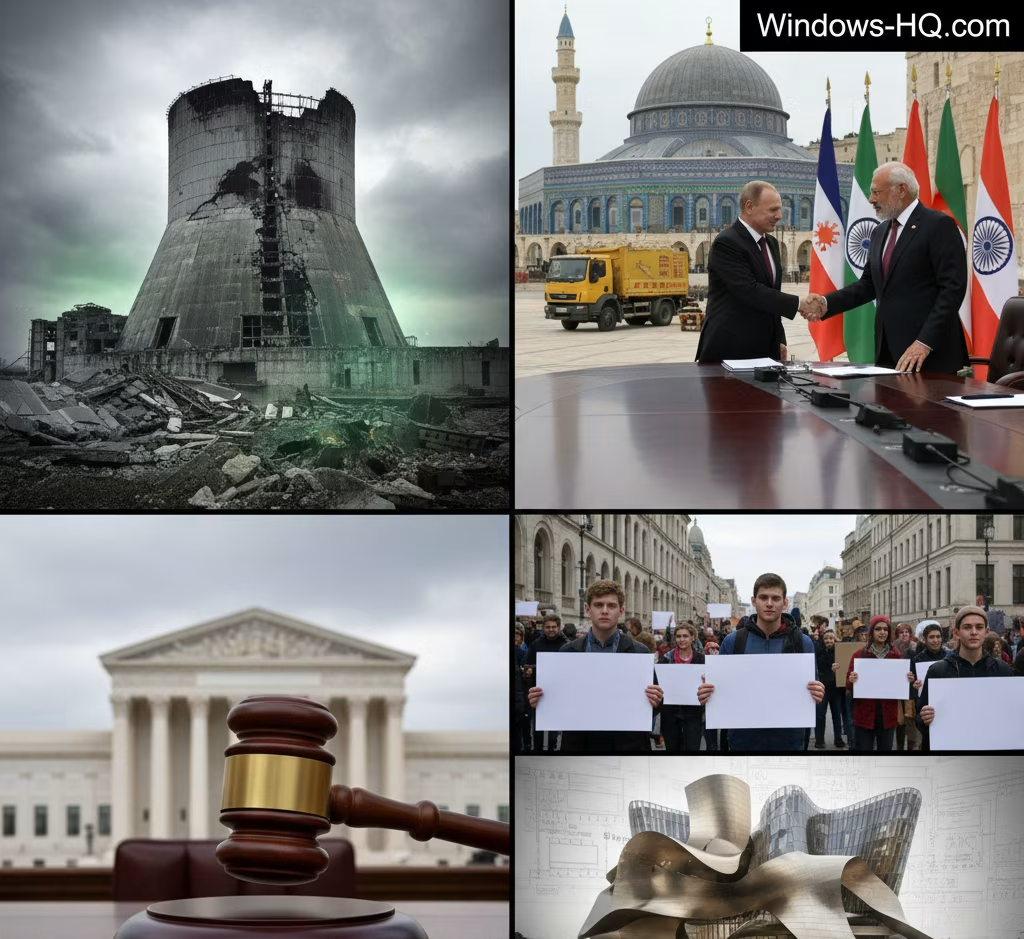
The global news landscape is currently dominated by two parallel crises: escalating military and humanitarian conflicts, and a wave of political and legal maneuvering that is reshaping international alliances and domestic policies.
The conflict in Ukraine remains a central point of global diplomacy, with US and Kyiv officials reporting progress on peace talks, yet cautioning that a genuine resolution hinges on Russia taking negotiations seriously. Despite the diplomatic efforts, the war’s long-term consequences are becoming tragically clear: the International Atomic Energy Agency (IAEA) reports that the protective shelter at the Chornobyl nuclear plant has been damaged by bombing and no longer effectively blocks radiation, necessitating major repair and raising grave safety concerns.
Meanwhile, the conflict in the Middle East continues to generate intense humanitarian focus, with global policy leaders gathering at the Doha Forum to discuss paths forward for both the Gaza and Ukraine wars. In Gaza, reports indicate that the hoped-for return to normality is a dangerous illusion, with bloodshed continuing and Arab and Muslim nations rejecting Israel’s “exit-only” plan for the Rafah border crossing, signaling a deep rift over post-conflict strategy.
In South Asia, a major diplomatic move saw Russian President Vladimir Putin and Indian Prime Minister Narendra Modi meet in Delhi. The talks yielded a promise from Putin for “uninterrupted oil shipments” to India, a clear signal of bolstering trade ties and a challenge to US pressure intended to limit Russian energy exports. This demonstrates a growing alignment between the two nations on energy security and trade.
The African continent is seeing renewed instability, particularly in the Democratic Republic of Congo, where fighting has flared up between the M23 militia and the Congolese army, threatening a fragile peace deal recently signed in Washington. Concurrently, satellite evidence has revealed the devastating scale of massacres perpetrated by the Rapid Support Forces (RSF) in Sudan, prompting the United States to consider wider sanctions against the warring factions.
On the political front, the United States Supreme Court has agreed to take up a significant constitutional challenge regarding the Trump administration’s order to end birthright citizenship, a development that carries major implications for immigration and legal status across the country. Separately, the administration is facing intense scrutiny following the release of video footage related to US military boat strikes in the Pacific, which allegedly show two unarmed, shirtless men clinging to wreckage before being killed in a second attack, prompting allegations of illegal killings.
In Europe, the specter of militarization is rising. Germany has introduced a controversial new military conscription bill, sparking thousands of protests in Berlin from young citizens fearful of a return to compulsory service. This shift reflects growing security concerns across the continent amid the ongoing war in Ukraine.
Controversy also extended into the sports and culture world. The inaugural FIFA Peace Prize was awarded to President Donald Trump at the World Cup draw, a decision that has been heavily criticized for undermining the governing body’s non-political mandate. Separately, the Eurovision Song Contest is facing a crisis as four countries, including Spain and the Netherlands, have announced withdrawals or boycotts in protest over the organizers’ decision to allow Israel to participate.
Finally, the world mourns the loss of Frank Gehry, the renowned Canadian-American architect celebrated globally for his deconstructivist style, exemplified by masterpieces like the Guggenheim Museum in Bilbao and the Walt Disney Concert Hall in Los Angeles.