The Garmin Cirqa is presented as a screenless fitness tracker priced at £179.99 / $199.99. It is designed to provide discreet health and fitness monitoring, targeting users who want to track key metrics and workouts accurately without the distractions of an active display or notifications mid-activity.
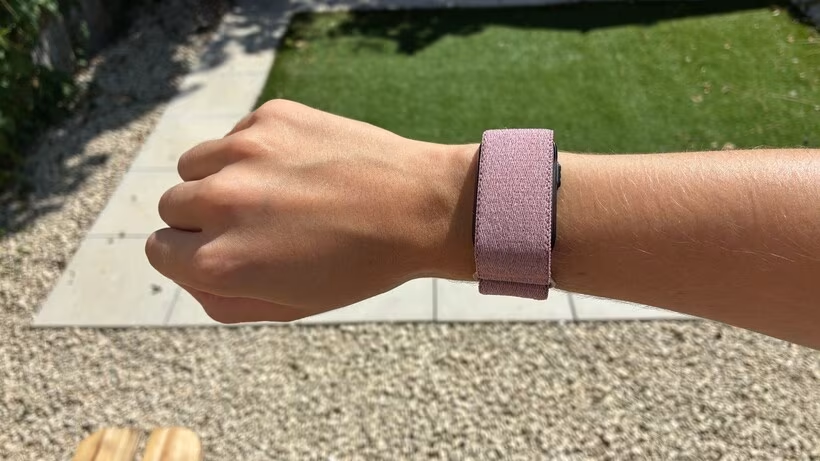
The device represents Garmin’s entry into the screenless wearable market, directly competing with devices such as Whoop and the Fitbit Air. It utilizes a Gen 4 sensor housed in a module that fits under a fabric strap. Tracking a specific activity can be initiated using a physical button located on the side of the unit.
While featuring a sporty fabric band available in four colors, the reviewer noted that the sensor module could appear somewhat bulky because its edges stick out slightly from the strap, which diminishes its sleekness compared to rivals like the Fitbit Air or Whoop. Furthermore, the included band was felt to be too athletic for everyday wear, suggesting a desire for less sporty alternatives.
In terms of core features, the Cirqa relies on Garmin’s Connected GPS, meaning it uses a paired smartphone’s GPS signal for location and pace tracking, as it lacks built-in GPS. The review found the location tracking to be generally accurate, citing only one instance of incorrect route mapping. Auto-workout detection proved reliable for runs and walks, though an inaccurate detection was noted when the reviewer was sitting on a train.
A notable feature is its integration with Natural Cycles, an MHRA-registered fertility-tracking app that monitors skin temperature overnight, which was considered particularly convenient due to the Cirqa’s 24/7 wearability. The Garmin Connect companion app serves as the central hub for all metrics, offering a customizable interface.
The tracker offers monitoring capabilities for over 80 workouts, measuring metrics like heart rate, blood oxygen saturation, stress levels, HRV, and VO2 Max. Although it employs the older Gen 4 sensor instead of the newer Gen 5, Garmin justified this choice by pointing out that the Gen 4 model is smaller and sits more discreetly. The review reported high accuracy in monitoring, noting that its HRV readings aligned closely with those provided by a Whoop MG.
For sleep tracking, the device provides a daily score out of 100, detailed sleep cycle breakdowns, and a Sleep Coach tab offering advice on optimal sleep duration. While general data aligns with the Whoop, some inconsistencies were observed regarding wake-up times and specific sleep stages.
One standout feature is the battery life. Garmin claims up to 10 days of use, which was confirmed by testing; the reviewer suggested the device could potentially last closer to two weeks. A Battery Saver option is available, though it requires disabling several tracking features. Charging takes slightly over an hour using Garmin’s proprietary cable, leading to a preference for on-wrist charging methods similar to Whoop.
The Cirqa does not mandate a subscription, presenting a major advantage over competitors like Whoop. However, an optional paid service, Garmin Connect Plus, is available for £69.99 annually or £6.99 monthly, unlocking AI features including Active Intelligence and nutrition tracking.
In conclusion, the Cirqa is deemed an impressive screenless tracker with strong battery life and generally accurate monitoring data. Its key drawbacks include the bulky sensor module, limited selection of sporty straps, and the necessity of relying on Connected GPS rather than built-in technology. Furthermore, it costs approximately £100/$100 more than the Fitbit Air, making it a less recommendation for budget-conscious consumers. It is highly recommended for users already invested in the Garmin ecosystem or those seeking excellent battery life without required subscription fees.