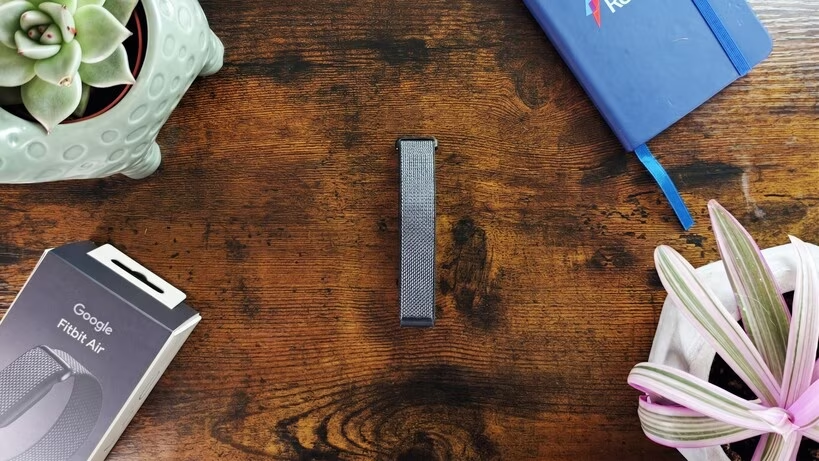
The Fitbit Air is highlighted as a compelling option in the screenless wearable market, offering comparable health insights to established competitors. The reviewer suggests the Fitbit Air provides a significantly smaller and more comfortable alternative to these devices.
Key features emphasized for the Fitbit Air include its ultra-slim, lightweight design, which makes it comfortable to wear day and night. Furthermore, the device integrates with the Google Health app, offering comprehensive health and wellness views through third-party integrations. This app also features an AI-powered Google Health Coach, which converts collected data into personalized, easy-to-understand advice.
Compared to major competitors, the article details a significant cost advantage. For instance, the Whoop 5 model is noted to set back £229/$239, and the Whoop MG is priced at £349/$359; however, these costs relate to yearly subscriptions rather than outright hardware purchases. The Fitbit Air, conversely, starts at £84.99/$99.99. Even when considering the recommended £7.99/$9.99 monthly subscription, the combined cost only approaches the annual Whoop subscription after nearly two years. Moreover, users do not require a subscription to use the Fitbit Air’s hardware.
While Google is not the first brand in this category, the Fitbit Air is praised for its compact package. Google designed the device specifically for sleep, and the data obtained is reported as highly accurate. The companion app is crucial for the Fitbit Air’s functionality, and the newly redesigned Google Health app is described as fantastic. This app is available for both iOS and Android and provides a comprehensive view of health data from the Fitbit Air, other wearables, and hundreds of third-party applications.
Monitoring capabilities include a 24/7 heart rate sensor, tracking heart rate, Heart Rate Variability (HRV), SpO2, and body temperature. The Health app translates this raw data into key metrics such as ‘readiness,’ described as an energy score, and cardio load for assessing exercise and strain.
Regarding longevity, while Google claims up to seven days of battery life, the reviewer reported that the Fitbit Air lasted nearly 10 days under constant use, including tracking general health, sleep, and several treadmill runs.
Ultimately, the reviewer concludes that the Fitbit Air offers the same screen-free experience as its primary competitor but in a much smaller and more comfortable package. The Google Health app is seen as the main distinguishing factor, providing a comprehensive view and support for various third-party apps. This combination allows the device to offer genuine value for money at a significantly lower initial cost.