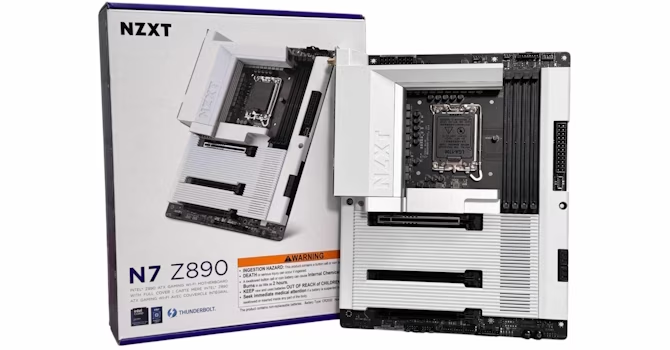
Intel’s shift to the LGA1851 socket has made certain motherboards appealing, particularly given the current high costs of memory and storage. Among the options is NZXT’s Z890 series, offering platforms for processors like the Core Ultra 7 270K Plus. The N7 Z890 was positioned as an affordable choice for those seeking a home for the Core Ultra 7 270K Plus, priced lower than the flagship N9 Z890, while reportedly offering similar aesthetics and features.
Pricing for the NZXT boards has fluctuated since their release. While the N7 Z890 settles around £300 or euros in the UK and Europe, and the N9 Z890 is around £350, the availability varies by region and circumstance. Notably, the N9 Z890 has at times become a bargain, seen for less than $250, and if available at a comparable price to the N7 Z890, it is considered the superior choice.
When comparing the N7 Z890 to its larger sibling, the N9 Z890, the differences are significant. The N7 Z890 is reported as inferior in several aspects. Feature limitations include lacking Wi-Fi 7, having 2.5 Gbps Ethernet instead of 5 Gbps, being devoid of RGB lighting, having only one M.2 heatsink compared to the N9’s five, and possessing fewer power phases. The actively-cooled VRMs of the N9 Z890 were mentioned as a tool for benchmarking.
Although the MSRP suggests the N9 Z890 is the premium option, the N7 Z890 still delivers solid performance, keeping both the VRMs and PCIe Gen 5 SSD cool. However, its drawbacks include the lack of Wi-Fi 7 and the limited M.2 cooling to a single port. Furthermore, the motherboard’s EFI was criticized for lacking a proper modern fan control suite, with the alternative being a complex, text-based configuration page.
Competition for the N7 Z890 is extensive and formidable. Alternative options include the ASRock Z890 Steel Legend Wi-Fi, which costs less and offers better VRM temperatures, Wi-Fi 7, and more M.2 heatsinks. The ASRock Phantom Gaming Z890 Riptide Wi-Fi has also received a price cut, providing Wi-Fi 7 and better SSD temperatures. For a more feature-rich EFI, the ASUS TUF Gaming Z890-Pro Wi-Fi is another suggested choice.
More concerning are the lower-tier options. Boards like the ASRock B860 Steel Legend Wi-Fi, available in white, are noted to cost significantly less than the N7 Z890 while offering similar specifications, better M.2 SSD cooling, and a better EFI. Similarly, the Gigabyte B860 Aorus Elite Wi-Fi7 Ice is cited as an appealing alternative.
Ultimately, while the N7 Z890 offers solid performance, the analysis suggests it requires a substantial price reduction. Key missing features, such as Wi-Fi 7 and multiple M.2 heatsinks, are viewed as unacceptable at its current price point. For consumers looking for an affordable option for core CPUs, the N7 Z890 is currently viewed as lacking standout features compared to its competitors, which often provide similar or better specifications at lower costs.