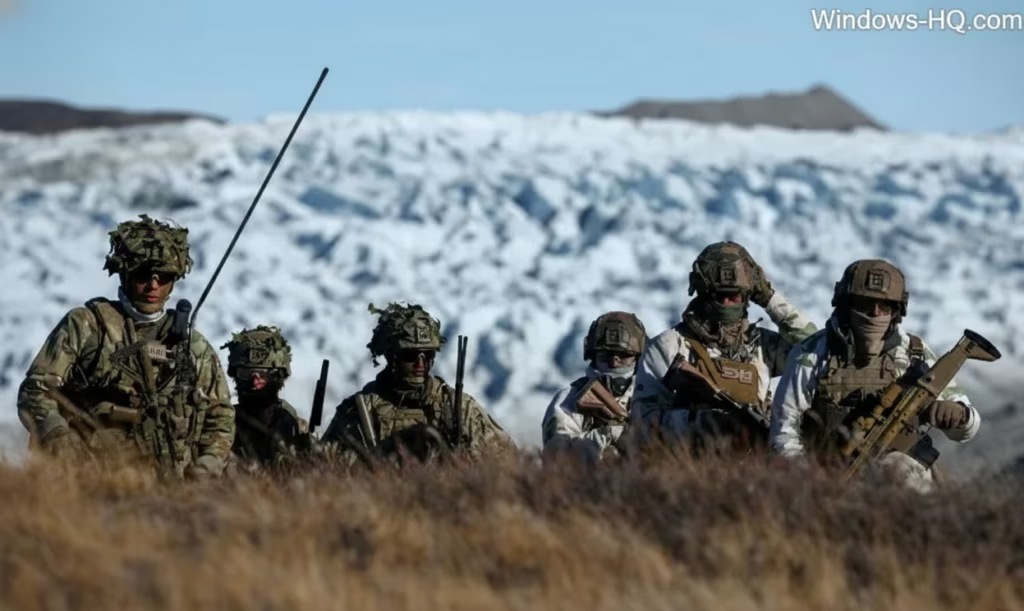
European nations have reaffirmed their commitment to Greenland, signaling increased support for the autonomous Danish territory amidst growing geopolitical tensions and resource competition in the Arctic. This renewed interest comes as the United States has reportedly expressed concerns about Greenland’s economic reliance on China and has hinted at potential interventions to safeguard its strategic interests in the region.
The Arctic is rapidly becoming a focal point of international attention, driven by the effects of climate change, which are opening up new shipping routes and making previously inaccessible natural resources, such as minerals and hydrocarbons, more viable for extraction. Greenland, strategically located in the Arctic, holds significant untapped reserves, attracting the interest of major global powers.
European allies, including Denmark, have voiced concerns over potential US interference in Greenland’s affairs, emphasizing the importance of respecting Greenland’s autonomy and sovereignty. They argue that any engagement with Greenland should be based on mutual respect and cooperation, rather than coercion or pressure.
Denmark, which retains control over Greenland’s foreign and defense policies, has been actively working to strengthen its ties with the territory and promote sustainable development. European nations, generally, have been investing in Greenland’s infrastructure, education, and renewable energy sectors, aiming to foster greater economic independence and resilience.
The increased European support for Greenland is seen as a countermeasure to the growing influence of both the United States and China in the Arctic. European leaders recognize the need to secure their own strategic interests in the region and prevent Greenland from becoming overly reliant on either superpower.
Greenland’s government has expressed its desire to diversify its economic partnerships and pursue sustainable development that benefits its population. It has welcomed European investments and collaborations, while also remaining open to engagement with other countries, including the United States and China, on mutually beneficial terms.
The situation in Greenland reflects the broader geopolitical dynamics unfolding in the Arctic, where competing interests and the pursuit of resources are reshaping international relations. The European Union has also outlined its Arctic strategy, emphasizing the need for environmental protection, sustainable development, and peaceful cooperation.
The commitment of European allies to Greenland underscores their determination to play a significant role in shaping the future of the Arctic. By providing economic and political support, they aim to ensure that Greenland remains a stable and autonomous territory, capable of making its own choices and contributing to the overall security and stability of the region. This commitment aims to ensure that any development within Greenland is in accordance with international law and promotes the well-being of its inhabitants, avoiding potentially exploitative situations.
The dynamics highlight the ongoing competition for influence in the Arctic, with various nations vying for access to its resources and strategic locations. The European approach favors sustainable development and respecting the sovereignty of Arctic territories. The support from European nations is essential for Greenland as it navigates the complex geopolitical landscape.