The Beelink ME Mini is a compact, NAS-capable mini PC designed for home theatre, content creators, and homelab enthusiasts. It is marketed as an easy-to-setup, upgradable, and compact backup solution.
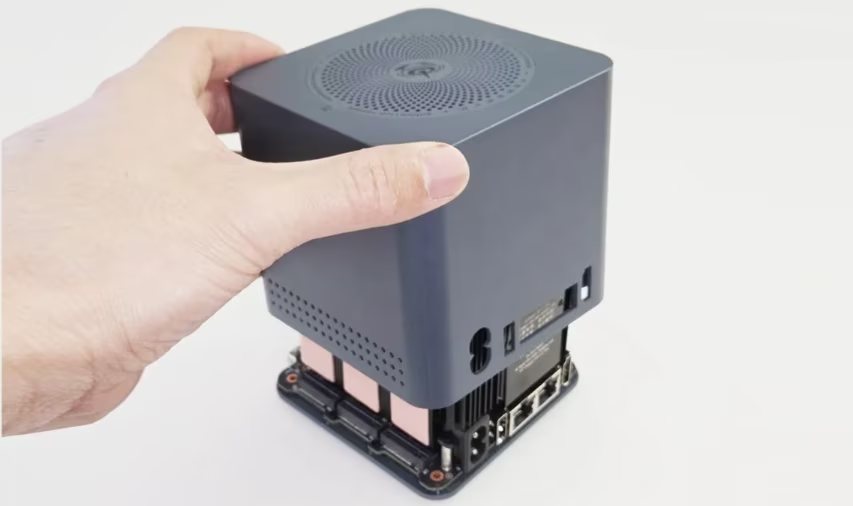
Physically, the unit features a cube-shaped design, measuring approximately 99mm in all dimensions. It is powered by an Intel N95 Alder Lake processor, which provides 4 cores and 4 threads, with a maximum Turbo boost of 3.4 GHz. This processor operates using only 15W of power, though one source notes an integrated 45W power supply.
In terms of memory and storage, the unit comes with 16GB of LPDDR5-4800 memory onboard. While this RAM is soldered and cannot be upgraded, it is noted that the system includes 64GB of eMMC storage for the operating system. A key feature is its capacity for expansion, boasting 6 x M.2 PCIE Gen3.0 NVMe SSD slots, allowing for a potential total storage capacity of up to 24TB (assuming six 4TB drives).
Connectivity options are extensive. The mini PC features dual 2.5Gbps high-speed LAN ports and is also equipped with a USB-C port (rated at 10Gbps), a USB 3.2 Type-A port, a rear HDMI port, and an additional USB 2.0 port. The model tested did not include a Wi-Fi module, but an alternative, higher-end model is available with an Intel N150 processor and Wi-Fi 6 connectivity.
The internal components include a massive aluminum heatsink cooled by a silent fan positioned on the top. The unit is powered by an integrated 45W power supply, with a separate CMOS battery located on the opposite side of the board. The six NVMe slots are split across opposite sides, three on each side.
The Beelink ME Mini supports various open-source, NAS-ready Linux-based operating systems, such as TrueNAS, Unraid, and Proxmox. The unit was successfully tested running multiple operating systems (including Proxmox, TrueNAS, and Umbrel OS) on the same system without issues.
Testing also showed the system’s capability to handle large file transfers at speeds between 250-300 MB/s, and it was able to smoothly support video file editing directly via the NAS function.