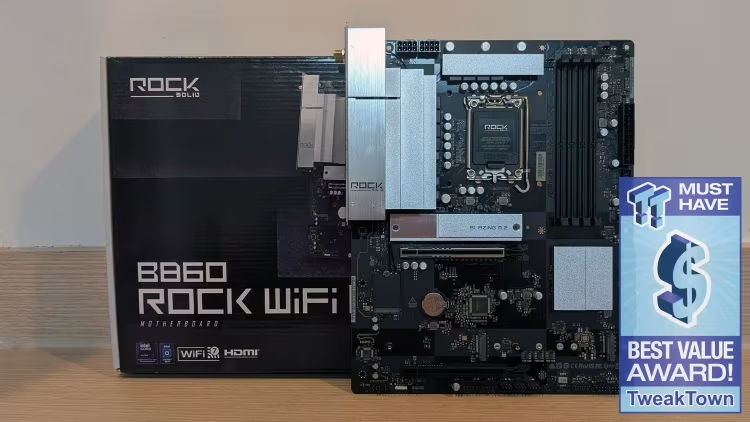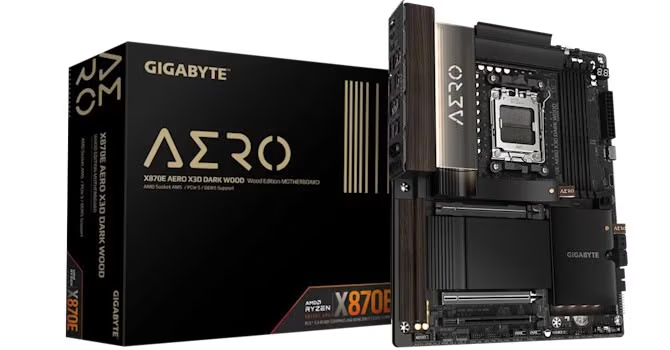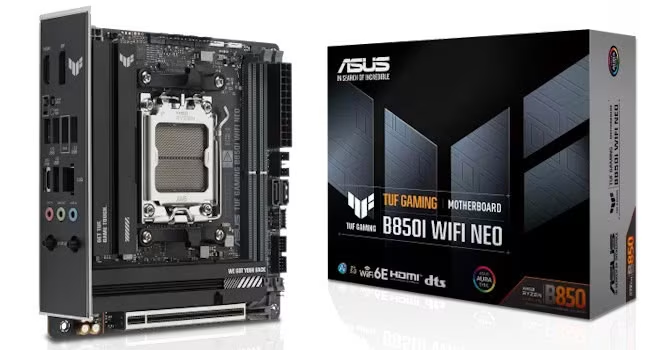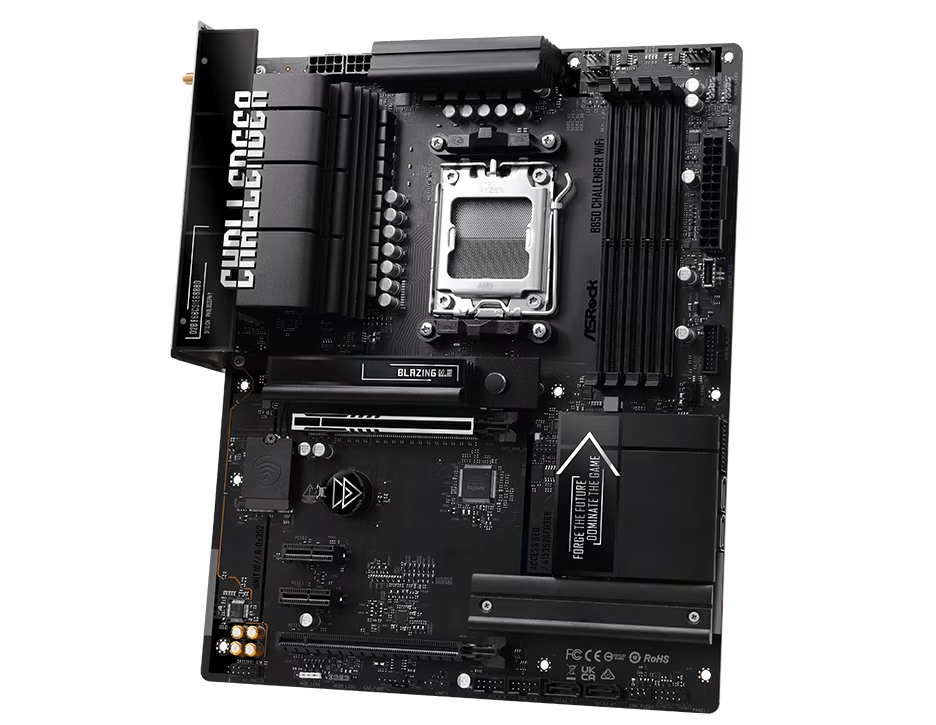
The ASRock B650 Challenger WiFi motherboard emerges as a compelling option for PC builders aiming to embrace the AMD AM5 platform and Ryzen 7000 series processors without stretching their budget. Positioned as a mainstream gaming solution, this motherboard strives to deliver a potent balance of essential features, robust performance, and modern connectivity at an attractive price point, making it a strong contender in the competitive B650 market.
From an aesthetic perspective, the B650 Challenger WiFi adopts an understated yet functional design. It features a clean, all-black PCB complemented by chunky, sleek VRM heatsinks that ensure efficient thermal management without relying on flashy integrated RGB lighting. This minimalist approach caters to users who prioritize performance and practicality over elaborate visual flair, offering a versatile foundation that can blend seamlessly into various build themes.
One of the motherboard’s standout features is its formidable power delivery system. It boasts an 8+2+1 power phase design, crucially employing 50A Dr.MOS components for the VCORE. This robust VRM configuration is more than capable of handling the power demands of even higher-tier Ryzen 7000 series CPUs, ensuring stable operation and providing a solid foundation for those looking to explore mild overclocking, thereby maximizing processor performance.
For connectivity, the ASRock B650 Challenger WiFi is well-equipped for contemporary gaming and productivity. It includes a single, reinforced PCIe 5.0 x16 slot, ready for the latest generation of graphics cards, future-proofing the build to a significant extent. Storage needs are met by two Hyper M.2 slots (PCIe Gen4x4), capable of housing high-speed NVMe SSDs, alongside four traditional SATA 6.0Gb/s ports for additional drives. However, it’s worth noting the absence of a PCIe 5.0 M.2 slot, which might be a consideration for enthusiasts demanding the absolute fastest storage.
Networking capabilities are a strong suit, providing both high-speed wired and wireless options. The motherboard incorporates a Realtek 2.5G LAN port, delivering exceptional network speeds for online gaming and data transfers. For wireless convenience, it integrates AMD WiFi 6E technology, supporting the 6GHz band for less congested, high-speed wireless connectivity, complemented by Bluetooth 5.2 for peripherals and accessories. Audio is handled by a Realtek ALC897 Audio Codec, further enhanced with Nahimic Audio for an immersive sound experience.
The rear I/O panel offers a comprehensive selection of ports, including one USB 3.2 Gen2 Type-C, one USB 3.2 Gen2 Type-A, four USB 3.2 Gen1 Type-A, and two USB 2.0 ports, catering to a wide array of peripherals. While the external connectivity is robust, a minor drawback for some builders might be the absence of a front panel USB-C header, which limits the full utilization of modern PC cases offering front Type-C ports.
In terms of performance, the ASRock B650 Challenger WiFi performs precisely as expected for a B650 chipset motherboard. Benchmark results from tests like Cinebench R23, PCMark 10, CrystalDiskMark, 3DMark, and Superposition all confirm its ability to efficiently leverage Ryzen 7000 series CPUs, providing a smooth and responsive computing experience for both gaming and general use. The VRM heatsinks proved effective, maintaining stable temperatures even under sustained loads, underscoring the board’s reliability.
ASRock’s UEFI BIOS is described as user-friendly and intuitive, allowing for easy system configuration and fine-tuning. Complementary software utilities such as ASRock Polychrome SYNC provide control over external RGB lighting, while the Live Update & APP Shop streamlines driver and software management, enhancing the overall user experience.
Ultimately, the ASRock B650 Challenger WiFi stands out as an exceptional value proposition in the AM5 motherboard landscape. Priced competitively around $180-$200 USD, it successfully balances cost with a compelling feature set, including a robust VRM, PCIe 5.0 graphics support, dual M.2 Gen4 slots, and modern 2.5G LAN and WiFi 6E connectivity. Despite the minor omissions like PCIe 5.0 M.2 and a front panel USB-C header, it offers a solid, reliable, and performance-driven foundation for any mainstream gaming PC, earning a strong recommendation for budget-conscious builders seeking entry into the AM5 ecosystem.