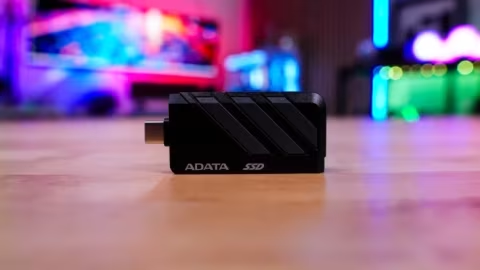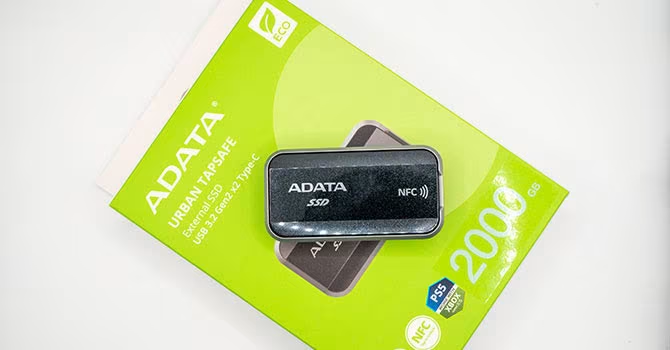
The ADATA Urban Tapsafe is a portable SSD with a high-end aesthetic and sturdy construction. Its metallic polycarbonate body and solid build quality give it a premium look, complemented by two interchangeable top-plates: one metallic black and one iridescent that shifts color depending on the angle of light. The drive itself weighs 72 g and features a 20 Gbps USB 3.2 Gen 2×2 host interface. ADATA advertises sequential transfer speeds up to 1900 MB/s, approaching the interface limit.
The 2 TB version of the drive currently retails for $391. Key features include NFC tag based security, excellent build quality, a clip for camera rigs, and a five-year product warranty.
The design aimed to address diverse user needs. The inclusion of the high-quality, one-way hinged clip allows mounting the drive onto iPhone Pro Max-based camera rigs without needing a cold shoe. Security is handled by an NFC tag system; users unlock the drive by tapping an NFC-enabled smartphone onto the plugged-in drive via the ADATA Tapsafe app.
Performance tests showed sequential read speeds reaching 1900 MB/s and sequential write speeds exceeding 1600 MB/s. The drive provides a generous 488 GB of SLC cache area for the 2 TB model. Within this cache, maximum write performance reached over 1600 MB/s. Once the cache is depleted, write speed drops to 250 MB/s, before plummeting to 72 MB/s.
However, performance analysis revealed inconsistencies. The 4K random access performance fluctuated, performing as expected up to QD4 but dropping significantly with queue depths of 8, 16, and 32. Furthermore, the drive’s speed drops substantially in mixed 50% read and write sequential loads, settling around 800 MB/s.
Security setup has limitations. Testing revealed the NFC tag range is too low, requiring physical contact between the phone and the drive for successful unlocking. This contrasts with the expected range of contactless payment systems.
Reviewers noted that while the ADATA Urban Tapsafe is a well-designed product with substantial improvements in industrial design over previous ADATA units, its current pricing structure is problematic. Priced at $391 for 2 TB, the premium set by the NFC security feature pushes the unit into the USB4 portable SSD category, which generally begins around $400–$450 for double the performance.
The performance profile and the high cost suggest that other 20 Gbps-class portable SSDs reviewed are currently more competitive choices.