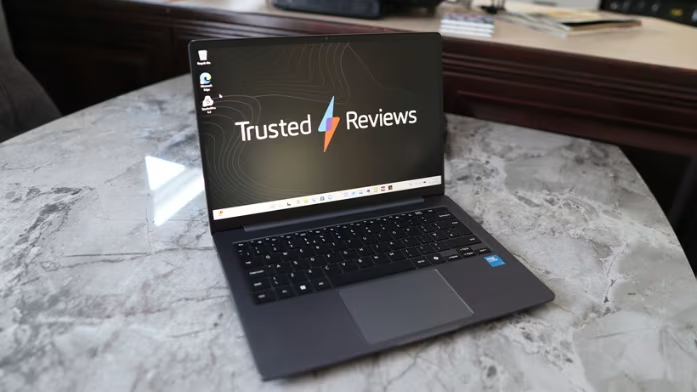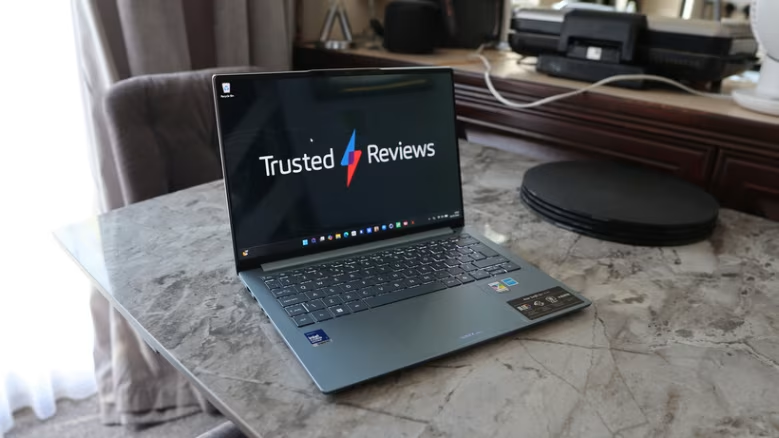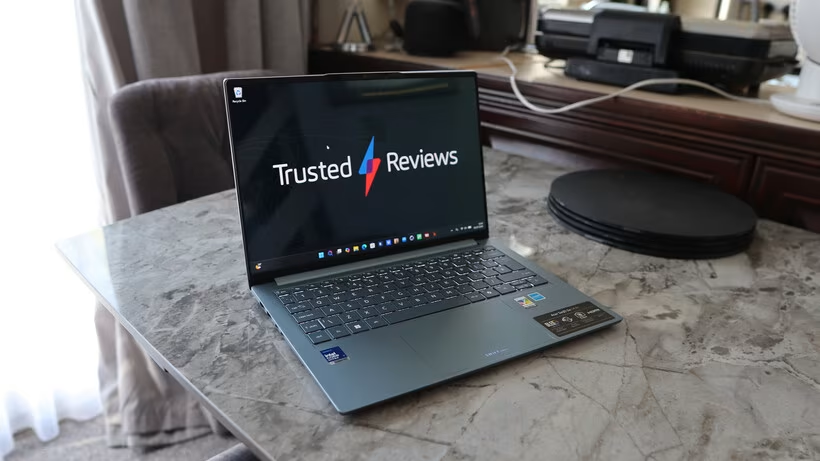
The Acer Swift Go 14 AI (2026) is presented as a well-rounded Windows laptop that performs strongly across multiple areas. It offers brilliant battery life, a stylish redesign, excellent port selection, and solid performance from Intel’s new Panther Lake processors at an affordable price point compared to several competitors.
Priced at £1,299 for the review model, this laptop is equipped with a mid-range Intel Core Ultra 7 355 chip. The reviewer notes that this processor balances both performance and endurance effectively. In terms of design, the machine received a significant refresh, moving away from last year’s nondescript grey chassis to a pleasant blue color accented with silver. Its construction material is primarily anodised aluminium, keeping its weight light at 1.24kg.
The port selection was highlighted as being fantastic for such a thin device. Available ports include two USB4-capable Type-C ports, two USB-A ports, a full-size HDMI port, a 3.5mm headphone jack, and a microSD reader.
The user experience features a tactile keyboard described as a joy to use, complemented by a trackpad made from OceanGlass—recycled ocean-bound plastic—which provides a smooth surface.
The display is a 14-inch OLED screen. It offers deep blacks and lovely contrast, specifically measuring at a 0.03 black level and 13,610:1 contrast ratio. Key specifications include a peak SDR brightness of 382.3 nits and excellent color coverage (100% sRGB and 99% DCI-P3). However, the review points out that the 1920×1200 resolution and 60Hz refresh rate are shortcomings when compared to certain rival models.
Audio output comes from downwards-firing speakers, which were deemed sufficient for casual listening but lacked the crispness of superior options.
Performance metrics show that the Core Ultra 7 355 Panther Lake chip delivers decently strong performance in both single- and multi-threaded workloads. While this represents only a handful of percentage point improvement over last year’s Core Ultra 7 255, the integrated graphics are noted as reasonable but lacking the power of the Arc B390 found in higher-end Panther Lake chips. This limitation impacts its suitability for prolonged creative or gaming tasks.
The model is configured with 16GB of RAM and a 512GB PCIe Gen 4 SSD. Although reviewers felt the storage capacity was slightly stingy, the drive itself performs briskly, recording measured reads of 7087.70 MB/s and writes of 5666.23 MB/s.
As a Copilot+ PC, it incorporates Microsoft’s AI tools, including Windows Studio effects for the webcam. These features provide auto-framing, background blur capabilities, and eye contact tracking.
A standout feature is the battery life, which achieved 20 hours and 51 minutes in the rigorous PCMark 10 video loop test. This duration allows for two to three working days of use before recharging is necessary. Charging speed is also efficient, with the 65W charger reaching 50% capacity in 35 minutes and requiring a full charge time of 75 minutes.
The overall conclusion praises the Swift Go 14 AI (2026) for its impressive balance of features within its price category. Despite making small compromises on the OLED screen, its combination of solid performance, excellent port selection, and brilliant battery life makes it a highly compelling alternative against more expensive competitors such as the Asus Zenbook A14 (2026), Dell XPS 14 (2026), and Lenovo Yoga Slim 7x Gen 11.