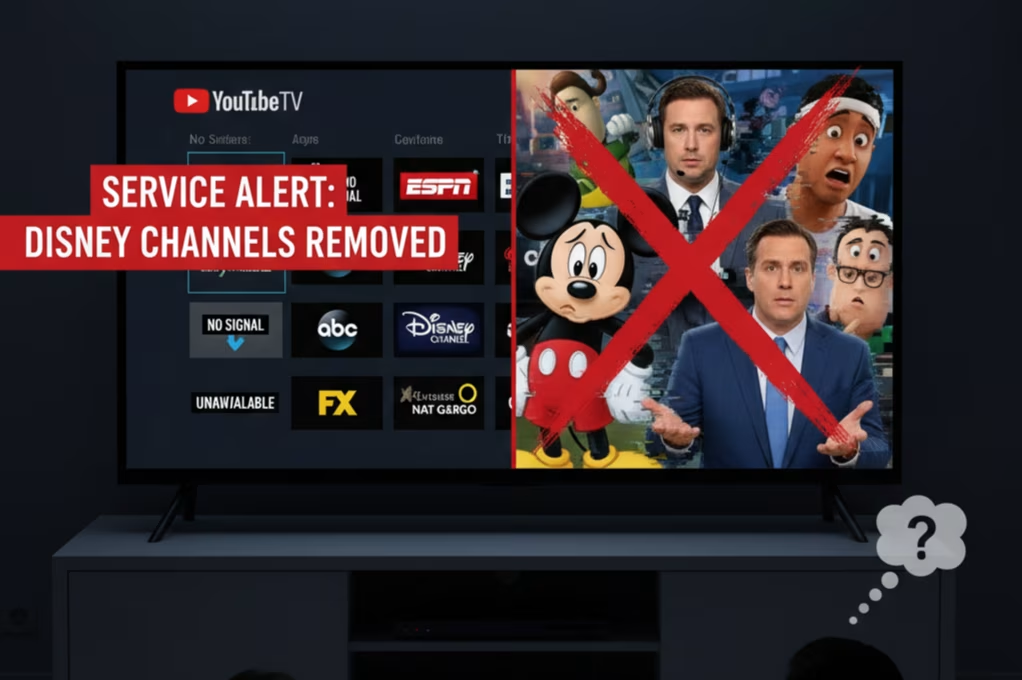
YouTube TV subscribers woke up to bad news this week as a significant chunk of video programming from ABC and ESPN disappeared from the streaming service. The immediate blackout is the result of a breakdown in negotiations between YouTube TV’s parent company, Google, and Disney, who failed to renew their content licensing agreement.
The removal is extensive, impacting a broad range of highly-valued Disney content. Along with the core ABC and ESPN networks, subscribers have lost access to channels like Disney Channel, FX, and Nat Geo, among others. This sudden loss particularly affects live sports viewers, as ESPN’s programming is a major component of the platform’s offering.
Google quickly went public with its side of the story, squarely placing the blame on the entertainment conglomerate. In a blog post, the company stated that Disney was “proposing costly economic terms” which would ultimately necessitate a price hike for YouTube TV customers while simultaneously offering them “fewer choices.”
YouTube TV’s parent company claims this aggressive negotiation strategy is designed to benefit Disney’s rival live TV products. Google specifically pointed to Disney’s ownership stakes in competing services like Hulu + Live TV and the soon-to-be-majority-owned Fubo, suggesting the blackout serves a broader competitive purpose.
The timing of the dispute is notable, especially considering Disney’s recent business maneuvering. The company just closed a major $220 million deal related to the now-defunct Venu sports-streaming service, under which Disney will own 70% of Fubo and Fubo will launch a new service featuring Disney’s sports networks.
Google further accused Disney of using the “blackout threat” as a negotiating tactic last week before ultimately following through on Thursday night. This move turned the contractual dispute into a immediate inconvenience for millions of YouTube TV users.
In contrast, Disney has maintained that the fault lies with the Google-owned platform. Speaking to the Associated Press, the company asserted that Google is simply refusing to pay a fair rate for its “valuable content.” This counter-argument frames the dispute as one of market fairness and appropriate valuation for premium networks.
Ultimately, the disagreement boils down to the financial terms of the carriage agreement—a common source of conflict in the modern television industry. Both corporate giants are holding firm, with YouTube TV attempting to keep costs down for its subscribers and Disney demanding what it considers to be proper market value for its essential programming.
For the user, the immediate consequence is a severely diminished channel lineup. As the two companies continue to exchange public accusations, millions of subscribers are left in the middle of a high-stakes corporate battle over content rights and subscription fees.
Both Google and Disney have expressed a commitment to reaching a resolution, though no new deal timeline has been established. Until a new licensing agreement is finalized, the Disney networks will remain dark on the YouTube TV platform, forcing subscribers to seek alternative viewing options for their favorite shows and live sports.