YouTube has announced another price increase for its Premium service, making it increasingly costly to view the platform’s popular content. Viewers who choose not to pay the higher subscription fees will be met with more extensive advertising breaks.
The costs for YouTube Premium have risen across various tiers. The individual plan now costs $15.99 per month, which represents a $2 increase. The family plan, while details are slightly different, is now priced at $26.99, an increase of $4. Furthermore, the base Premium Lite subscription, designed to remove most ads, has also seen a minor rise, moving from $7.99 to $8.99 per month.
YouTube’s subscription pricing has a history of adjustments. It initially launched in 2015 as YouTube Red with an individual plan cost of $9.99 per month. This morphed into YouTube Premium in 2018 at $11.99. A further price hike occurred in 2023, bringing the cost to $13.99. The latest US price increase is the first since 2023, though many international viewers observed price hikes in 2024.
The rise in streaming prices is not unique to YouTube, with competitors also raising costs. Netflix has reportedly increased its prices multiple times, and Amazon Prime Video is also raising prices while removing features from its lower-tier plans.
Meanwhile, the issue of advertisements on the free tier has drawn attention. After generating over $40 billion in ad revenue in 2025, the site expanded its use of unskippable 30-second ads in the TV app this year, up from a previous maximum wait time of 15 seconds.
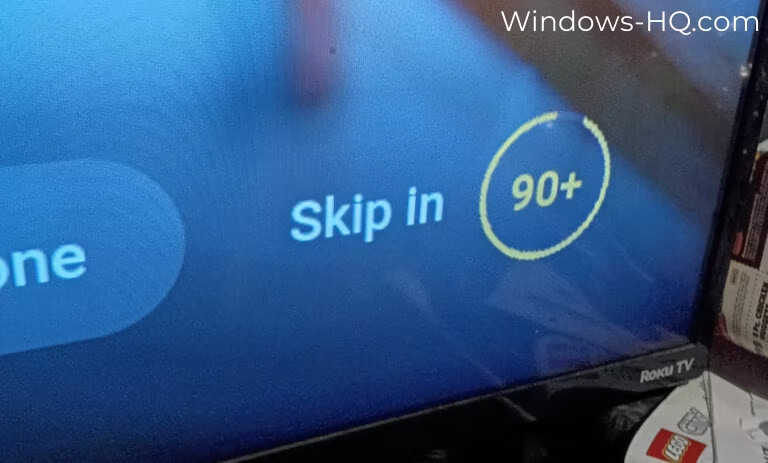
Viewers, however, have been reporting significantly longer ad breaks. Reports of 90-second unskippable ads have proliferated, leading some users to accuse the company of deception or misleading language. Initially, YouTube posted on X stating that it does not use a 90-second non-skippable ad format and that it was not part of any testing.
Despite YouTube’s initial denial, many viewers reported seeing these extended ads, accompanied by several images suggesting unskippable 90-second breaks. Some users noted that these long breaks combine a 30-second unskippable ad followed by shorter skippable ads, yet the interface display only showed the standard “Skip in” text with a countdown until the ads concluded.
Recently, YouTube addressed the controversy by stating that these longer unskippable ads were actually the result of an interface bug. A company spokesperson explained that this was caused by a bug, which in turn displayed higher, inaccurate timers for shorter ads. YouTube confirmed that it is working on a fix and reiterated its denial of having a 90-second non-skippable ad format or conducting such tests.
In summary, viewers are faced with two choices for enjoying YouTube content: either increasing their budget to cover the rising subscription costs, or enduring an ever-increasing volume of ads on the free tier. Though alternative YouTube clients and web ad-blockers exist, YouTube continues to adapt to block such measures.