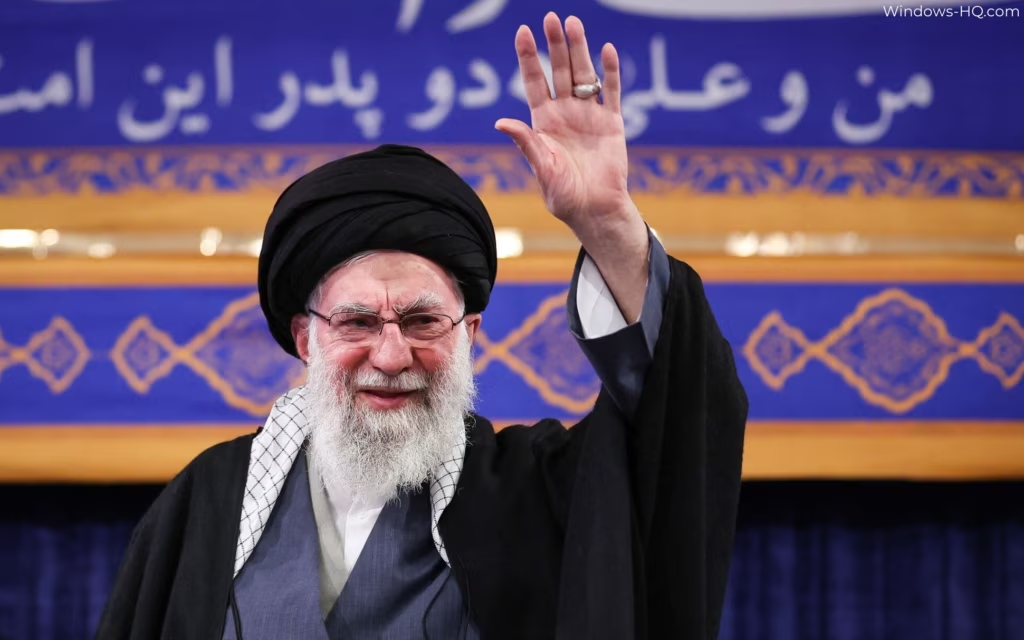
Joint US-Israeli military strikes on Tehran have resulted in the death of Iran’s Supreme Leader, Ayatollah Ali Khamenei, marking an unprecedented escalation in Middle Eastern conflict. US President Donald Trump announced the assassination following targeted aerial bombardments on Khamenei’s compound. The death of the cleric was subsequently confirmed by Iranian state media and government officials.
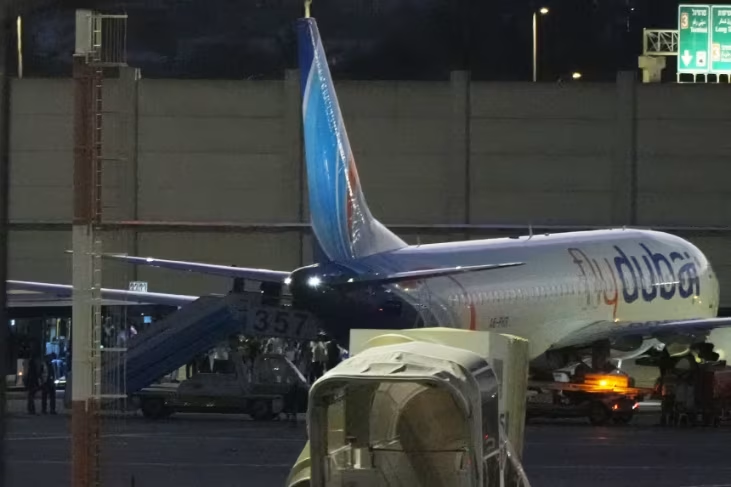
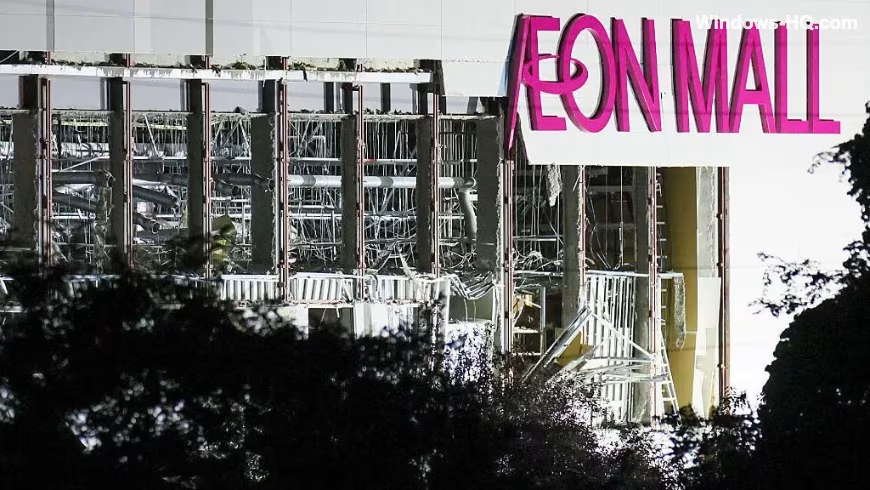
The coordinated attacks reportedly eliminated several other top Iranian leaders and military officials. In the wake of the strikes, the Iranian government declared 40 days of public mourning and vowed to deliver a severe response to the perpetrators. Retaliatory Iranian missile strikes have already been launched across the region. Apparent strikes have been reported in Tel Aviv, Israel, as well as in Dubai, Doha, Bahrain, and Kuwait—locations hosting US military bases or allied interests.
In a significant departure from his previously stated foreign policy stances, President Trump is now openly advocating for complete regime change in Iran. Addressing the Iranian public directly in a video message, Trump stated that their “hour of freedom is at hand.” He explicitly urged citizens to seize control of their government and state institutions once the military operations conclude. The US President also extended an offer of “immunity” to members of the Islamic Revolutionary Guard Corps (IRGC) and domestic police forces, provided they peacefully lay down their arms and merge with civilian protesters.
This strategic shift diverges notably from historical US interventions, such as those in Iraq or Venezuela. Rather than deploying ground troops for an occupation or formally installing an interim administration, Washington appears to be relying on a combination of intense aerial military pressure and an internal civilian uprising to topple the government. Despite the US administration’s optimism for an organic collapse of the theocracy, geopolitical analysts and regional experts caution that Khamenei’s death will not necessarily guarantee regime change. Iran’s constitution outlines a defined succession protocol for such events. A transitional council—comprising the president, the head of the judiciary, and a Guardian Council jurist—will temporarily assume leadership duties until a new Supreme Leader is officially appointed by the clerical establishment.
Experts note that the Iranian regime has spent decades building institutional redundancy and military resilience. The IRGC and other loyalist factions are deeply entrenched in the country’s power structures. Analysts warn that these forces may simply adapt, harden their stances, or fragment into competing factions rather than concede power. As the military campaign continues, with the US pledging sustained bombing to degrade Iran’s missile and nuclear infrastructure, the broader region braces for a protracted conflict. The ultimate political fate of the Iranian government remains highly uncertain amid the ongoing hostilities.